Freddy Loix’s story at the Ypres Rally is not one of fleeting appearances but of a career-long entanglement with the event, to the point where his name is almost synonymous with it.

Loix first competed at Ypres in the late 1980s, entering as a young driver with raw speed rather than experience. By the 1990s, as he rose onto the international stage with factory drives for Toyota, Mitsubishi, and Hyundai, he never abandoned the Belgian event. For local fans, this duality was the key to his appeal: Freddy was at once a world-class professional and still unmistakably “one of their own”.
It was in the 2000s, after stepping back from the full-time World Rally Championship, that he began to rewrite the Ypres record books. Driving successive generations of Super 2000 and R5 machinery – from the Peugeot 207 S2000 to the Škoda Fabia S2000 and later the Škoda Fabia R5 – Loix became the rally’s consummate master. His technique was ideally suited to the rally’s narrow, cambered tarmac where absolute precision mattered more than brute force.
Between 2008 and 2016, he achieved a remarkable streak of victories, including an unprecedented run of six consecutive wins from 2010 to 2016. In total, he stood on the top step of the Ypres podium eleven times, a record which remains untouched and may well stand forever. In doing so, he transformed himself from a competitor into a local monument, embodying the very essence of the rally.
Loix’s wins were not merely statistical. Each came against strong opposition — from factory-backed Intercontinental Rally Challenge and European Rally Championship drivers, including names such as Kris Meeke, Bryan Bouffier, and Craig Breen. Yet Loix’s blend of local knowledge and disciplined execution meant that outsiders seldom left Ypres victorious when he competed.
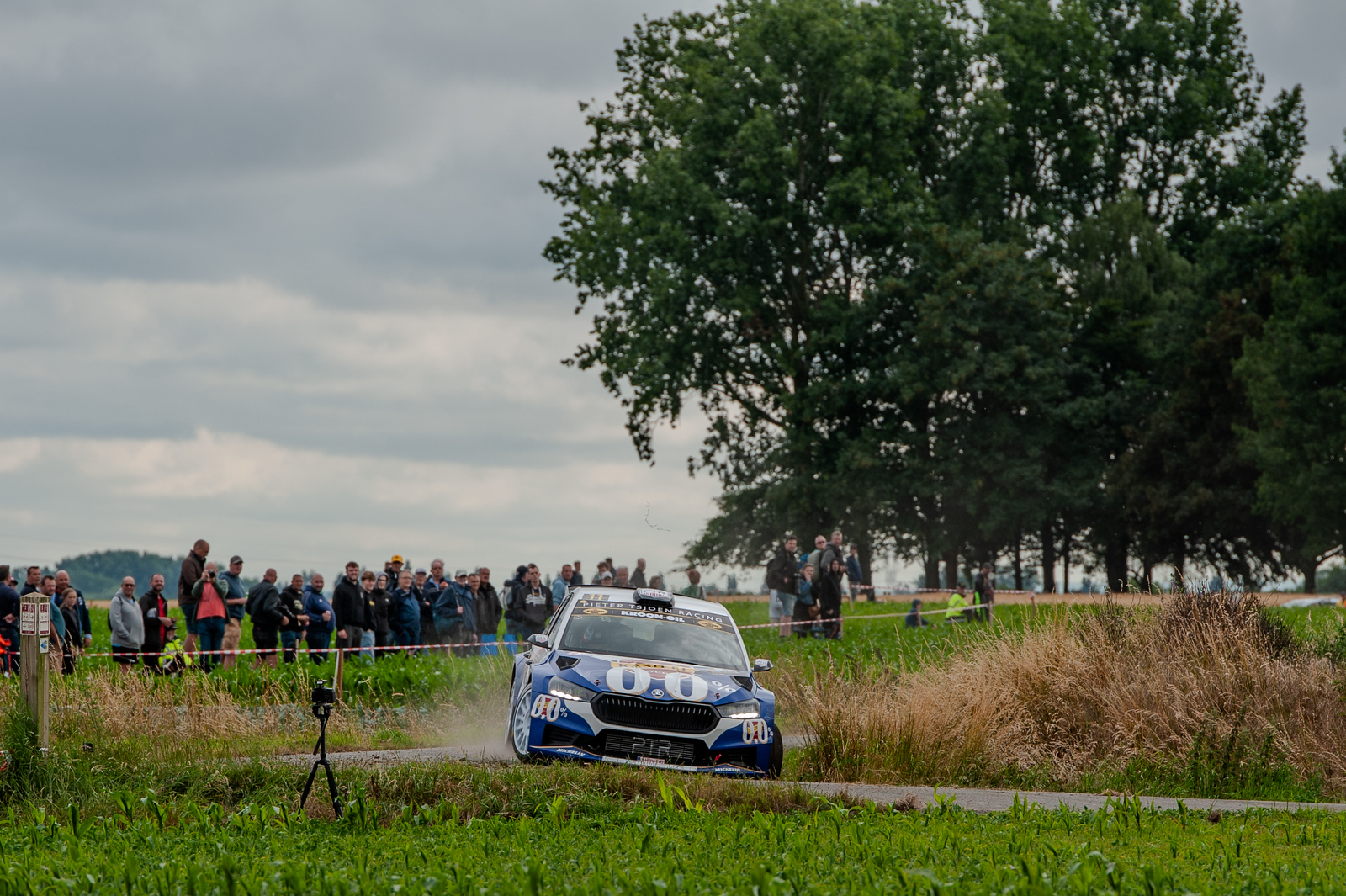
Even after easing away from full-time competition, he maintained an influential presence in Belgian rallying, both as a mentor to younger drivers and as an occasional competitor. His 2025 campaign, undertaken well past the age at which most professionals have long since retired, was less about defending records and more about reaffirming his place in the rally’s living history. Entering again with a modern Rally2 car — the latest evolution of the machinery with which he had enjoyed such success — Loix demonstrated that his style had lost none of its clarity. While victory proved elusive against younger full-time professionals, his performance reminded the crowd why his reputation was built not on nostalgia, but on the sustained mastery of these roads.
In the end, Freddy Loix at Ypres is more than a chronicle of individual triumphs. It is a story of continuity, of one driver shaping the identity of an event as much as the event shaped his career. If rallying is often about fleeting moments of brilliance, Loix’s Ypres record reveals something rarer: enduring mastery across decades, an achievement gained not through spectacle alone but through a precisely cultivated relationship with the most unyielding rally in Belgium.