Day 1
Thierry Neuville set the tone early at the EKO Acropolis Rally Greece, leading after a punishing opening Friday that immediately reminded everyone why this event sits among the hardest on the WRC calendar. The Hyundai driver ended the day 9.7 seconds ahead of Sébastien Ogier, with Adrien Fourmaux close behind in third after a leg that briefly saw him lead the rally before a puncture knocked him back. On the longest day of the event, the crews faced 129.22 kilometres of rough gravel north of Loutraki, where road cleaning, exposed rocks and broken rhythm made survival as important as speed.
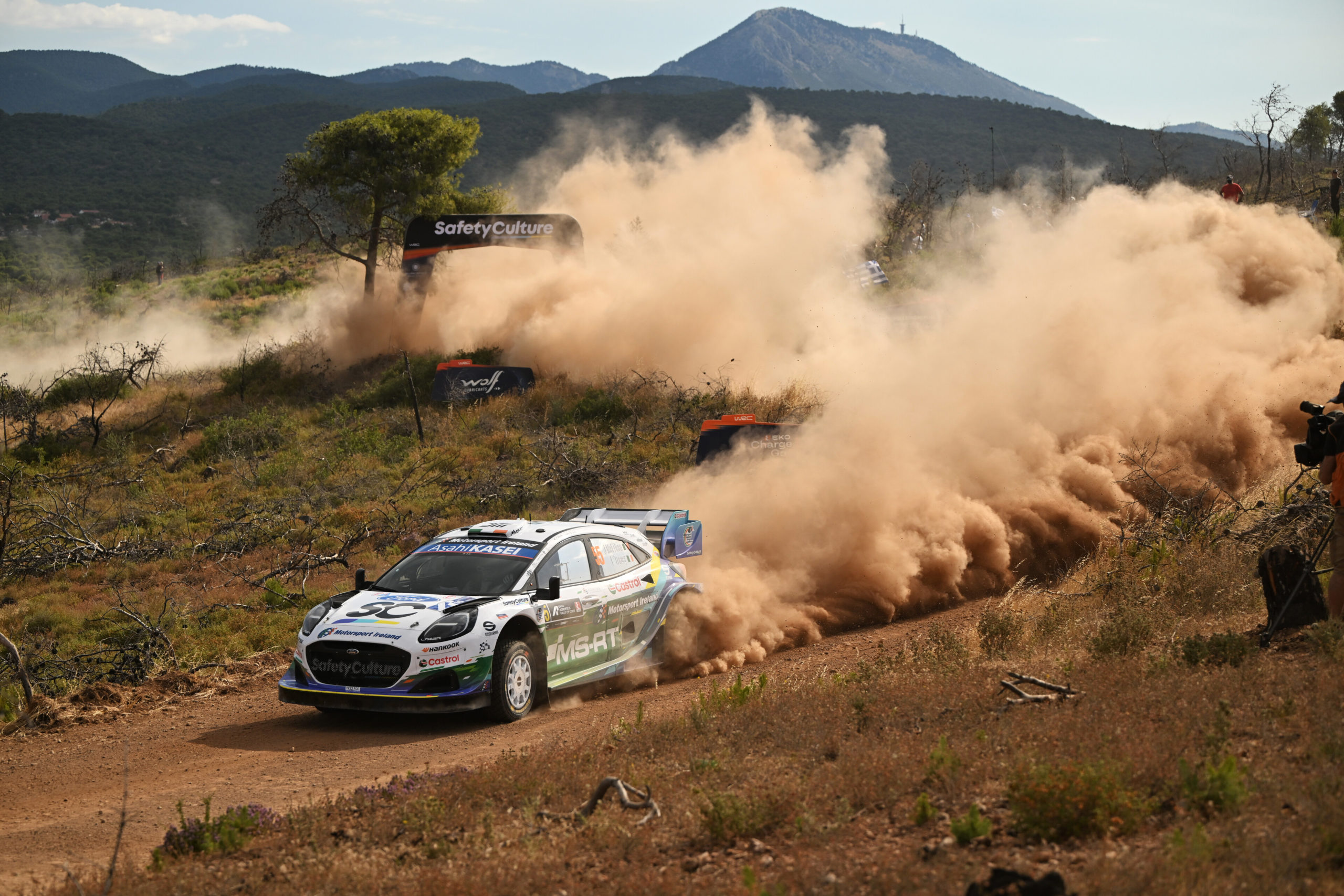
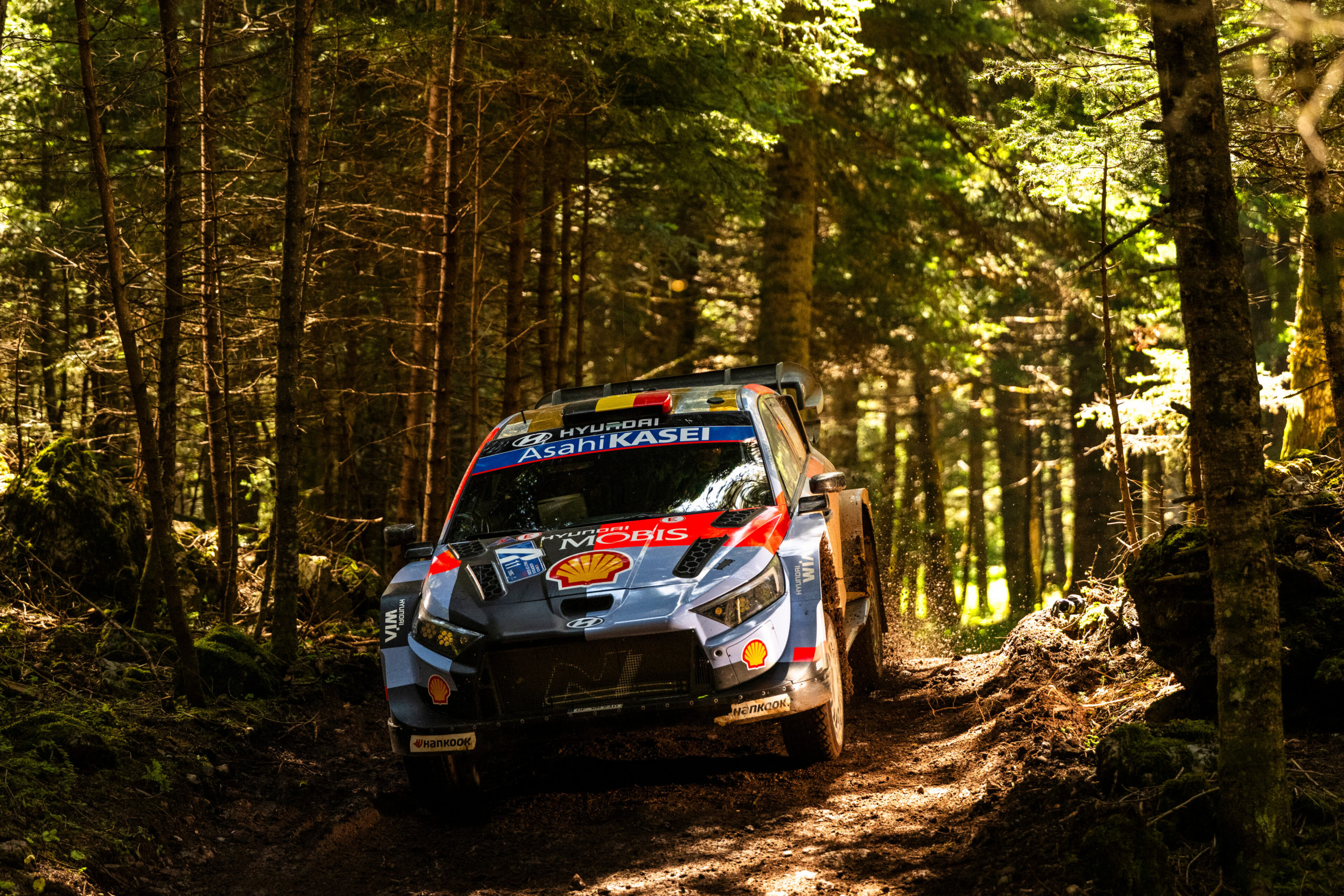
Neuville’s day was built on measured driving rather than visible aggression. He moved into the lead on SS4 after Fourmaux lost time with a front-right puncture, then kept his car in one piece despite reporting damage to the front splitter and an aerodynamic imbalance. Ogier never let him get away, winning SS4 and staying close throughout the afternoon, but the Frenchman made it clear that controlling risk mattered more than chasing every last second. In the Acropolis, that sort of restraint often proves wise.
Fourmaux was one of the day’s fastest drivers. He edged Neuville by a tenth of a second on Bauxites, then delivered a strong run on Parnassos Mt to seize the lead, only for the rally to bite back almost immediately when a puncture dropped him down the order. He recovered well enough to win the closing Thiva stage and end the day third overall, but the damage had already been done. Behind the leading trio, M-Sport Ford enjoyed a brief moment of promise through Jon Armstrong, who climbed as high as third and claimed his maiden WRC stage win, before a puncture and loss of power ended his day in frustration.
Josh McErlean made it through the chaos with enough consistency to hold fourth overnight, a strong position in one of the season’s toughest rallies. Mārtiņš Sesks followed in fifth, while Takamoto Katsuta kept his powder dry in sixth for Toyota. Further back, championship leader Elfyn Evans paid the price for opening the road and ended the day seventh after struggling for traction all day, with the loose gravel and sharp rocks making life especially hard for the first car through. Dani Sordo was eighth after a costly wheel change, Andreas Mikkelsen led WRC2 in ninth, and Sami Pajari completed the top ten despite puncture trouble and a brief power loss. Oliver Solberg’s day ended in the final stage after beaching his GR Yaris Rally1.
Day 2
Saturday brought a different but equally severe version of the Acropolis test. Thierry Neuville and Sébastien Ogier entered the day separated by 9.7 seconds, and by the close of play that margin had been cut to just 4.1 seconds, setting up a tense final day. The roads across the Peloponnese offered less exposed rock in places, but sandy sections, tree-lined mud, second-pass degradation and the usual heavy road cleaning ensured that the rally remained every bit as unforgiving.
Ogier spent much of the day applying pressure. He trimmed Neuville’s advantage before midday service and then tried a bold tyre strategy in the afternoon, carrying only one spare. Even so, he was cautious enough to avoid unnecessary risk on a rally where punctures had already shaped the story. Neuville, for his part, responded with a strong time on the shortened second pass of Ghymno and looked to have steadied the ship, even though he ended the day with visible damage to the front-left of his Hyundai and a small fluid leak. The gap remained tiny, but the balance of the fight was still very much intact.
The podium battle behind them kept shifting. Fourmaux opened the day third and showed strong pace again, but a wheel change on the shortened Ghymno stage cost him time and allowed Takamoto Katsuta to move ahead into third. Katsuta’s approach was careful and controlled, which was exactly what the conditions demanded, and he made the most of the trouble around him. Fourmaux fought back on Menalo Mt to regain fourth from Josh McErlean by just one second, and McErlean still remained in a fine position in fifth overall after another composed run.
Sami Pajari moved up to sixth, while Evans’ Acropolis misery deepened when he was forced to stop and change a front-right wheel on the final stage, losing 1 minute 50.2 seconds and slipping to seventh. Sordo remained eighth after another deflation, and Andreas Mikkelsen continued to lead WRC2 in ninth, extending his advantage over Robert Virves to 13.9 seconds. By the end of Saturday, the rally had become a classic Acropolis stand-off: two favourites separated by almost nothing, and everyone else fighting to survive the stones and the heat long enough to see Sunday.
Day 3
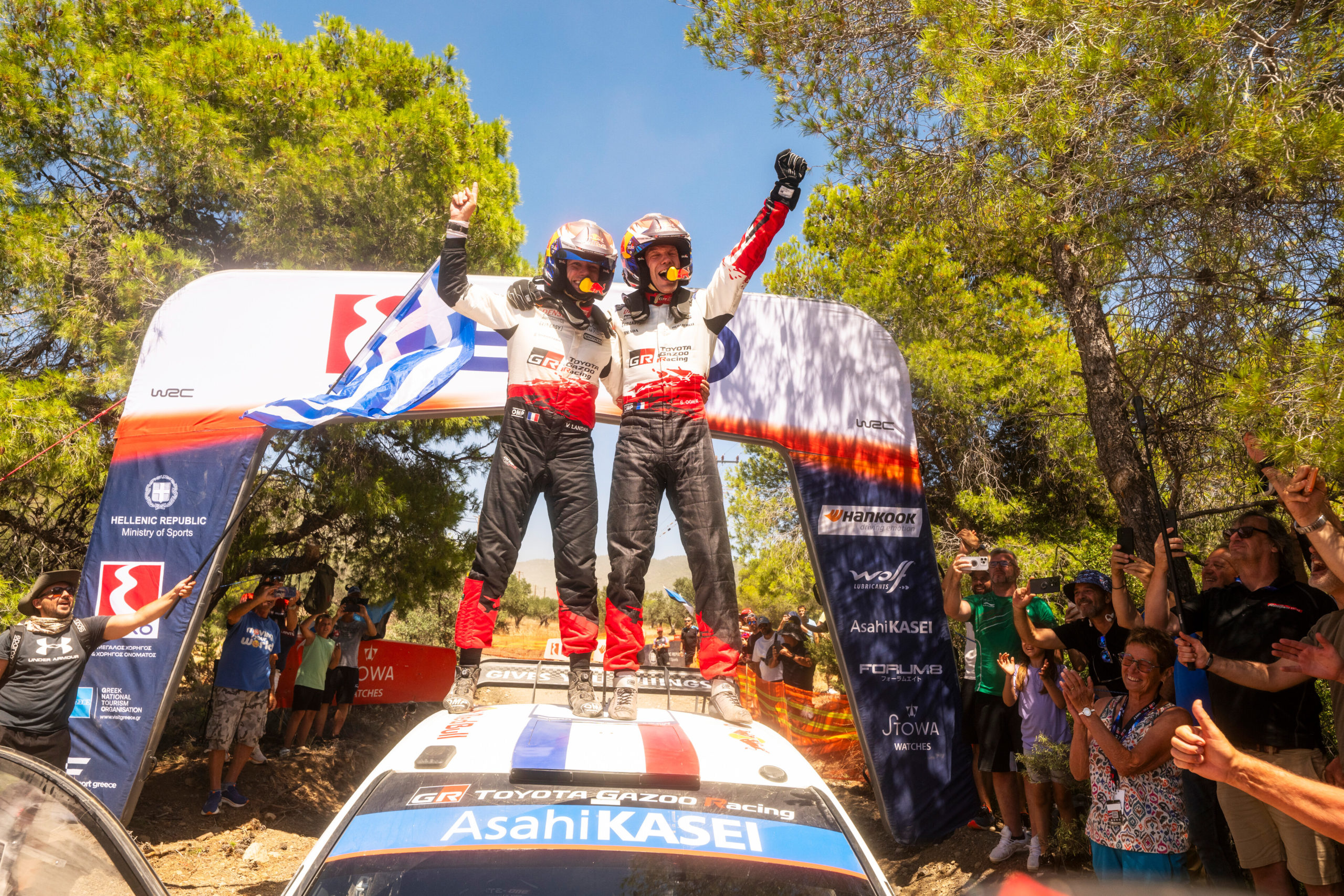
Sunday’s finale delivered exactly the sort of Acropolis conclusion the rally had been threatening all weekend. Neuville led Ogier by 4.1 seconds at the start of the day, but the Toyota driver overturned that deficit almost immediately on the opening Aghii Theodori test. From there, the gap remained narrow until the decisive second pass, when Neuville suffered two rear punctures and lost 53.5 seconds, effectively handing Ogier the victory. The Frenchman then completed the rally in style by going fastest on the Wolf Power Stage as well, sealing a perfect Sunday and his 69th WRC win.
It was a classic Ogier performance: calm, controlled, and ruthless when the opportunity arrived. He and Vincent Landais took advantage of the moment without overreaching, and Ogier later described the result as a kind of payback after the disappointment he had suffered in Portugal. The Greek gods, as he put it, were finally on his side. Neuville, meanwhile, was left to reflect on a rally he had controlled for so long and might well have won without the late puncture. His pace and composure had been strong all weekend, and the result underlined just how fine the margins can be in Greece.
Takamoto Katsuta completed a well-earned podium in third, surviving the rally’s attrition and managing his pace carefully on the second car’s road position from Friday. It was an important result for both him and Toyota, coming after a weekend where simply staying clean often counted for more than outright speed. Josh McErlean delivered one of the performances of the rally by taking a career-best fourth overall for M-Sport Ford, despite a late scare on Aghii Theodori 2. Sami Pajari finished fifth after a strong final day, while Fourmaux’s pace was again clear even if fortune continued to work against him, leaving him sixth.
Evans salvaged seventh and kept his championship lead intact despite a weekend of road-opening misery and repeated wheel-change delays. Mārtiņš Sesks finished eighth for M-Sport, while Robert Virves won WRC2 and took ninth overall after moving ahead of Mikkelsen when the Norwegian stopped to change a wheel. Mikkelsen still finished second in class and 10th overall, with Alejandro Cachón third among the Rally2 runners. At the top of the standings, Ogier’s maximum score tightened the championship picture, but the bigger story was the way the Acropolis once again turned a title fight into a war of patience, survival and timing.