“The deal of the century for rallying.” That’s how FIA president Mohammed Ben Sulayem described the sale of WRC Promoter GmbH to French automotive group Cosmobilis and private credit investor Park Square Capital, and the long‑term commercial rights agreement that now governs both the World Rally Championship and the European Rally Championship. On paper, it is indeed the biggest deal in the history of the two series, and a pivotal moment for a sport that has oscillated for decades between cult status and commercial vulnerability.
Yet for all the superlatives, this “deal of the century” is still partly a black box. No financial details have been disclosed; the contract length is described only as “long‑term,” with paddock sources suggesting something in the region of 25 years but nothing officially confirmed. Rallying stands on the threshold of a new era — but the exact shape of that era remains, for now, blurred.
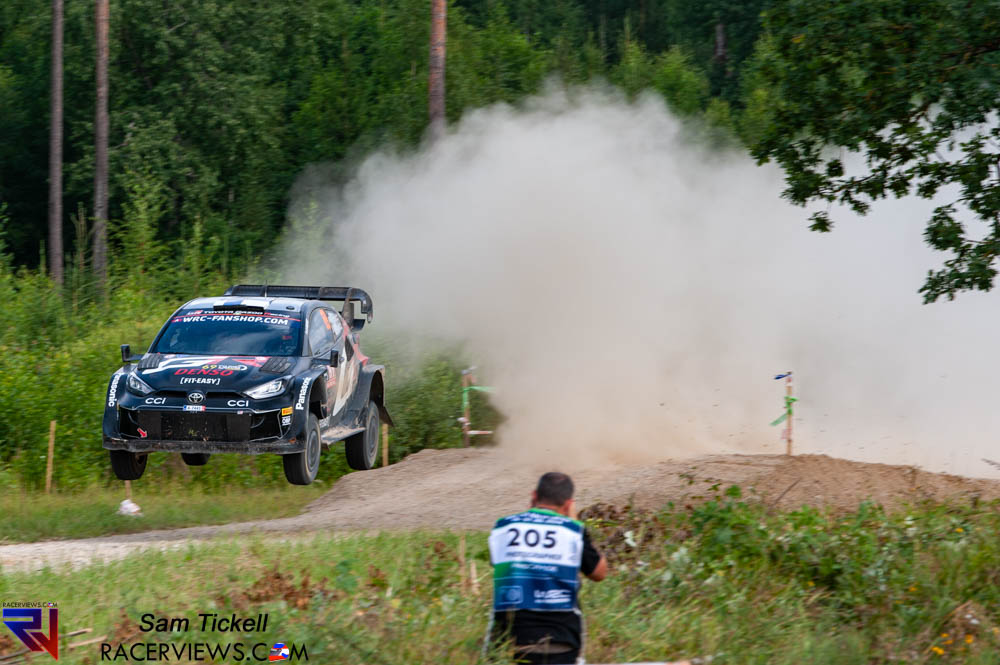
Tet Rally Latvia. FIA World Rally Championship. 2024. Shot by Sam Tickell for www.racerviews.com
From fragile rights to fully‑fledged promoter
To see why this sale matters, you have to remember where the WRC came from. Before WRC Promoter GmbH stepped in, the series’ commercial rights lived through a messy succession of media entities. International Sportsworld Communicators and then Convers Sports Initiatives struggled; when CSI entered administration, the championship’s rights and TV product were effectively left in limbo. The business model was fragile. Events were spectacular but frequently loss‑making. A sport built on risk and romance had a commercial structure that looked worryingly close to collapse.
Red Bull and KW25’s creation of WRC Promoter in 2013 marked a rescue of sorts. As the FIA itself notes, WRC Promoter GmbH became responsible for “all commercial aspects” of the WRC and ERC — TV production, global media and sponsorship rights, and even proposing calendar venues and pushing competitor numbers. A modern media spine followed. WRC+ launched in 2014, packaging every stage live, onboard cameras and shoulder content into a subscription product, later rebranded as Rally.TV and expanded to include ERC.
Financially, the turnaround was slow but real. German filings show WRC Promoter with sales around €25.7m and an operating profit of roughly €4.6m in 2021, despite COVID‑era disruption. By 2024, the business was credible enough that Reuters and others were reporting a potential sale valuation up to €500m, underpinned by EBITDAs north of €20m. The championship had moved from “always losing money” to something private equity could sensibly pitch as a growth platform.
In that trajectory, Cosmobilis and Park Square aren’t swooping in to salvage a failing series. They’re buying a promoter that has already dragged WRC from post‑administration chaos into a functioning, if still modest, global sports property. The question now is what an automotive services group and a credit investor can add.sports.
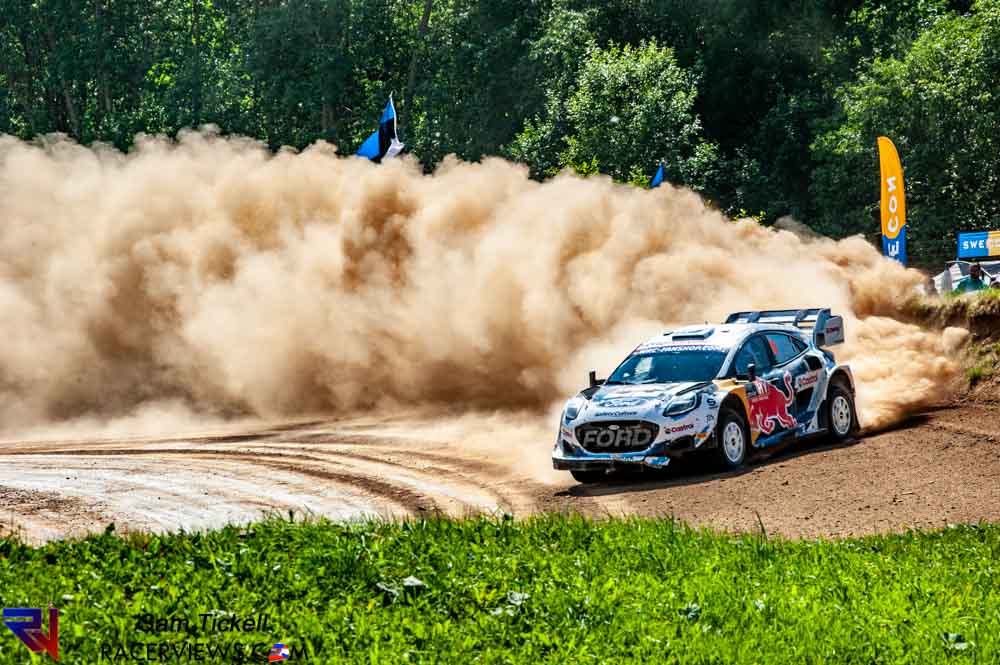
Tet Rally Latvia. FIA World Rally Championship. 2024. Shot by Sam Tickell for www.racerviews.com
A sale years in gestation
This sale didn’t appear overnight. As early as August 2024, WRC Promoter was reported to be exploring a sale, with Red Bull and KW25 linked to valuations around €500m and EQT Partners rumoured as a buyer. JPMorgan was engaged to help structure the deal, and by 2025 the FIA had formally started a tender process for a new promoter, explicitly signalling that it was looking for “long‑term investment” and a new steward for a championship that had reached capacity on its schedule.
Hopes that a deal would be wrapped up by December last year came and went. It took “several months of discussions,” FIA language that underplays how complex this transaction must have been. Only now, at the end of July 2026, has the agreement been signed, timed to land in the middle of Secto Rally Finland and framed as part of a wider regulatory and strategic reset for the sport.
Crucially, this is not just a minority investment. As one long‑form paddock analysis put it, Cosmobilis and Park Square “bought the company” outright; this is a change of ownership, management and strategic control, not simply a new shareholder in an existing structure. Former Lotus and McLaren F1 team boss Éric Boullier will serve as CEO, fronting the promoter as it navigates both the commercial cycle and the incoming WRC27 technical regulations.
We know who the new owners are and broadly what they say they want. We still don’t know the precise contractual terms or the financial architecture underpinning the “deal of the century”.
WRC Rally Croatia, 2021, Sam Tickell with www.racerviews.com
What the FIA and the new owners are promising
The official language is expansive. The FIA calls the agreement “a landmark long-term commercial rights deal” and “the biggest deal in the history of these championships,” framing it as central to its vision under Mohammed Ben Sulayem. The release you’ve pasted emphasises that the deal is “designed for the rallying community” — fans, competitors, organisers, member clubs — and promises that rallying will become “more accessible, more competitive, and more commercially successful” while governance and regulations stay strong.
Cosmobilis and Park Square’s own joint statement sharpens those themes. They describe acquiring the commercial rights to WRC and ERC as a “tremendous acceleration” of Cosmobilis’ strategy to connect the automotive ecosystem, positioning the championships as an “international platform where manufacturers, partners, media, technology, and fans come together”. Their ambition is to turn the WRC into “the global benchmark for motorsport” while making the series a driver of “sustainable growth” for the wider Cosmobilis ecosystem, leveraging access to 30 manufacturers, 12,000 commercial touchpoints and 100,000 automotive professionals.
For Park Square, the language is more finance‑coded but equally bullish: WRC and ERC are “iconic championships with exceptional heritage and global appeal,” and the firm will provide “both capital and strategic support” to realise their potential. Together with Boullier’s pledge “to make every round a spectacular event, designed to thrill fans around the world,” the picture painted is one of serious capital, automotive reach and a media‑savvy CEO aiming to turn rallying into something closer to a mainstream global property.
The FIA folds this into its own internal agenda. WRC is “preparing for a major regulatory overhaul,” with next‑generation technical regs due in 2027 aimed at making the sport safer, more competitive and more affordable at the top level, backed by a new FIA Growth Fund to support rally development from elite to grassroots. The promoter deal is presented as the commercial backbone supporting that policy shift.
All of that sounds undeniably positive. It is also, by design, broad.
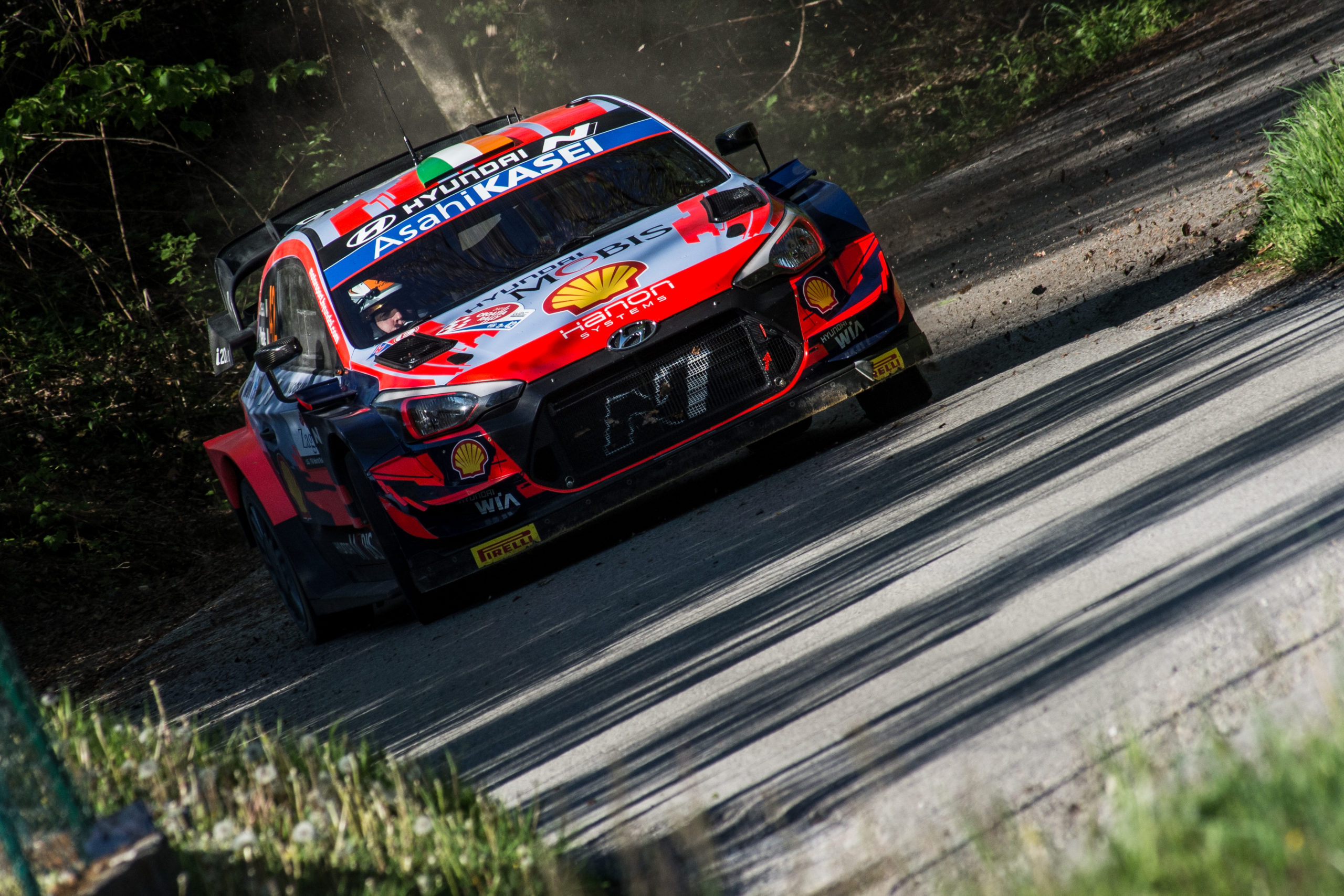
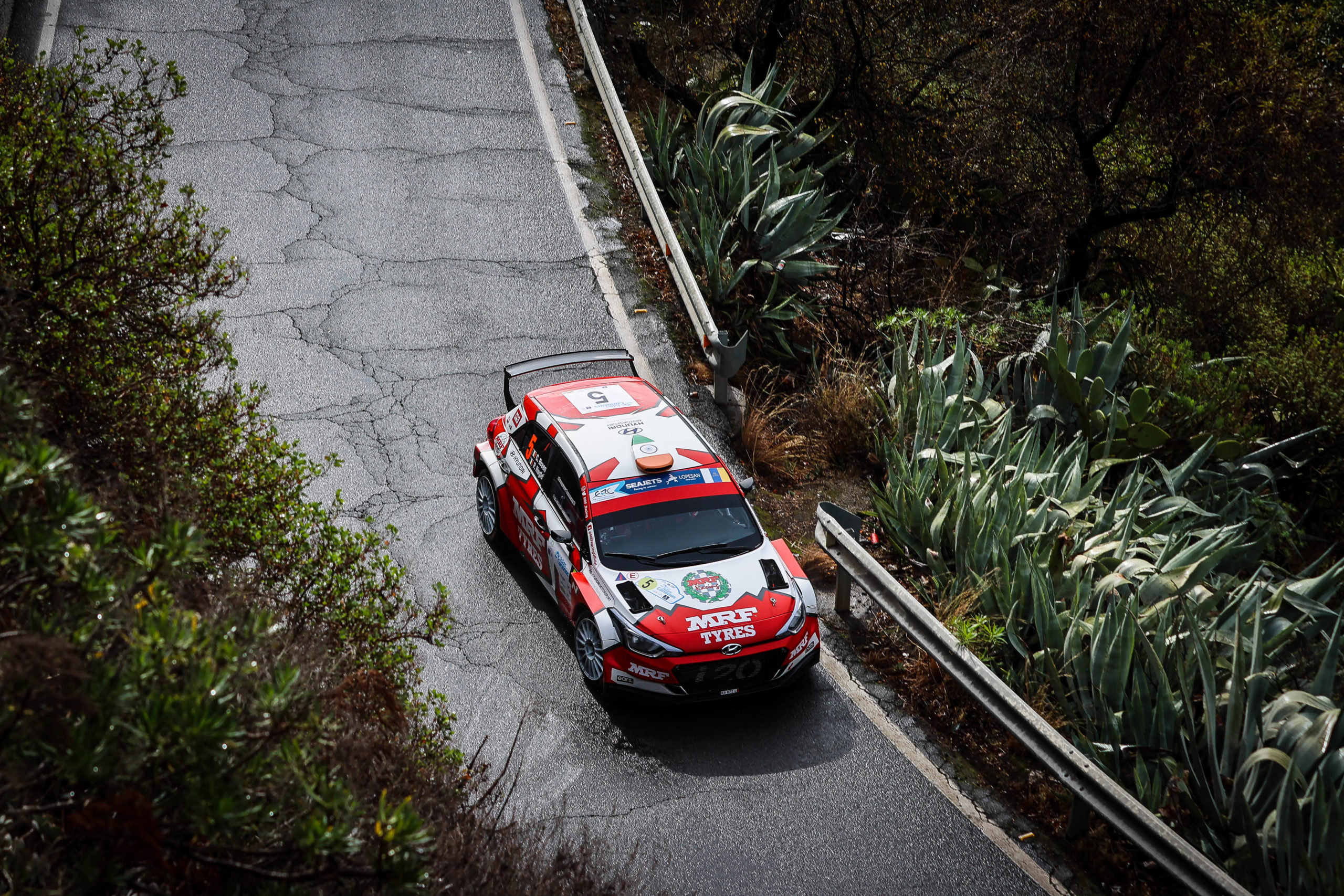
05 BREEN Craig (IRL), NAGLE Paul (IRL), Team Team MRF Tyres, Hyundai i20 R5, action during the 2020 Rally Islas Canarias, 5th round of the 2020 FIA European Rally Championship, from November 26 to 28, 2020 in Las Palmas de Gran Canaria, Spain – Photo Jorge Cunha / DPPI
What we’re still waiting to see
This is where optimism has to be tempered with realism. For all the talk of “never before seen levels of investment,” neither the FIA nor the new owners have disclosed hard financial details. A source quoted in April suggested the purchase price would be “for less than €500m,” but that’s still rumour, not transparency. We don’t know the annual rights fees, revenue shares for teams and events, or how much fresh capital is being committed to content, fan experience or calendar expansion.
The duration of the promoter agreement remains officially vague: “long‑term” and “multi‑year” in public, an understood “about 25 years” in paddock reporting, but no explicit confirmation. A quarter‑century commitment can be reassuring — stability, continuity, long‑range planning — but it also locks the championship into a relationship whose detailed terms the rally community has not yet seen.
More substantively, we don’t yet know how the promise of “accessibility” and “competitiveness” will be translated. Will event organisers see reduced rights fees and more support for infrastructure, or increased obligations to meet fan‑experience and broadcast benchmarks? Will the push to make rallying “more accessible” manifest in ticket pricing, live‑streaming models, or novel city‑stage concepts that may or may not sit comfortably with traditional gravel epics ? Will manufacturers be asked to commit to long‑term programmes under WRC27 rules, or given flexible entry options that prioritise marketing activations over deep technical engagement?
Even on core strategic priorities, the gap between intention and execution matters. The FIA has openly admitted that attempts to secure a US WRC round for 2026 failed, and flagged North America as a priority under the new promoter. Turning that into a viable event — with local promoters, political support, manufacturer buy‑in and calendar fit — is non‑trivial. Likewise, “strengthening sustainability goals” and aligning rally operations with carbon‑neutrality objectives is easy to promise; aligning logistics, fuels, car technologies and fan travel with those goals, without hollowing out the sport’s identity, is much harder.
In short: the rhetoric is strong, and for once rallying feels like it has a growth‑oriented commercial narrative. But a fair telling of the story has to acknowledge that many of the hardest questions — about money, balance of power and practical consequences — have yet to be answered publicly.
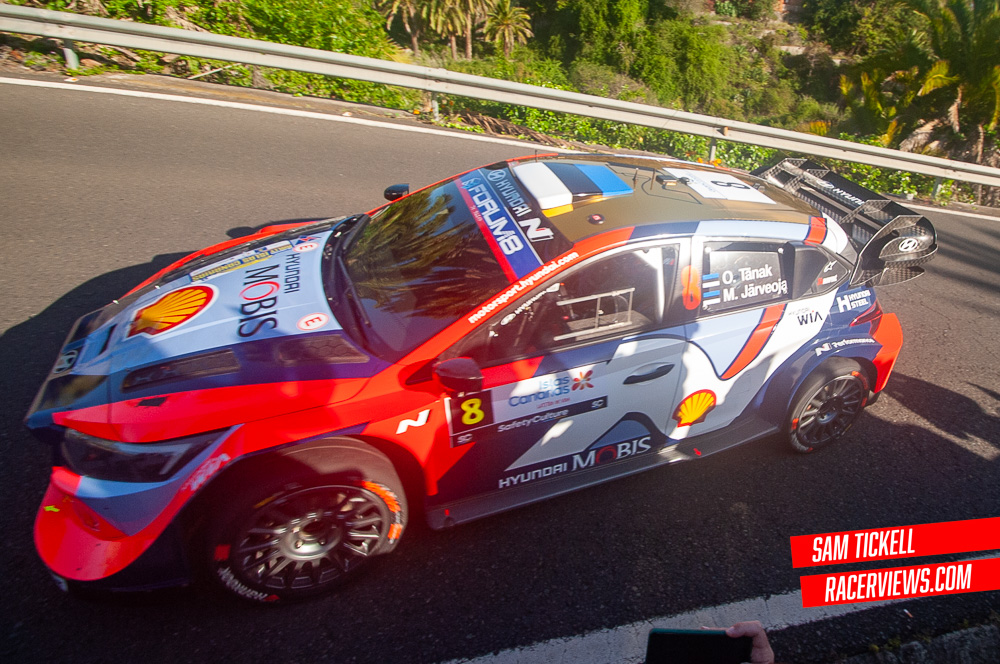
Rally Islas Canarias, 2025 FIA World Rally Championship. Shot by Sam Tickell for www.racerviews.com
Hopeful, but not just a press release
So where should the hope sit?
First, in the simple fact that a sport which once saw its promoter enter administration is now attractive enough to be bought outright by a major automotive platform and a $22bn credit investor, in a deal the FIA is comfortable calling the biggest in its history. That says something about rallying’s fundamental appeal: the combination of manufacturer relevance, dramatic visuals and loyal fan bases has real value on a global media landscape crowded with series competing for attention.
Second, in the tone from inside the service park. Drivers like Sébastien Ogier have been blunt about their dissatisfaction with elements of the previous promotional regime, and equally clear that “fresh blood” with “motivation to push the sport back where it should be” is welcome. The reaction to the Cosmobilis/Park Square deal has been broadly positive, not because anyone thinks all problems are solved overnight, but because a new promoter with deeper capital and clear intent offers at least a chance to reset some long‑standing frustrations — from calendar construction to fan reach.
Third, in the alignment of the commercial deal with the regulatory horizon. The WRC27 rule set, the FIA Growth Fund and the promoter agreement are being framed as part of one coherent plan rather than isolated initiatives. If that coherence holds in practice — if commercial pressures don’t simply override regulatory objectives — rallying might be able to grow without losing the sporting DNA that still makes it one of the most compelling forms of motorsport.
But hopeful doesn’t mean uncritical. This is a moment to keep asking for detail: on contract length, on financial flows, on what “more accessible” and “more competitive” will mean in terms of concrete policy and event design. It’s a moment to remember that “deal of the century” is a phrase that should be judged in ten years’ time, not just in the glow of a July press conference.
The sale of WRC Promoter is, undeniably, a turning point. It takes the sport from a decade‑long chapter of repair and consolidation into a new era of promised expansion. For everyone who cares about rallying — from factory bosses to road‑section volunteers — the task now is to make sure that this chapter delivers more than a catchy headline.
This website uses cookies to improve your experience. We'll assume you're ok with this, but you can opt-out if you wish.AcceptRead More
Privacy & Cookies Policy
Privacy Overview
This website uses cookies to improve your experience while you navigate through the website. Out of these, the cookies that are categorized as necessary are stored on your browser as they are essential for the working of basic functionalities of the website. We also use third-party cookies that help us analyze and understand how you use this website. These cookies will be stored in your browser only with your consent. You also have the option to opt-out of these cookies. But opting out of some of these cookies may affect your browsing experience.
Necessary cookies are absolutely essential for the website to function properly. This category only includes cookies that ensures basic functionalities and security features of the website. These cookies do not store any personal information.
Any cookies that may not be particularly necessary for the website to function and is used specifically to collect user personal data via analytics, ads, other embedded contents are termed as non-necessary cookies. It is mandatory to procure user consent prior to running these cookies on your website.