There are few places in the world where sound, sun, and stamina converge quite as harmoniously as they do at Daytona in late January. The Rolex 24 is not a sprint, but a slow crescendo — an event that rewards patience and punishes bravado. Yet, as dawn rose over the Atlantic, the air just beginning to shimmer in the Florida warmth, Roger Penske’s team once again turned precision and persistence into victory.
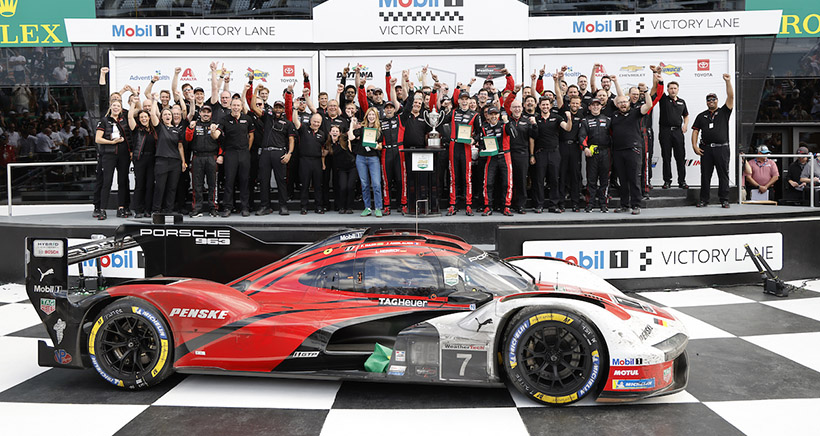
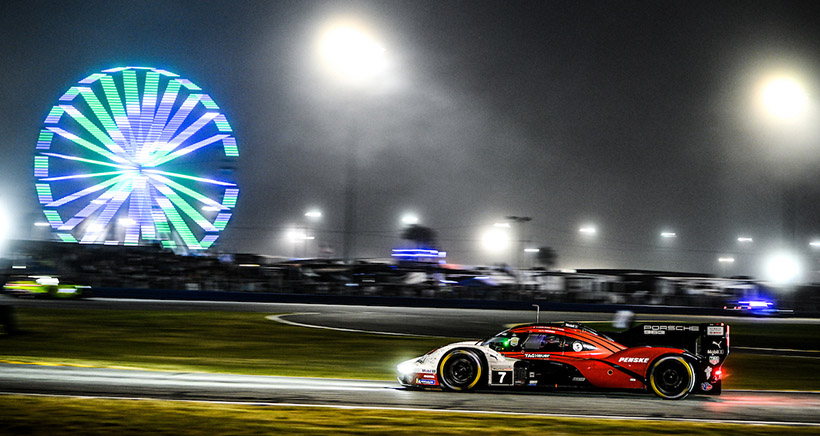
For Penske, entering his sixtieth year in competition, the margins still matter. His Porsche 963 — all taut lines, purposeful engineering, and clean white livery — crossed the line first, ahead by just 1.569 seconds after twenty-four hours of unrelenting pursuit. From the pit wall, the man they call “The Captain” looked a mixture of pride and quiet satisfaction. “You know,” he said, with the calm authority of someone who long ago stopped counting his trophies, “for our sixtieth, it’s a big deal.”
The Brazilian Felipe Nasr, smooth and unsentimental in his driving, delivered that clinching stint. Behind him, Britain’s Jack Aitken threw everything into his Cadillac’s final laps, coming within half a breath of taking the lead at Turn 1. For nearly an hour, their duel traced a modern outline of endurance racing’s elemental tension — control versus chaos, method versus nerve.
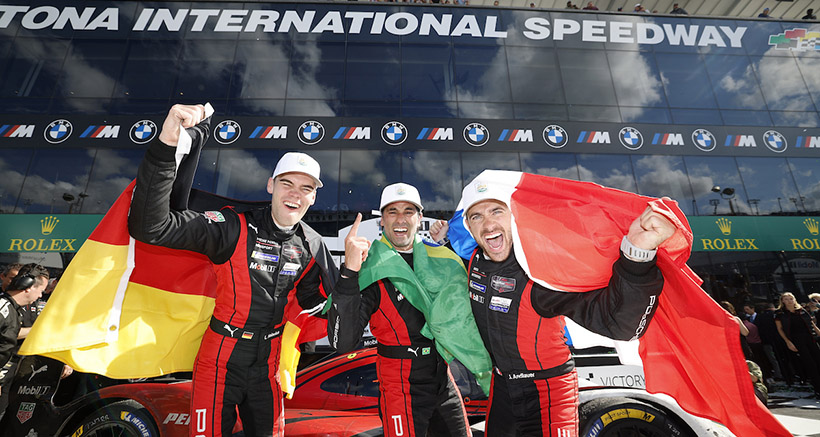
When the flag waved, Nasr joined a small fraternity: three consecutive overall wins at Daytona, a record shared only with fellow Brazilian Hélio Castroneves and 1970s icon Peter Gregg. His co-drivers, Laurin Heinrich and Julien Andlauer, both won their first Rolexes. Porsche, meanwhile, claimed its twenty-first victory in the race’s history, a reminder that engineering elegance still leaves its mark on raw American asphalt.
Endurance, Elevated
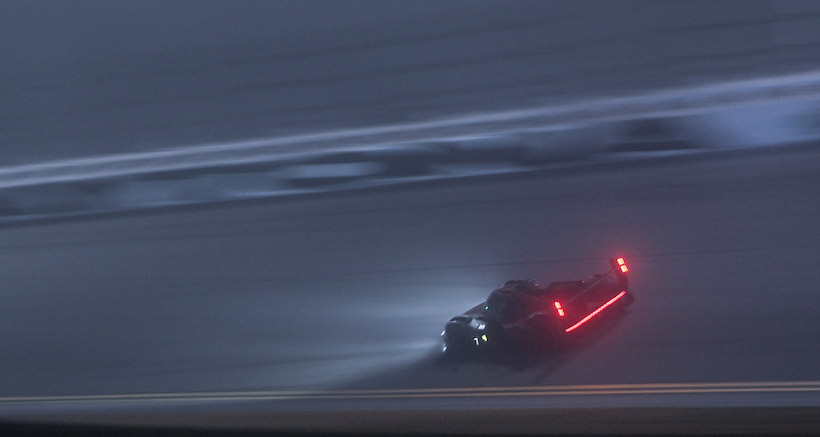
Daytona isn’t all glamour. Amid the grandstands and mobile espresso bars, there’s grit. This year, thick fog rolled in past midnight, forcing a six-hour caution — the longest in the event’s storied history. The circuit fell silent, a silver mist swallowing the grandstands and leaving crews in an uneasy half-sleep. When visibility returned at dawn, a slipstream of color burst across the tarmac: Porsche, Cadillac, BMW, Acura. Nine of the eleven top-class prototypes led at least a lap, each with their own rhythm and intent.
In the garages, technicians moved like pit-lane surgeons — torque wrenches clicking in tempo, telemetry screens glowing pale blue. The mechanics’ motions spoke to a deeper philosophy of craft, one that Penske’s organisation has turned into doctrine. In an age of automation and simulation, this remains a sport sustained by human endurance as much as mechanical durability.
The Quiet Architects of Victory
Elsewhere in the paddock, smaller triumphs unfolded. CrowdStrike Racing — a newcomer with a certain Silicon Valley sheen — secured redemption in the LMP2 category. Their ORECA prototype had been clipped in a first-turn mêlée, yet recovered to win with characteristic composure. George Kurtz, the driver-owner with the look of a man more used to board meetings than back straights, called it a “lifelong dream finally done.”
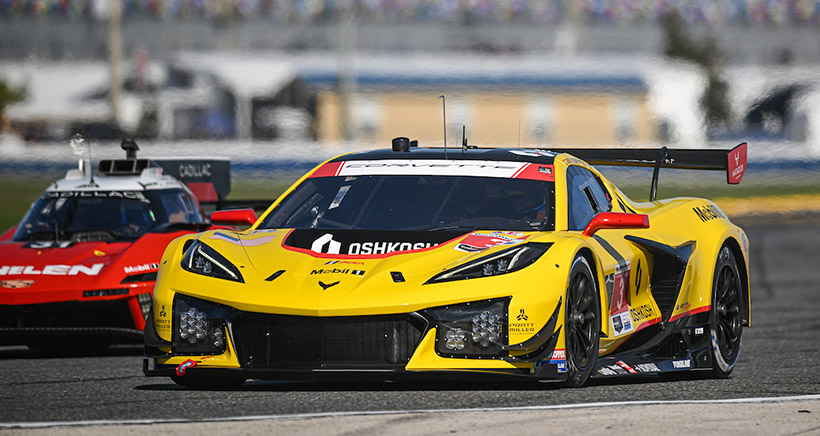
Further down the order, Paul Miller Racing’s BMW team carved a different path to the top of the GTD Pro field, one that began unexpectedly at the rear of the grid. A camber penalty forced them to start fifteenth, but in a display of calm endurance — “If you’re going to get disqualified, this is the race to do it,” smiled Neil Verhagen — they found fluency through the night. Their progress was measured, tactical, as if drawn by compass rather than instinct, until the sun broke and the BMW settled quietly into the lead. Their eventual win, by just over two seconds, was their second at Daytona — proof that certain approaches to discipline never go out of style.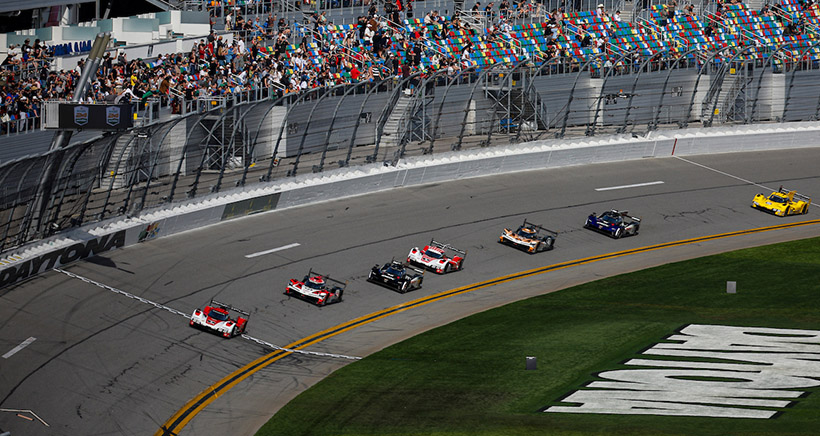
The Art of the Duel
No endurance race is complete without a late flourish, and Daytona delivered one worthy of its growing legend. In the GTD class, Phillip Ellis in his Winward Mercedes and Nicki Thiim in Aston Martin green danced through the tri-oval, trading paint and pragmatism with a surgeon’s precision. Their near-contact sent both cars into shimmering slides — corrected, somehow, by instinct more than calculation. “It was a little stressful,” Ellis admitted later, with the understated grin of someone whose pulse had only just returned to normal.
That brief drama brought the record crowd to its feet. For a moment, it wasn’t about sponsorship budgets or data traces — just two drivers suspended between control and collapse, the kind of theatre that reasons why endurance racing endures.
A Tradition Polished Like a Watch Face
Beyond the track, the Rolex 24 carried its usual contrasts. There were the fans camping by the infield fire pits, the private jets lined neatly on the horizon, and the steady rhythm of hospitality suites where espresso met bourbon. This isn’t Le Mans, nor is it Formula 1; it is something quieter, more reflective. The soundscape of Florida’s flagship 24-hour race feels less like spectacle and more like a long conversation between speed and stamina, precision and patience — punctuated, of course, by the purr of the flat-six.
For Penske and Porsche, this latest triumph places their partnership in rarefied company: three consecutive wins, matching history, hinting at still more to come. For Daytona, it was the largest crowd in its sixty-four years — a city of tents, campers, and hotel balconies united by curiosity for a race that never stops evolving.
And when the final engines fell silent, there was perhaps one enduring takeaway: endurance racing’s elegance lies not in excess, but in restraint. At Daytona, success still belongs to those who can wait — thirty-six hours of preparation for a margin of victory smaller than a heartbeat.