Toyota’s Early Gambit: The Undercut That Set the Tone
For all the focus on Hyperpole drama, the race itself settled into its first shape around hour four, when Toyota made the first big strategic call of Le Mans 2026.
From the opening stint, the No.8 Toyota GR010 Hybrid was slightly out of phase, pitting early and banking on clear air rather than track position. That “offset strategy” propelled Sébastien Buemi to the front by the end of the opening hour, and as he triple‑stinted through the late afternoon, the Swiss driver built a lead approaching half a minute over the chasing BMW and Cadillac pack.
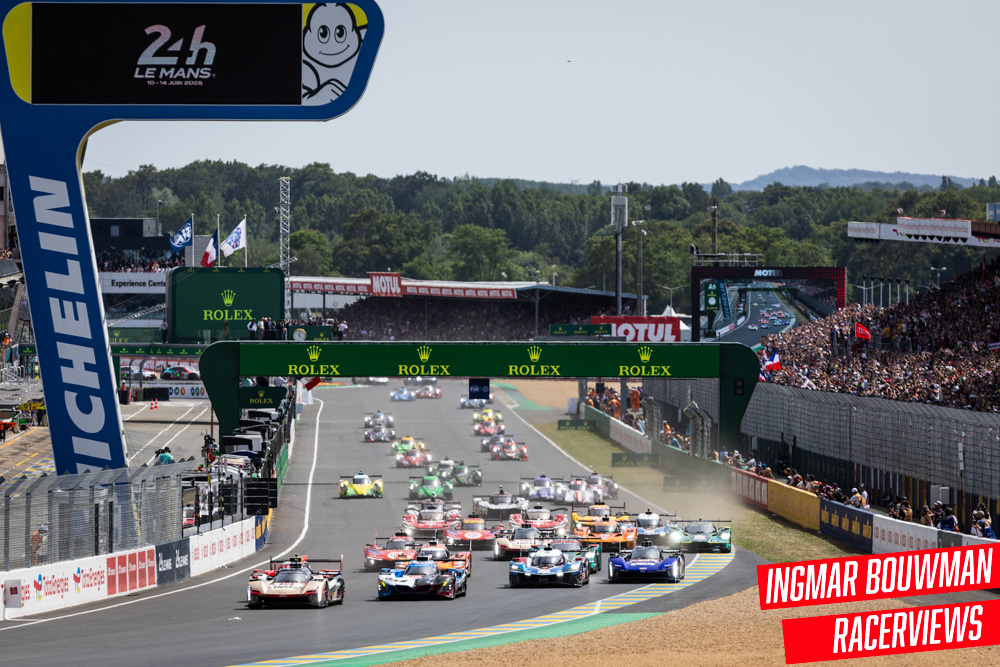
At four hours, the official readout was clear:
Toyota at the head of the field,
BMW and Cadillac giving chase,
all three manufacturers having already led at least once in the opening phase.
Toyota’s gamble hadn’t yet decided the race, but it dictated the rhythm: Le Mans 2026 would be as much about who dared to step off the “standard” fuel window as it would be about pure lap time.
Four-Way Fight Into the Night
By the eight‑hour mark, as darkness settled in and the first safety car loomed on the horizon, the “big three” had become a big four.
The ACO’s eight‑hour round‑up captured it perfectly:
Toyota, BMW and Cadillac “sitting at the top table with their cards close to their chests,” with two Cadillacs, one Toyota and one BMW forming a four‑car fight for the lead.
The No.20 BMW M Hybrid V8 had taken a spell at the front thanks to a timely undercut and a well‑timed full course yellow, only to see its advantage eroded by the next neutralisation.
A dramatic incident with an LMP2 car dealt the BMW its first major blow; contact led to tyre damage and a long, painful limp back to the pits, dropping the car to the tail of the Hypercar order before the crew dragged it back into contention.
The No.12 and No.38 Cadillac V-Series.Rs were already emerging as the metronomes of the field, consistently running at the sharp end whenever the race stayed green.
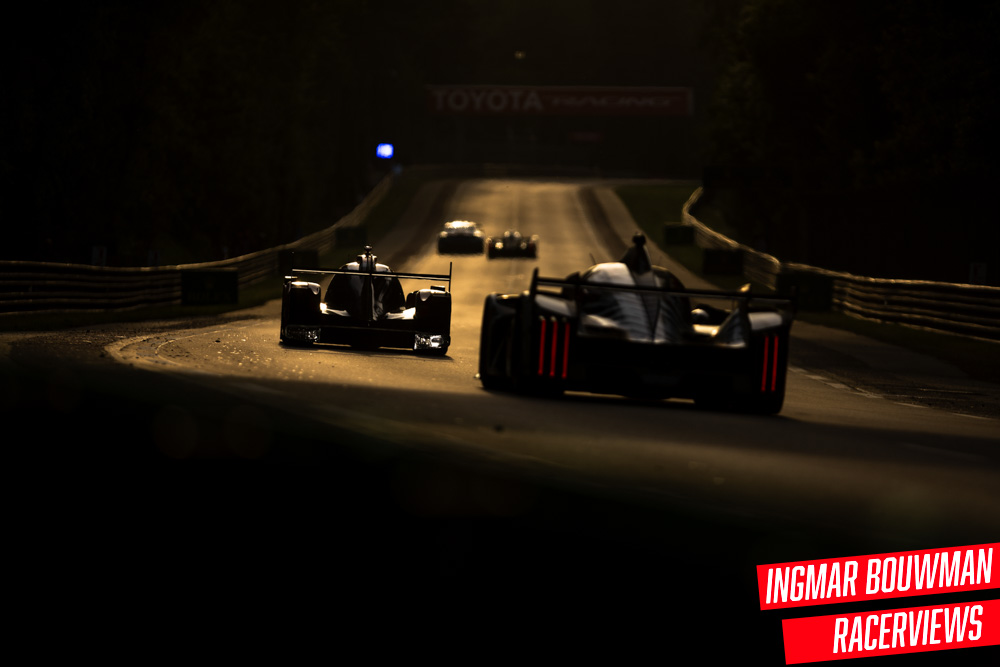
At midnight, the top four were separated by just 45 seconds — Toyota’s early gambit had not broken the field, it had merely lit the fuse.
First Safety Car: Ferrari Trouble, Field Compressed
The night’s first major neutralisation arrived just past the seven‑and‑a‑half‑hour mark.
A side‑by‑side clash between the No.54 Ferrari and a Ford Mustang in LMGT3 triggered the first safety car of the race, dragging the top four Hypercars back into each other’s orbit and erasing the cushion that Toyota’s strategy and BMW’s opportunism had built.
Ferrari’s troubles didn’t end there.
The No.51 Ferrari 499P was handed a drive‑through penalty after Alessandro Pier Guidi was judged responsible for contact with the No.9 LMP2 car, dropping the car down to 10th in Hypercar.
The No.83 AF Corse Ferrari copped a five‑second penalty for an unsafe release, making for a bruising opening half of the race for the defending champions.
As the safety car peeled in, Toyota still led, but the landscape had shifted: the top four were now locked together, nose‑to‑tail through traffic, with strategy gaps reset.
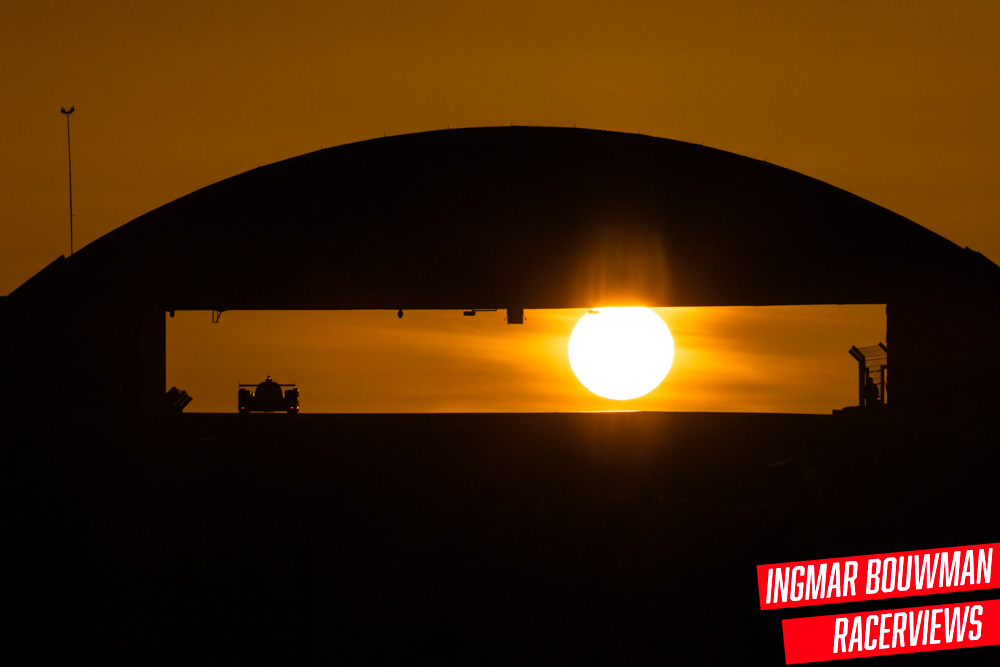
Cadillac vs BMW: The Battle for the Night
As darkness deepened, the race story began to swing decisively toward Cadillac.
In the hours between six and twelve, the No.38 Hertz Team JOTA Cadillac with Sébastien Bourdais at the wheel led a sustained attack, heading the No.20 BMW in a duel that saw the pair separated by only a handful of seconds.
Bourdais, Earl Bamber and Jack Aitken rotated through the night, the Frenchman and the Kiwi using their multi‑class traffic craft to inch clear each time the field spread out.
Highlights footage captured Jack Aitken diving past Sheldon van der Linde to seize the lead, one of several moments where Cadillac asserted itself as the car to beat whenever the track was green and dry.
At the six‑hour milestone, the scoreboard told the story:
No.38 Cadillac leading, No.20 BMW in second, Toyota playing the strategic long game a little further back.
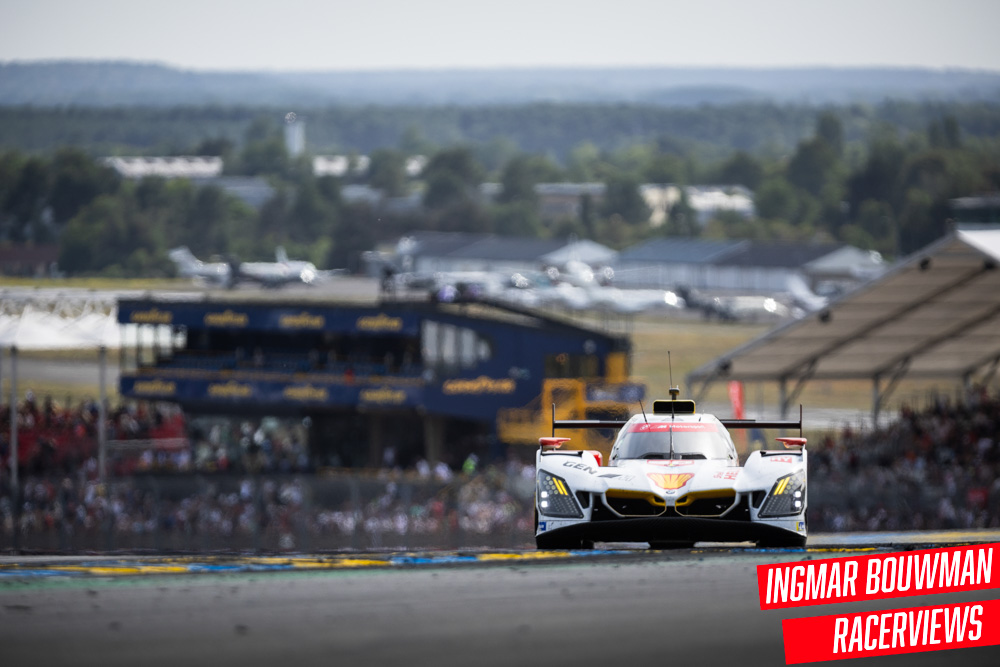
Major Incident: BMW’s Painful Crawl and Garage Time
The race nearly swung away from BMW entirely in the seventh hour.
Contact with an LMP2 car inflicted serious damage on the No.20 BMW, shredding a tyre and forcing the car into a torturous crawl down the Mulsanne Straight and around the full 13.6‑km lap. The Bavarian prototype haemorrhaged time before it finally limped to pit lane, where it was pushed into the garage for repairs.
The episode cost BMW a shot at a “clean” race, but a combination of safety cars, full course yellows, and relentless pace later in the night allowed it to claw back onto the lead lap mix as the early morning approached.
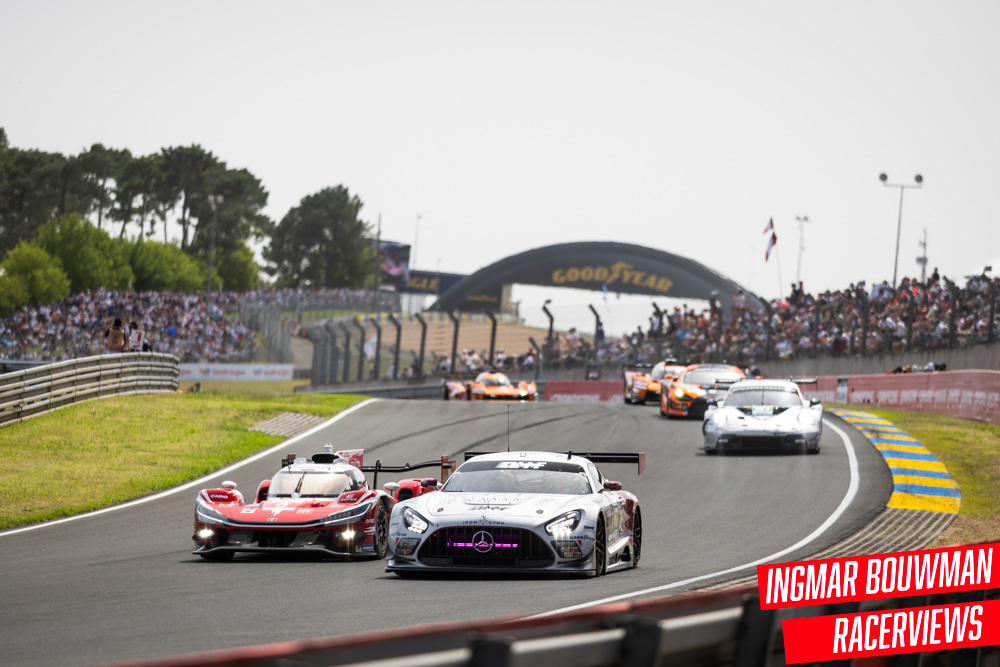
Genesis, Alpine and the Supporting Cast
While the headliners battled, the supporting cast wrote their own chapters.
Genesis continued its steady climb in its debut campaign, hitting “milestone moments” in the Hypercar class and spending time in the top five.
Alpine lurked as the dangerous outsider, one of the few cars able to live with the leaders’ pace over long stints when the traffic rolled their way.
In LMP2, the No.30 Duqueine ORECA held the class lead after eight hours, while teams juggled tyre double‑stints and long night runs.
LMGT3 delivered what the ACO called “razor‑thin margins,” with Lexus and Aston Martin sharing the limelight, the class lead changing hands on pit lane more often than on track.
Le Mans 2026 through the night wasn’t just about who led overall; it was a layered race, each category running its own drama beneath the headline act.
Cadillac’s Dawn Charge: The Gold Car Wakes Le Mans
By dawn, the race had a new and very loud alarm clock.
The ACO’s 16‑hour round‑up — effectively the state of play around 07:00 Sunday — painted a clear picture:
“The V8‑powered No.12 Cadillac Hertz Team JOTA machine was the alarm call Le Mans woke up to this morning; the bright gold Hypercar was in full flight as it tightened its stranglehold on the 94th edition of the 24 Hours of Le Mans, with BMW and Toyota trying to give chase.”
The No.12 Cadillac had cycled into the lead through the night and then started to edge away, its combination of raw pace and fuel efficiency allowing it to keep Toyota and BMW at arm’s length whenever the race stayed green.
Norman Nato underlined that dominance with one of the fastest laps of the race, a 3:26.3‑range effort, emphasising that Cadillac could still find qualifying‑style speed deep into the night.
By around 07:00, the narrative had shifted from “four‑way fight” to “Cadillac trying to escape” — but with the caveat that Toyota and BMW were still well within one pit stop.
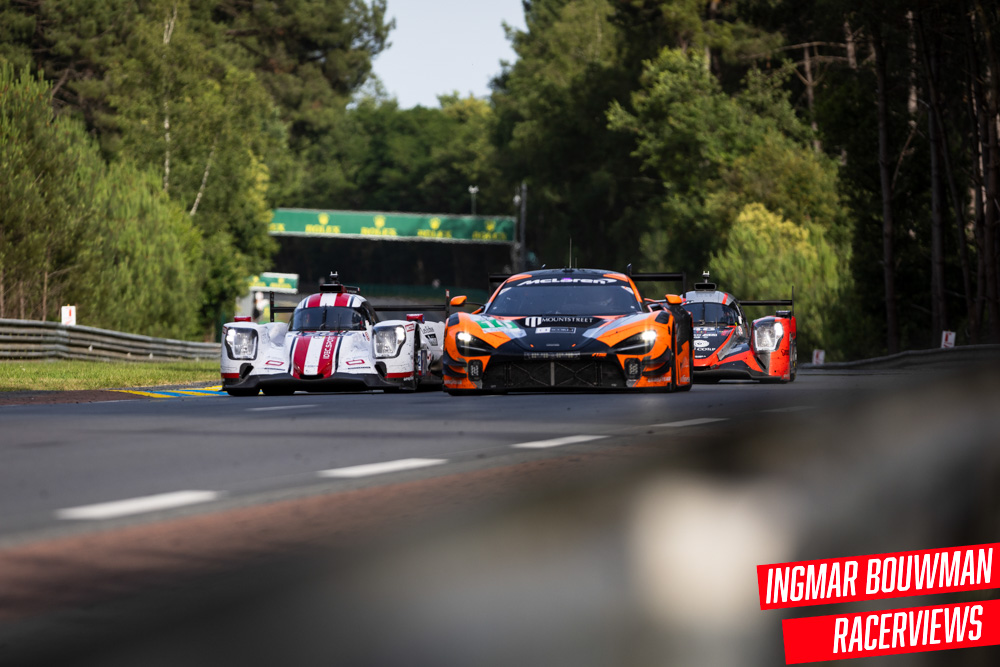
Major Battle: Toyota vs Cadillac vs BMW at Daybreak
Despite the gold Cadillac’s apparent upper hand, the race remained on a knife edge into the early morning.
The No.8 Toyota continued to play the long game, often appearing off‑sequence but using its fuel offset to rejoin the fight each time a safety car or FCY intervened.
The No.20 BMW, battered but not broken, re‑inserted itself into the lead conversation as strategies converged, often emerging from pit cycles directly behind the leading Cadillac.
The No.12 Cadillac held the “official” lead at the 16‑hour snapshot, with the No.20 BMW and No.8 Toyota classified as its primary pursuers — a three‑way fight separated by seconds rather than minutes, depending on where the pit cycle fell.
In the ACO’s words, “glory is still very much up for grabs” as the race approached its final third; Cadillac had stretched its legs, but Le Mans had not yet made up its mind.
Classes in Context: LMP2 and LMGT3 Overnight
While Hypercar drew the headlines, the other classes quietly built their own finales.
LMP2: Tyre Wars in the Dark
In LMP2, the official halfway updates emphasised a “strategic battle over tyres”, with teams mixing double and triple stints to keep themselves in the hunt.
The Duqueine No.30 ORECA led at the eight‑hour mark, with Inter Europol and Forestier by Panis frequently appearing in the top three.
Traffic — particularly through the Porsche Curves and into the Ford Chicane — repeatedly reshuffled the order, with leaders sometimes losing 10–15 seconds in a single lap when they arrived at a GT3 “train” at the wrong time.
LMGT3: Razor-Thin Margins
LMGT3 might yet be the closest class of the race.
The ACO’s 12‑hour summary underlined “razor‑thin margins”, with Lexus, Mustang and Aston Martin all taking turns at the head of the field.
A safety car for a GT clash at hour seven‑and‑a‑half reset the class lead yet again, and by dawn several cars remained on the class lead lap, separated by only a handful of seconds once pit cycles equalised
Where We Stand at 07:00
By roughly 07:00 Sunday, with around 8–9 hours still on the clock, the state of Le Mans 2026 can be summarised as:
Hypercar:
No.12 Cadillac leading and “stretching its legs,” the gold V‑Series.R setting the tone into sunrise.
No.20 BMW and No.8 Toyota the main hunters, frequently reappearing on the Cadillac’s rear wing after each pit cycle or neutralisation.
No.38 Cadillac, Alpine and Genesis close enough to punish any major mistake.
LMP2:
Duqueine and Inter Europol among the key players, the class still wide open with no dominant leader.
LMGT3:
A multi‑brand scrap with Lexus, Aston Martin and Mustang all taking turns in front; margins measured in seconds, not minutes.
Le Mans has drawn its battle lines, but this race — as always — will be decided in the final acts. For now, as the sun rises over the Sarthe, it is a gold Cadillac that wakes the paddock, with Toyota and BMW refusing to let it escape.