Brooklands Museum – 8 August 2026
There are some motorsport venues where you can almost feel the history beneath your feet.
Brooklands is one of them.
As I walked into Brooklands Museum for the Grand Prix Centenary celebration, it was impossible not to think about what had taken place here exactly 100 years ago. On 7 August 1926, Britain staged its first official Grand Prix at this very venue. A century later, the sound of racing engines once again filled the air as Brooklands welcomed a remarkable collection of Grand Prix and Formula 1 machinery to celebrate that milestone.
Take a look at our full gallery here
For someone who spends much of their time photographing and writing about motorsport, this was always going to be a special event. But standing beside the famous banking, looking across what remains of this pioneering circuit, it felt like considerably more than just another day at a motorsport museum.
This was where the story began.
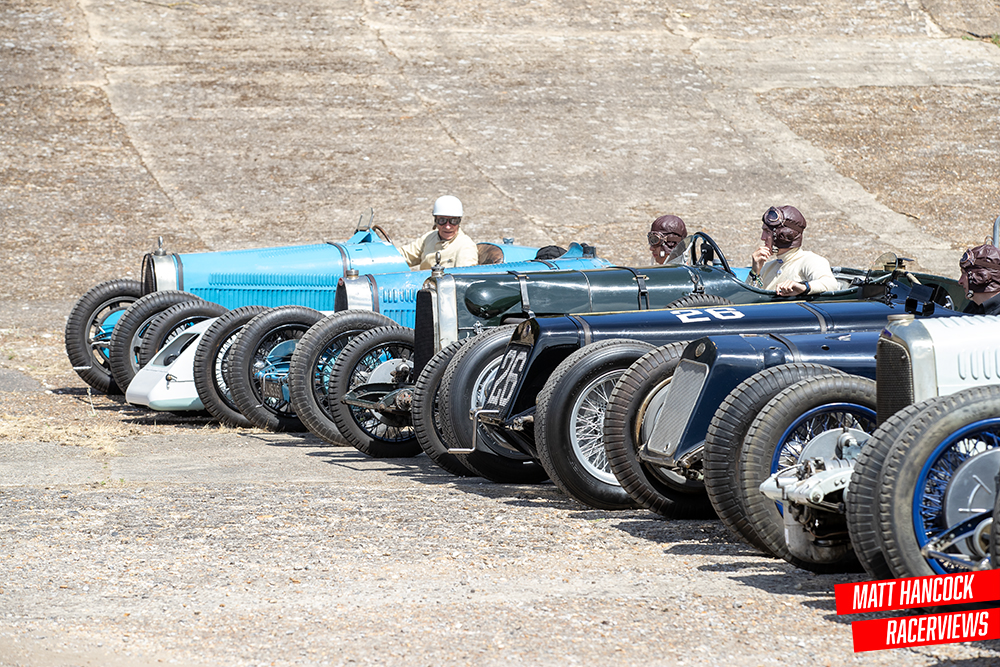
A hundred years in the making
On 7 August 1926, the Royal Automobile Club organised what was officially known as the Grand Prix of the Royal Automobile Club, the event that would become recognised as Britain’s first Grand Prix.
The choice of Brooklands was hardly surprising. Opened in 1907, Brooklands had already established itself as a centre of technological innovation and motor racing. Its imposing concrete banking provided a unique challenge, while the venue’s facilities and reputation made it the natural home for Britain’s first attempt at staging an international Grand Prix.
The 1926 race used a special 2.61-mile configuration incorporating sections of the famous banking, the Railway Straight and Finishing Straight, with temporary sandbag chicanes added to increase the challenge. The race ran for 110 laps – more than 287 miles – and lasted over four hours.
Thirteen cars were entered, nine took the start and only three would complete the full distance.
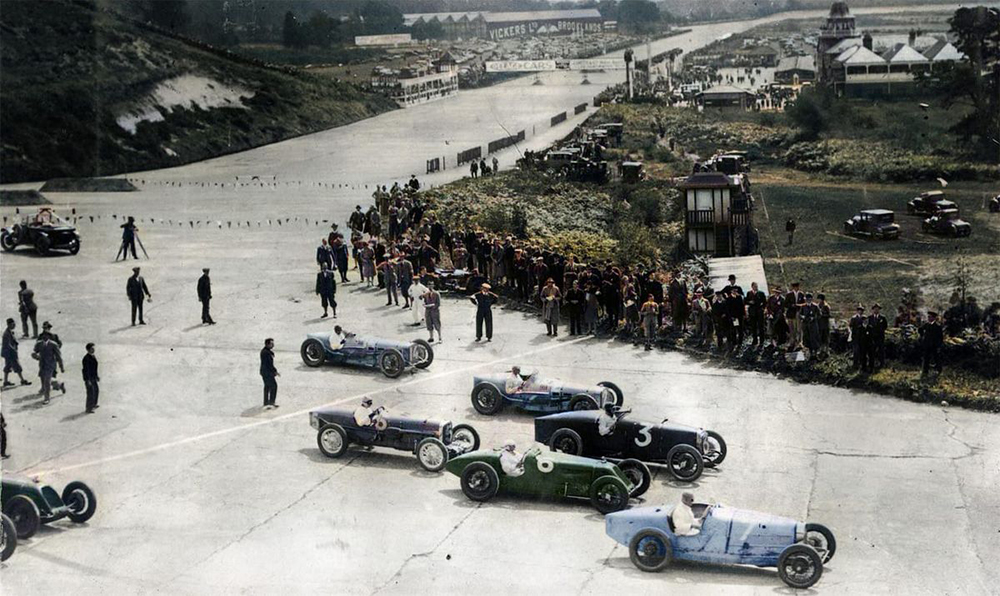
Victory went to the Delage 15-S-8 shared by French drivers Robert Sénéchal and Louis Wagner, while Britain’s own Malcolm Campbell finished second in his Bugatti 39A. Another Delage, driven by Robert Benoist and André Dubonnet, completed the podium.
It was a race that demonstrated just how different Grand Prix racing was in its infancy. Mechanical reliability was as important as outright speed, while the drivers faced heat, vibration and physical punishment that would be almost unimaginable in modern Formula 1.
Indeed, Wagner was forced to repeatedly stop and cool his feet because of the extraordinary heat generated around the Delage’s cockpit.
Yet despite the attrition, the event was regarded as a major success and established the foundations for what would become Britain’s extraordinary contribution to international Grand Prix and Formula One racing.
From Brooklands to Formula One
It is worth remembering that Formula One, as a World Championship, did not yet exist in 1926.
The first Formula One World Championship would not be established until 1950, with the British Grand Prix at Silverstone becoming the opening round of that inaugural championship. However, the roots of British Grand Prix racing stretch back much further, to that pioneering day at Brooklands.
Over the following decades, the British Grand Prix would move between some of the country’s most famous circuits, including Brooklands, Donington Park, Aintree, Brands Hatch and Silverstone.
Names that have become synonymous with British motorsport would follow: Campbell, Segrave, Moss, Hawthorn, Clark, Stewart, Hunt, Mansell, Hill, Hamilton and many more.
The machinery changed beyond recognition, but the fundamental ingredients remained the same – speed, engineering, bravery and the relentless pursuit of performance.
That history was very much in evidence at Brooklands during the centenary celebration.
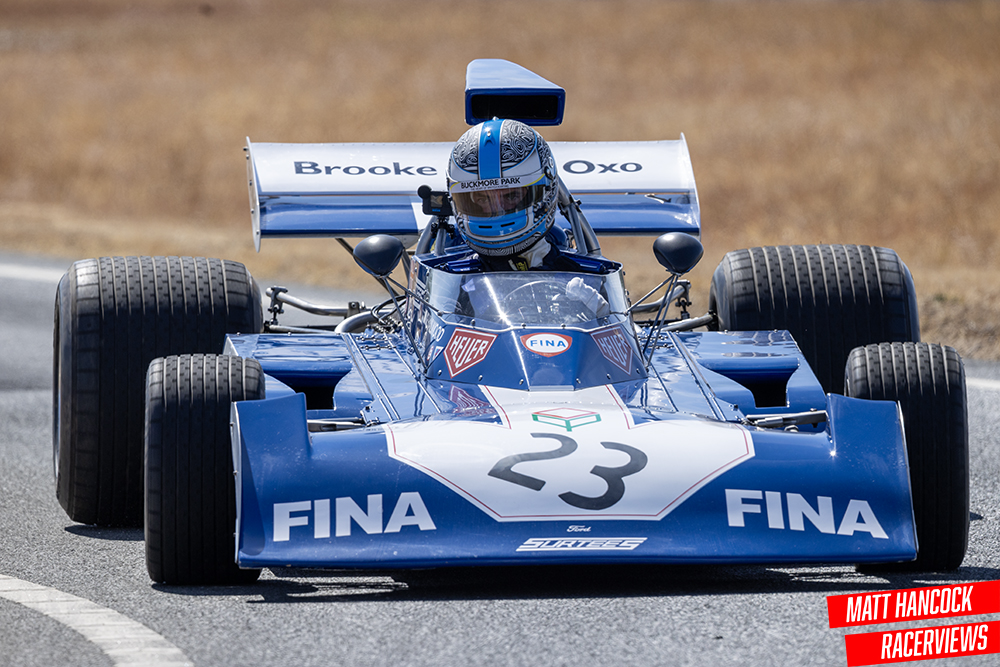
A century of Grand Prix machinery
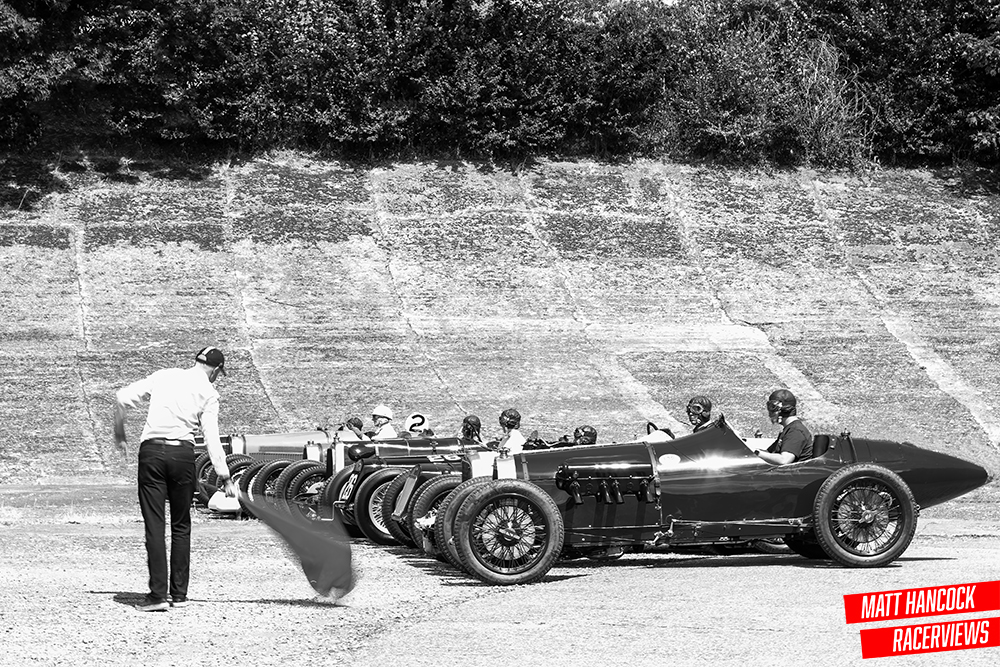
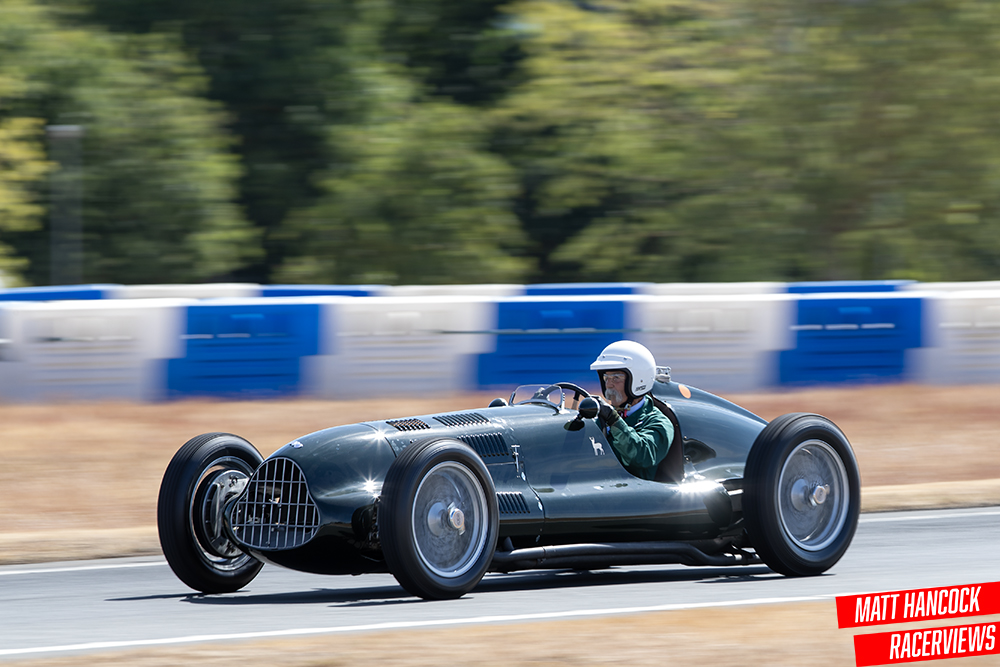
The Museum had assembled an extraordinary collection of cars representing different eras of Grand Prix competition, creating a fascinating visual timeline of technological development.
From the comparatively fragile-looking machines of the 1920s through to the sophisticated engineering of modern Formula 1, the contrast was enormous.
Yet seeing these cars together provided a fascinating reminder that modern Formula 1 did not appear overnight. Every technological breakthrough, every change in chassis design, every improvement in aerodynamics and every advance in engine technology is part of a much longer story.
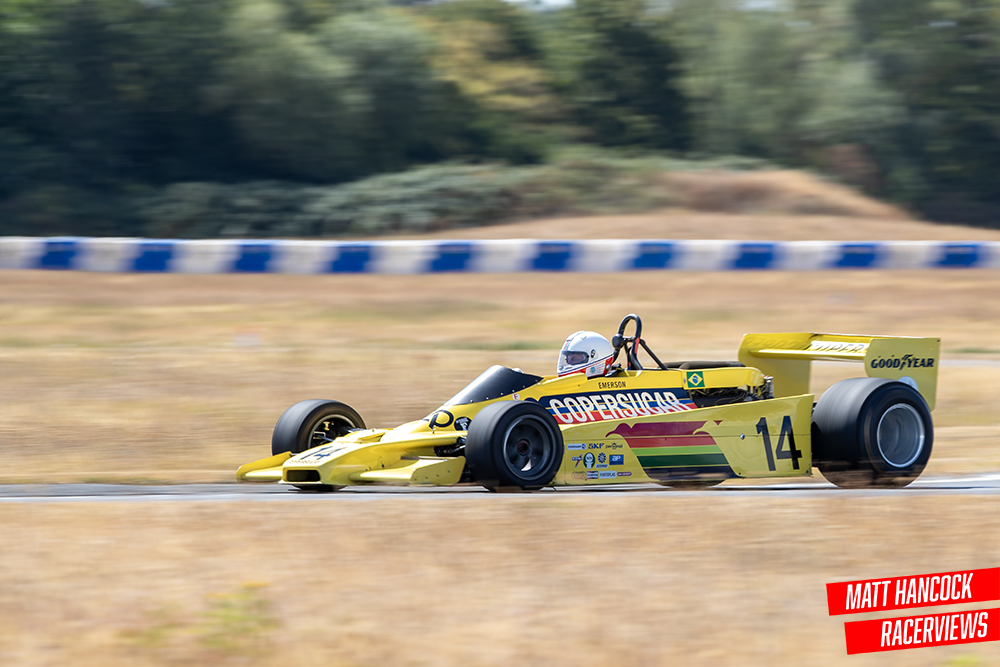
Brooklands Museum’s centenary event promised a glimpse of Grand Prix machinery spanning a century, with cars exiting their normal pride-of-place locations in museums and garages, and back onto the track.
The priceless machines were back, even for just one weekend, to where they belonged.
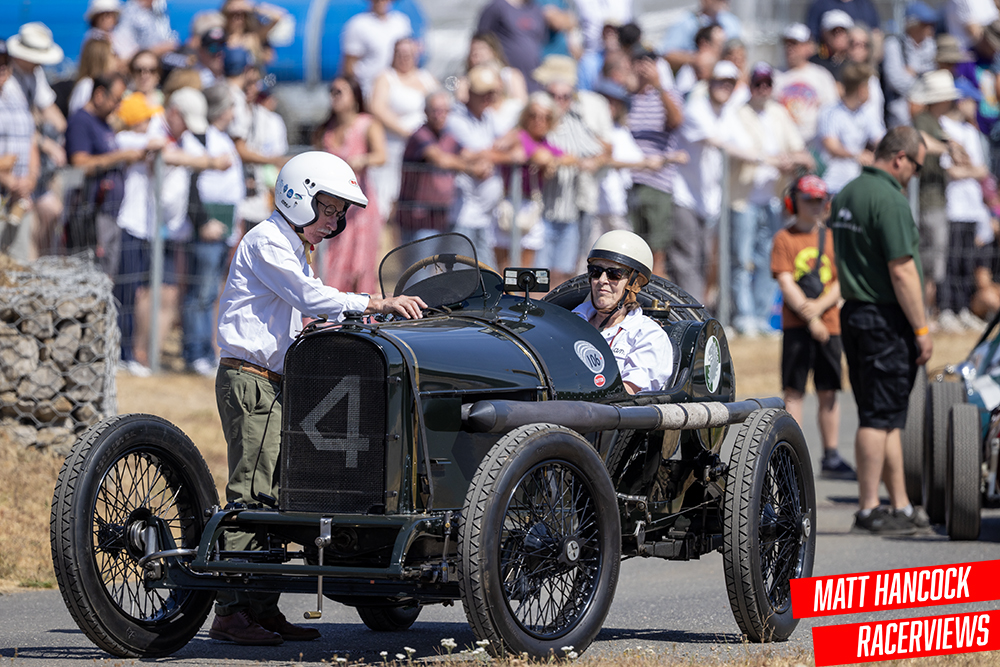
Bringing the past back to life
There is something uniquely powerful about seeing historic racing cars in motion.
A static display allows visitors to appreciate the engineering, the craftsmanship and the history. But when an engine fires, the exhaust note reverberates around the circuit and a car begins moving towards the banking, the history suddenly becomes tangible.
It is what we remember. Why we fell in love with the sport to begin with. Furthermore, it gave a feeling of what motorsport would have been like in the sport’s infancy.
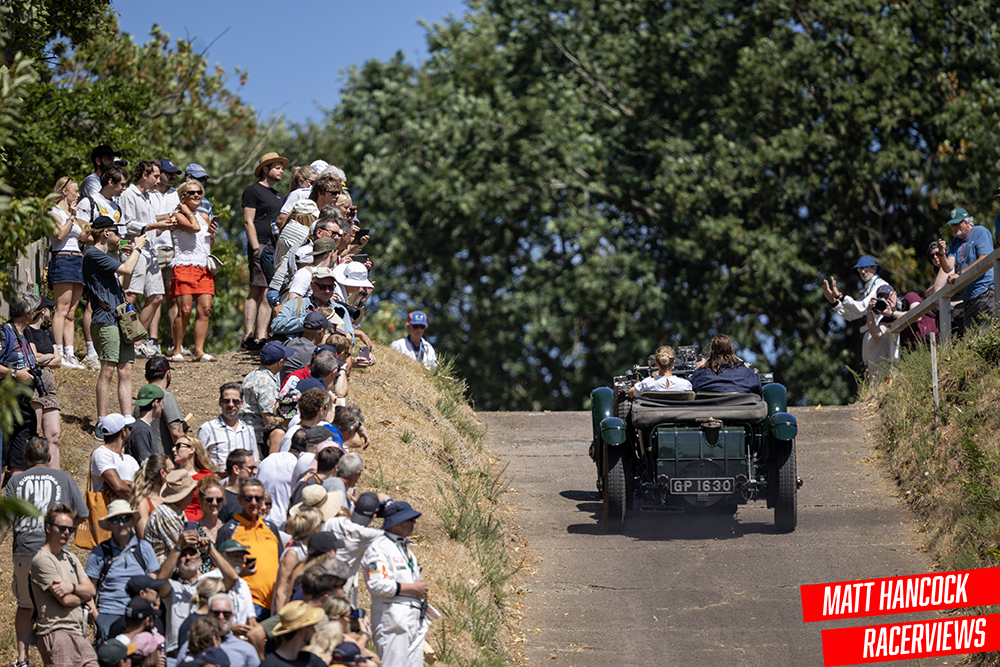
In 1926 there were no carbon-fibre monocoques, hybrid power units, sophisticated telemetry systems or computer-controlled aerodynamics. Drivers wrestled with machinery that demanded enormous physical commitment, while engineers relied upon mechanical understanding and experience rather than computer modelling.
And yet the objective was identical. Go faster than everyone else.
Events celebrating anniversaries can sometimes feel overly nostalgic. This one did not.
While there was certainly plenty of nostalgia, the underlying message was more significant: motorsport is an evolving story.
The cars gathered at Brooklands demonstrated that perfectly.
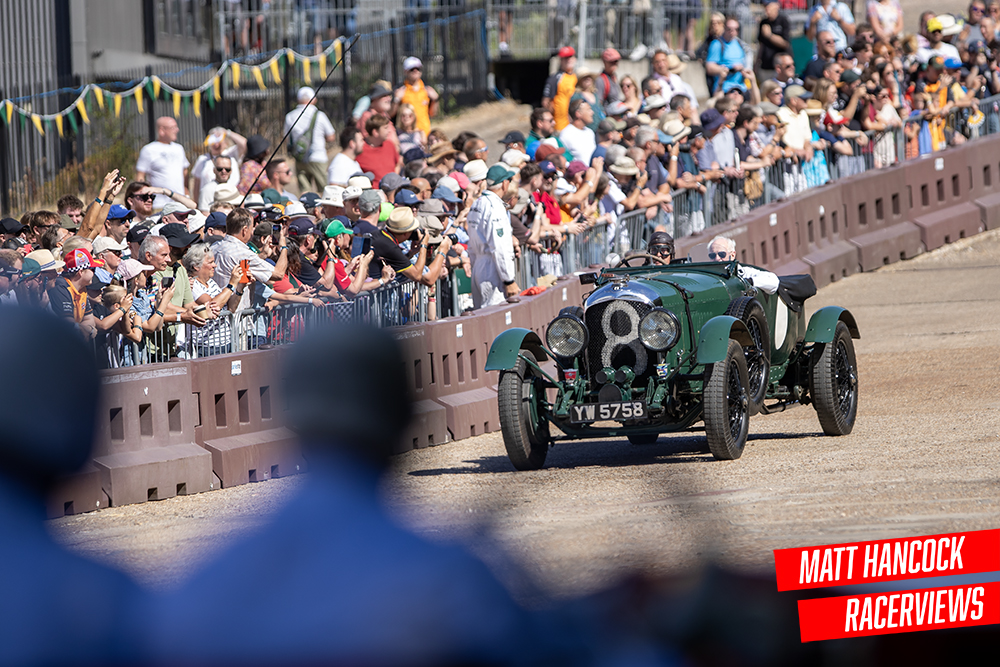
The early Grand Prix machines represented engineering in its rawest form. Later cars showed the development of suspension, aerodynamics, engine technology and driver protection. Modern Formula 1 machinery represents the extraordinary culmination of a century of experimentation.
Seeing all of those eras brought together made it possible to understand that progression.
The event also provided an excellent opportunity for younger visitors to discover that Formula 1’s history did not begin with the television era, nor with the arrival of today’s superstar drivers.
It began with people willing to experiment, and Brooklands was where Britain took one of its biggest steps into international Grand Prix racing.
The RacerViews info
By Matt Hancock
We are passionate, dedicated motorsport professionals.
In 2026 you will see us trackside and stageside with exclusive coverage of
- The World Endurance Championship
- The World Rally Championship
- Belgian Rally Championship
- British GT
- British Rallycross
- and more!
We aim to bring you interviews and photos you won’t see anywhere else. We don’t aim to break the news, rather we aim to bring the voices of the racers to you and the atmosphere of the event to you at home. Our social media presence on Facebook, Twitter and YouTube bring you more, a holistic experience. We partner with racers and professionals in the industry and give back where we can. If we can help you or you have a story to share, please contact us.