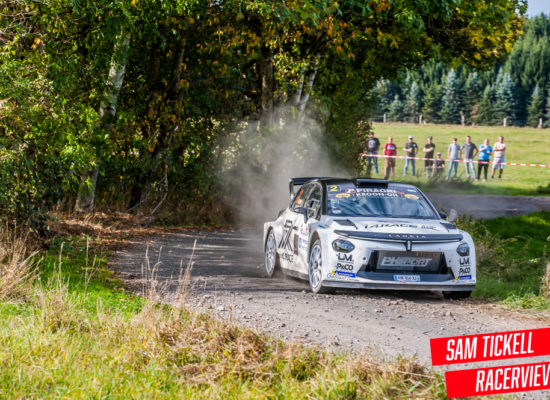
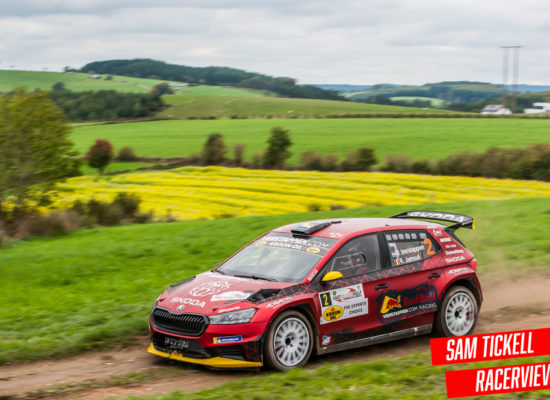
There are rallies that are won on the stages, and there are rallies that are decided in the space between the final flying finish and the podium. The 2026 East Belgian Rally was both.
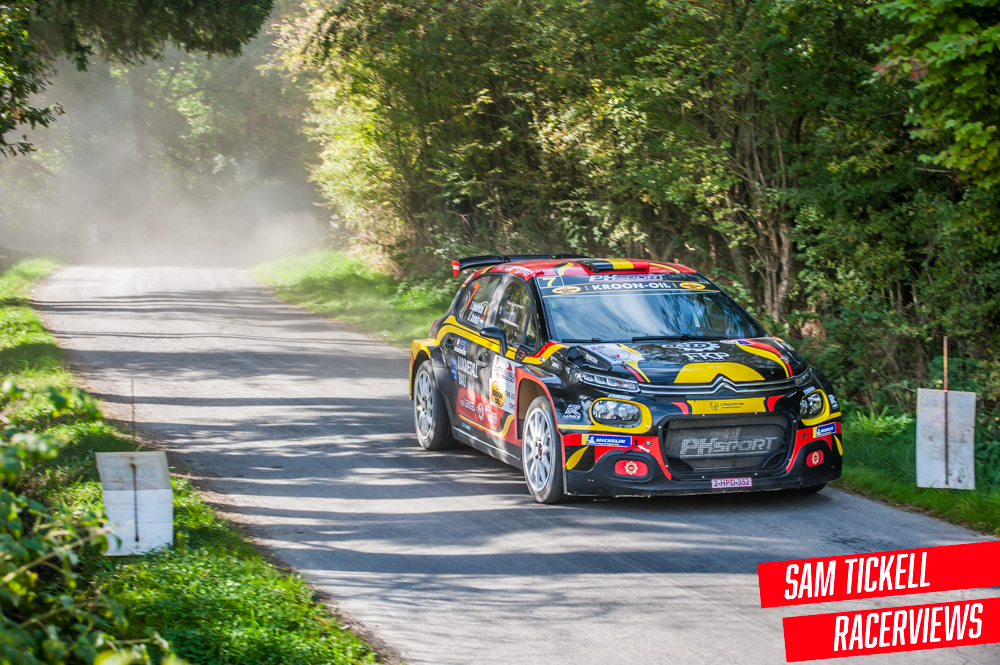
Tom Heindrichs and Jonas Schmitz claimed a landmark home victory on the twentieth running of the event, defeating Maxime Potty and Hugo Cravillon by just 3.5 seconds. Yet the result only became official after Grégoire Munster, who had crossed the finish as the apparent winner, received a two-minute-20-second penalty for speeding on the road section.
That unusual conclusion should not obscure the quality of Heindrichs’ performance. The victory was not inherited; it was built across a long, demanding day in the East Belgian Ardennes, through pressure, mechanical uncertainty and the sort of late-rally tension that makes regional competition so compelling.
The East Belgian Rally remains one of the Belgian calendar’s most distinctive events. Based around Sankt Vith, it takes place across the rolling roads of the German-speaking part of Belgium, where the landscape can appear calm and pastoral until the cars arrive. The 2026 route covered 138.15 kilometres of competition over 12 stages, with the four tests—Büllingen, Bütgenbach, Sankt Vith and Burg-Reuland—each repeated three times. Including liaison sections, the rally extended to almost 420 kilometres.
Heindrichs refuses to fade
Heindrichs entered the event with a compelling narrative. A local driver competing in the headline Rally2 class, he was making his first Belgian championship appearance of the season and his first home rally in the category. Alongside Schmitz, he had the opportunity to turn local knowledge and local support into something more substantial than atmosphere.
For much of the day, however, Munster appeared to have the upper hand. After eight stages, the Hyundai crew held a lead of only 6.9 seconds, but that margin represented control in a rally where the gaps could change quickly. Heindrichs remained close enough to punish any hesitation, while Munster carried the burden of defending at the front.
The decisive sequence came on the final loop. Munster encountered trouble that affected the Hyundai’s braking performance and made a mistake. After stage 10, Heindrichs moved into the lead by 3.1 seconds. Munster’s team managed to repair the problem on the following road section, allowing him to continue and reduce the deficit to 2.8 seconds. Then Heindrichs made his own error on the closing kilometres, handing the advantage back to Munster.
On the road, it looked as though Munster had rescued the victory. At the finish, he was the winner.
Then came the stewards.
The result changes again
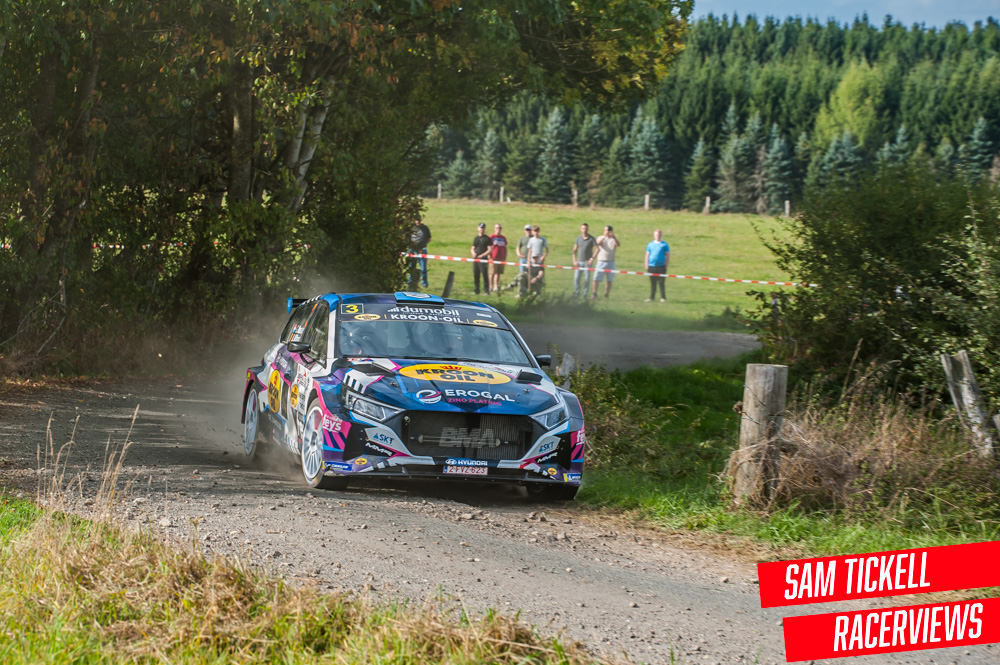
Munster was called before the sporting officials after being recorded speeding at two locations on a liaison section. The resulting penalty totalled 140 seconds and dropped the Hyundai crew to seventh place.
That transformed a dramatic near-miss into Heindrichs and Schmitz’s first Belgian championship victory. Potty and Cravillon finished second in the Lancia Ypsilon, 3.5 seconds behind, while Thomas Martens and Tom Buyse completed the podium in their Hyundai, 17 seconds behind the winners.
The penalty is an uncomfortable but important part of the story. Rallying is often narrated through stage times, but the discipline of the road sections is fundamental to the sport. Competitors share public roads, operate within strict safety limits and remain subject to regulations after the helmets come off and the stopwatch stops. Munster’s mistake was costly precisely because the rally had not ended when he crossed the last stage finish.
For Heindrichs, the circumstances may have altered the final classification, but they do not diminish the pressure he applied throughout the day. He had forced Munster to keep responding, recovered from his own late error and remained close enough for opportunity to matter.
That is not a hollow victory. It is a rally victory in its most complete form: speed, endurance, resilience and compliance.
Potty’s different kind of success
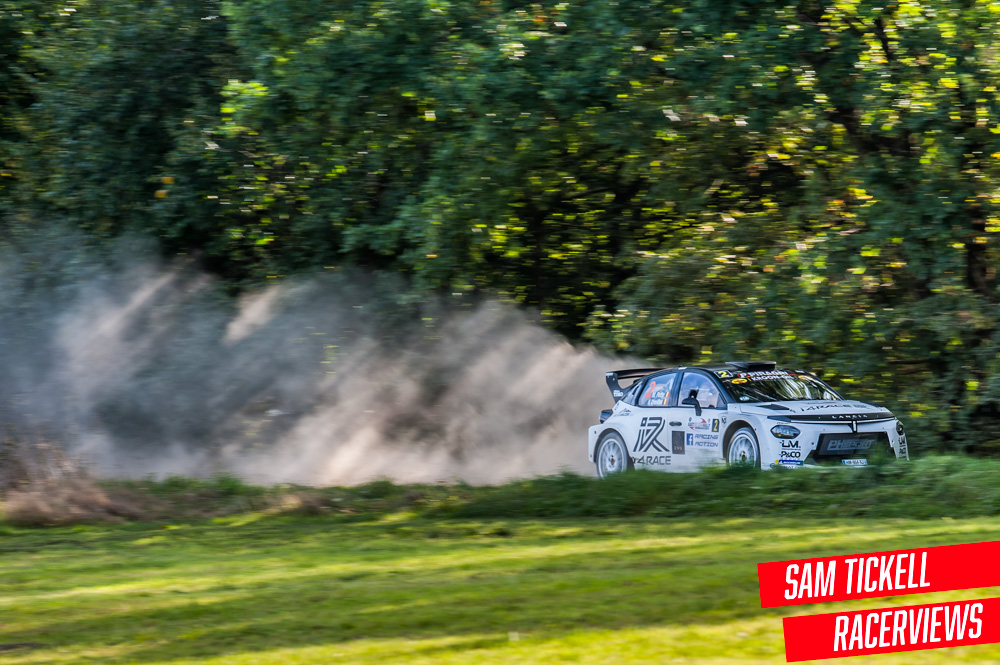
Maxime Potty arrived in Sankt Vith with the Belgian title already secured following the cancellation of the Boucles Chevrotines. His rally therefore lacked the championship pressure carried by Munster and Heindrichs, but his second-place finish remained a useful demonstration of consistency.
Potty was also competing without regular co-driver Renaud Herman, who had recently become a father. Hugo Cravillon stepped into the seat, and the pairing immediately delivered a podium result in the Lancia Ypsilon.
There was a neat contrast at the front of the field. Heindrichs was chasing a first major home success; Potty was racing without the need to prove a championship outcome; Munster was trying to convert pace into a result after technical trouble. Each crew approached the same roads with a different burden.
That is one reason Belgian national-level rallying remains so watchable. The entry list contains drivers fighting for titles, careers, reputation and enjoyment at the same time.
The Porsche subplot
If the Rally2 battle supplied the competitive tension, the Porsche Rally Trophy Benelux provided much of the spectacle.
Eight Porsche 911 GT3 Cup cars equipped with Rally GT kits appeared on the entry list, bringing a distinctive combination of rear-engined traction, high-revving performance and circuit-derived aggression to the East Belgian stages. John Wartique and Maxime Andernack produced the strongest result, winning their class, taking fourth overall and setting the Power Stage’s fastest time.
Their victory had championship consequences. Wartique moved into the lead of the Porsche Rally Trophy Benelux standings with 155 points, ahead of Loïc Pirot on 143 and Romain Delhez on 111. Pirot finished second in the class, while Delhez suffered a major setback after leading by 12.7 seconds in the final loop before problems ended his challenge.
The Porsche field also illustrated the breadth of the event. Thomas Anacleto and Marie Stirling were among the fastest crews on stage, setting the outright best time three times despite still learning the Sankt Vith roads. A puncture on Büllingen 2 was followed by an off-road excursion and retirement, a concise reminder that spectacular speed is often accompanied by a narrow margin for error.
Johan Dekens had looked set for a strong Masters result before going off on the penultimate stage. Local entrant Rainer Hermann also retired after suffering rear suspension damage. The 911s added theatre, but the rally demanded the same restraint from them as from every other car.
A strong local presence
The East Belgian Rally works best when the international and local dimensions coexist. More than 90 teams contested the event, and the field included a substantial group of crews from the surrounding region.
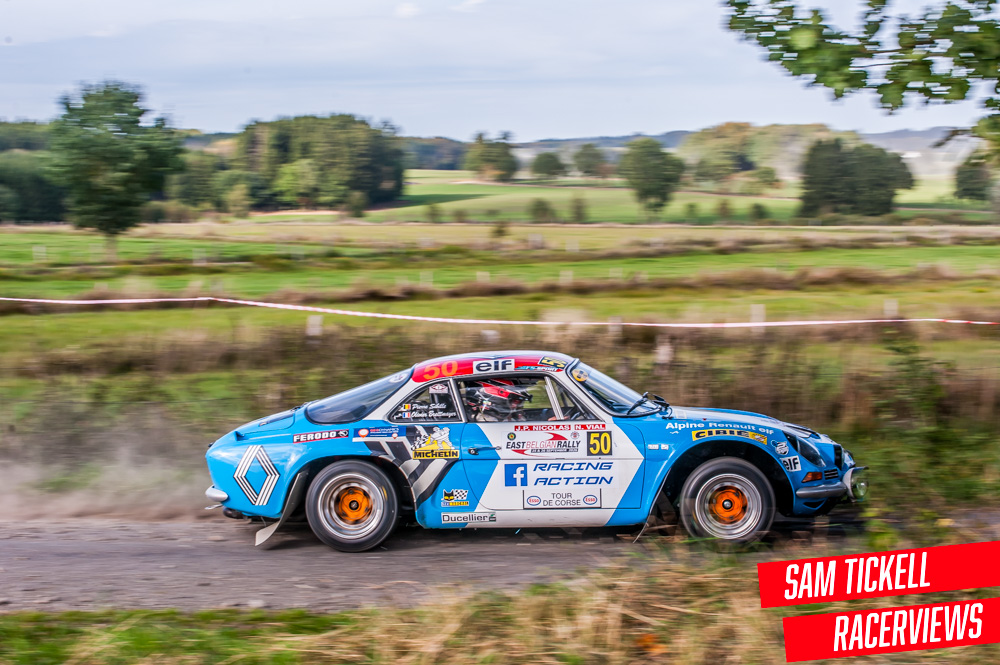
Kevin and Marco Hommes finished 18th in a Citroën C3 Rally2, while Sergio Plattes and Andreas Palm took 21st overall and third in the Stellantis Cup. Dany Born and Céline Velz won the RC5 class in their Renault Clio Rally5, finishing 38th overall. In Historic, Reiner and Angelo Feltes reached third in class and 43rd overall.
These results are more than an appendix to the overall classification. They show the rally’s role as a regional sporting institution. For the leading crews, the event is a championship round; for many local competitors, it is the largest occasion of their season, bringing them into the same competitive space as factory-supported or professionally developed cars.
The entry list also reflected the event’s cross-border character, with Belgian, Luxembourgish, German and international participants moving through the same compact community network around Sankt Vith.
The emotional complexity of the weekend
The event also carried a tragic note. Richard Malpass, a 72-year-old British participant in the non-competitive Slowly Sideways demonstration, died after suffering a heart attack following the first run at Büllingen. Emergency services responded quickly, but he could not be saved.
That loss placed the weekend’s sporting drama in a different frame. Rally events are communities as much as competitions, and the paddock contains competitors, organisers, marshals, volunteers, photographers and spectators whose connection to the sport extends beyond the classification.
It is appropriate to celebrate Heindrichs and Schmitz’s victory while acknowledging the seriousness of what occurred away from the headline battle. A mature rally report must hold both truths: the exhilaration of competition and the vulnerability of the people who make the event possible.
A victory with resonance
The 2026 East Belgian Rally offered a close Rally2 contest, an emerging local winner, a championship already settled at the top but still meaningful lower down, spectacular Porsche machinery, class battles extending through the field and an ending shaped by sporting regulations as much as stage performance.
For Heindrichs and Schmitz, the result will be remembered as a first Belgian championship victory and a home success. For Munster, it will be remembered as the rally that escaped twice: first through mechanical trouble, then through an avoidable road-section penalty. For Potty, it became another podium in a title-winning season. For Wartique and Andernack, it was a decisive step towards the Porsche Rally Trophy Benelux crown.
Just one rally to go in the season with the Spa Rally taking place at the end of November.