
Formula E has often been judged against its own previous generation. At Jarama, GEN4 finally offered a broader comparison.
Edoardo Mortara’s 1:24.344 on the opening day of pre-season testing was not merely the fastest lap of the day. It placed Formula E’s new car in a different performance conversation. It was around five seconds quicker than the best GEN3 Evo test lap at the same circuit, roughly five seconds under the fastest GEN3 Evo lap from the 2026 Madrid ePrix, and quicker than the circuit’s listed LMP2 benchmark.
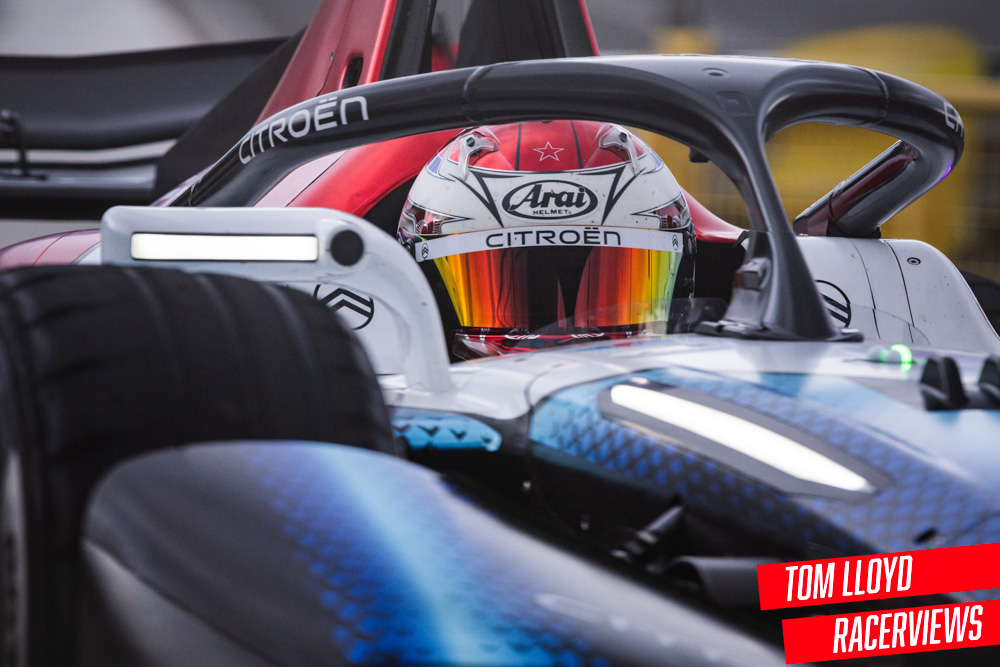
That does not make GEN4 an LMP1 car, and it certainly does not make it a Formula 1 car. But it does make a more persuasive argument than Formula E has often been able to make. This is a single-seater with genuine circuit-racing performance, rather than a category whose appeal rests principally on its urban setting and sustainability message.
A different kind of Formula E
GEN4 is not an incremental update. It brings 600 kW in Attack Mode and qualifying, 450 kW in race trim, a 55 kWh battery, permanent all-wheel drive and regeneration of up to 700 kW.
The result is a car that should feel fundamentally different from the GEN3 Evo. It has more power, more downforce, more energy to manage and a much broader electronic toolkit. It also asks drivers to rethink traction, braking, energy deployment and race management.
António Félix da Costa captured that sense of discovery after the opening days at Jarama.
“This new generation car has been a real head scratcher. I feel like every time I go out on track, I get more confused, and it’s a good thing, because we just keep on unlocking potential and discovering new things.”
— António Félix da Costa
His view was ultimately positive.
“The car is a real joy to drive. It really does push the driver, and I think hopefully we can pass that on to you guys, to the media and to the fans.”
— António Félix da Costa
That is an important distinction. GEN4 is not simply a more powerful Formula E car. It is a machine that changes the kind of driving Formula E demands.
Against Formula E’s recent past
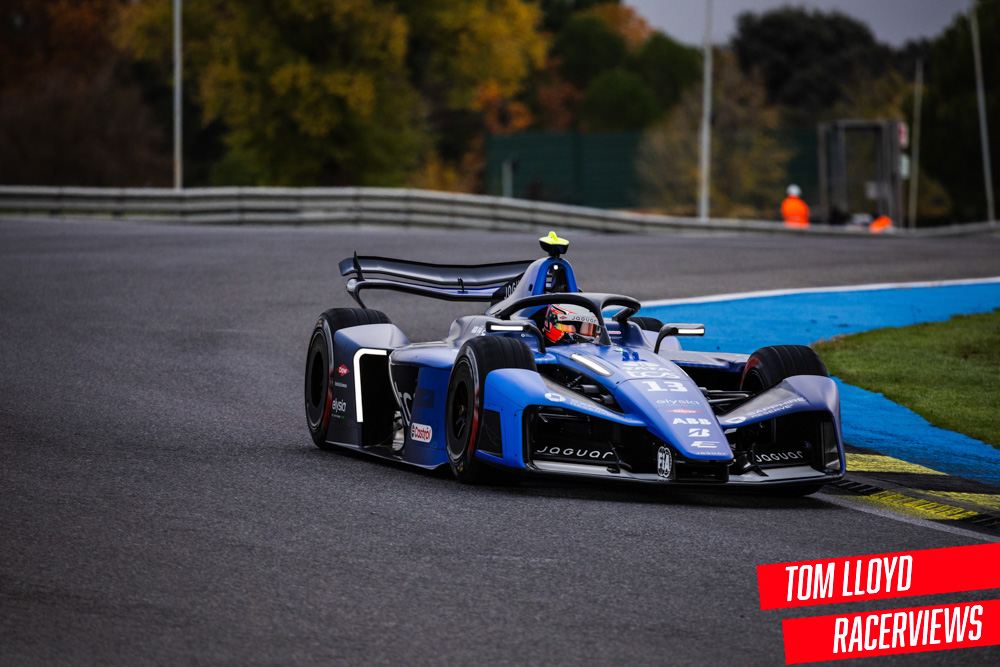
The most relevant comparison is with the GEN3 Evo. At the Madrid ePrix in March, Dan Ticktum set the fastest Formula E lap of the weekend, a 1:29.403 in first practice. Mortara’s GEN4 test lap was 5.059 seconds faster.
The comparison needs a caveat. The March ePrix was run in cold and wet conditions, while the November test took place in a controlled environment with teams able to pursue performance programmes. A direct lap-time comparison is therefore indicative rather than definitive.
Even so, the scale is striking. Racer reported that the fastest race lap at last season’s Madrid ePrix was 1:32.941, making Mortara’s test time more than eight and a half seconds quicker.
The cleaner comparison is with the GEN3 Evo test at Jarama two years earlier. Mitch Evans set a 1:27.461 then; Mortara’s GEN4 lap was 3.117 seconds faster.
| Benchmark | Driver | Car | Time | Gap to GEN4 |
|---|---|---|---|---|
| GEN4 test, 2026 | Edoardo Mortara | Mahindra GEN4 | 1:24.344 | — |
| GEN3 Evo test, 2024 | Mitch Evans | Jaguar GEN3 Evo | 1:27.461 | +3.117s |
| GEN3 Evo ePrix fastest practice lap, 2026 | Dan Ticktum | Cupra Kiro GEN3 Evo | 1:29.403 | +5.059s |
| GEN3 Evo ePrix fastest race lap, 2026 | — | GEN3 Evo | 1:32.941 | +8.597s |
The first number is the most credible measure of the technical step. The second is the most dramatic, but it compares a test lap with a race lap under very different conditions.
Against other machinery…but on a different layout
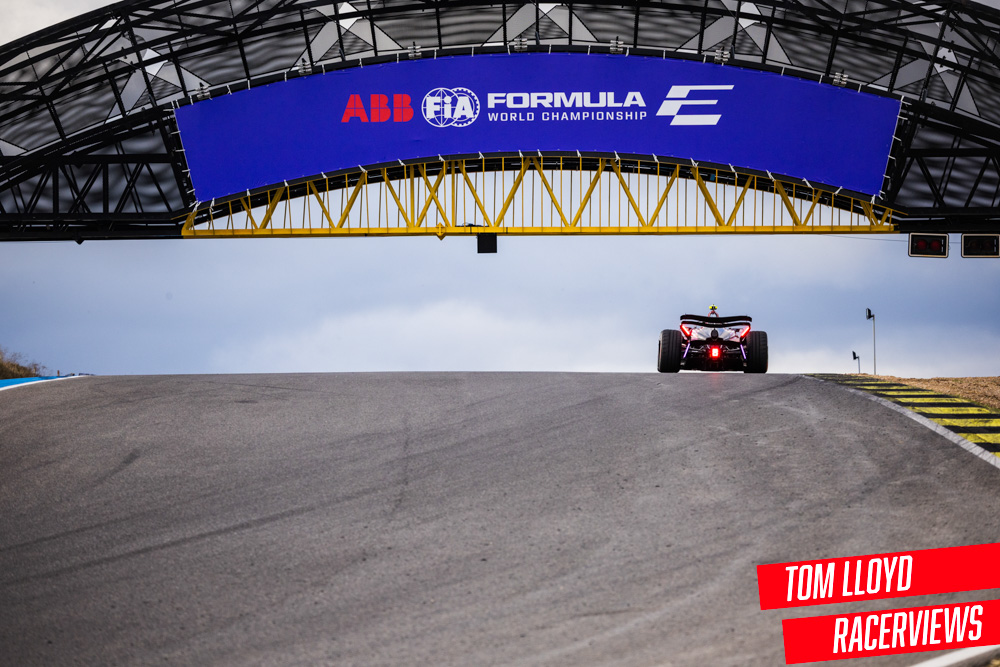
Jarama has a long and varied motorsport history. It hosted nine Formula 1 Spanish Grands Prix between 1968 and 1981, and 15 Spanish motorcycle Grands Prix between 1969 and 1988. The circuit was lengthened in 1991, creating the current 3.850 km layout.
That history gives GEN4 a useful frame of reference.
| Category | Driver | Car | Time | Context |
|---|---|---|---|---|
| Formula 1 | Alan Jones | Williams FW07B | 1:15.467 | 1980 Spanish Grand Prix race lap record |
| Superleague Formula | Yelmer Buurman | Panoz DP09 | 1:20.011 | 2009 Jarama round. |
| Formula E GEN4 | Edoardo Mortara | Mahindra GEN4 | 1:24.344 | 2026 pre-season test. |
| LMP2 | Miguel Angel Castro | Lola B05/40 | 1:26.138 | 2006 1000 km of Jarama. |
| Formula E GEN3 Evo | Mitch Evans | Jaguar GEN3 Evo | 1:27.461 | 2024 pre-season test. |
The Superleague Formula reference is particularly interesting. Yelmer Buurman’s 1:20.011 in a Panoz DP09 remains the listed Superleague Formula benchmark at Jarama, putting that car 4.333 seconds ahead of GEN4’s current test time.
That is not a damaging comparison for Formula E. Superleague Formula was a V12-powered single-seater series built around football-club branding, and its cars were designed for outright circuit performance rather than energy efficiency or urban racing. But it does illustrate the gap Formula E is trying to close.
GEN4 is still around four seconds slower than that Superleague Formula reference. It is, however, now clearly in the same broad performance territory as serious circuit machinery, rather than being defined only by the constraints of a street circuit.
The Formula 1 caveat – meaningless but fun comparison
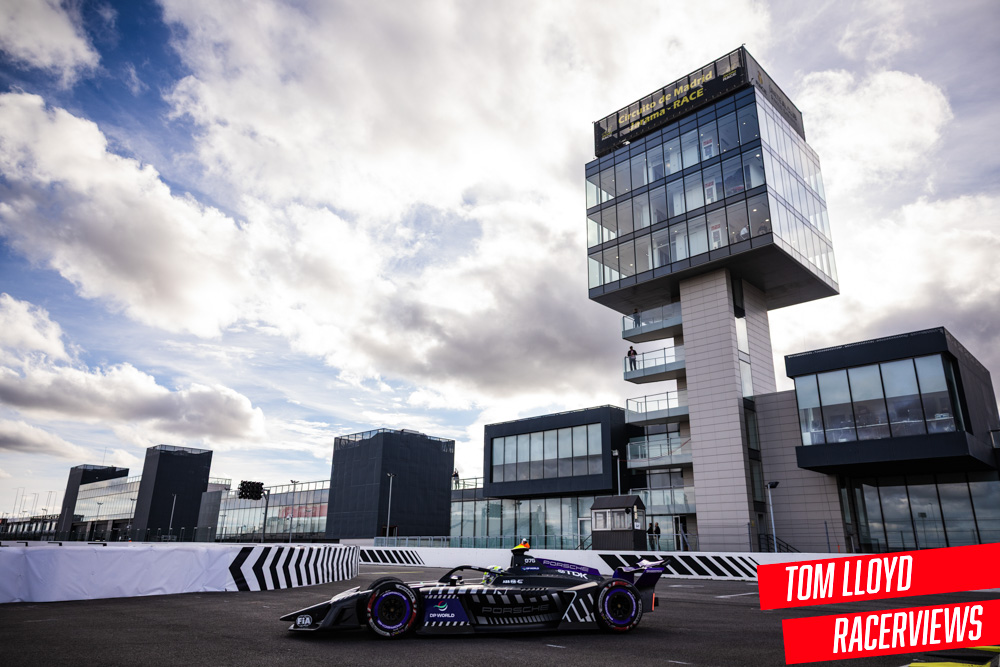
Formula 1’s 1:15.467 race lap record belongs to Alan Jones in a Williams FW07B at the 1980 Spanish Grand Prix. Gilles Villeneuve’s 1:16.440 in a Ferrari 312T4 is also frequently cited, although the two were set on different circuit configurations.
These times should not be used to claim that GEN4 is “nine seconds off Formula 1”. The 1980s cars ran on a shorter, older layout, while the current Jarama configuration dates from the 1990 revisions.
The more honest comparison is directional. Formula 1 remains in a different performance universe. But GEN4’s 1:24.344 is close enough to credible circuit-racing benchmarks that Formula E can now make a performance argument without needing to apologise for the category’s electric identity.
Why this matters
Formula E’s challenge has never been a lack of technical ambition. It has been the difficulty of convincing a motorsport audience that the product is fast, demanding and worth watching.
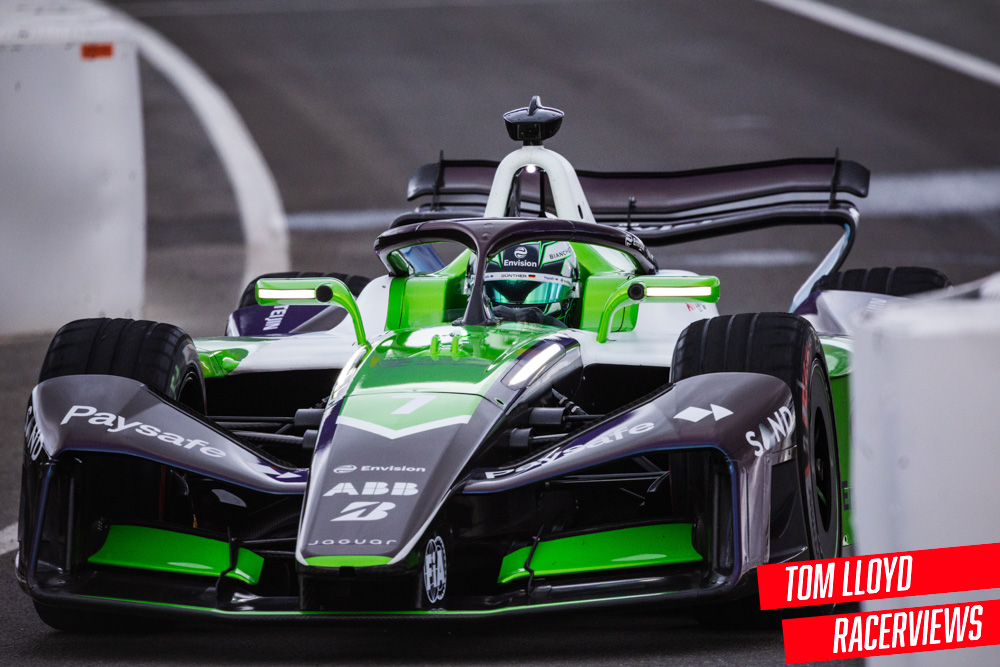
GEN4 changes that proposition. It is visibly faster than its predecessor, and Mortara’s opening-day lap was almost ten seconds under the GEN3 Evo benchmark from the Madrid ePrix, even if conditions make a precise comparison impossible.
The important point is not that GEN4 beats every car that has ever visited Jarama. It does not. The important point is that it now belongs in the conversation.
Formula E has spent much of its existence explaining why it is different. With GEN4, it has a chance to show that it is also fast.