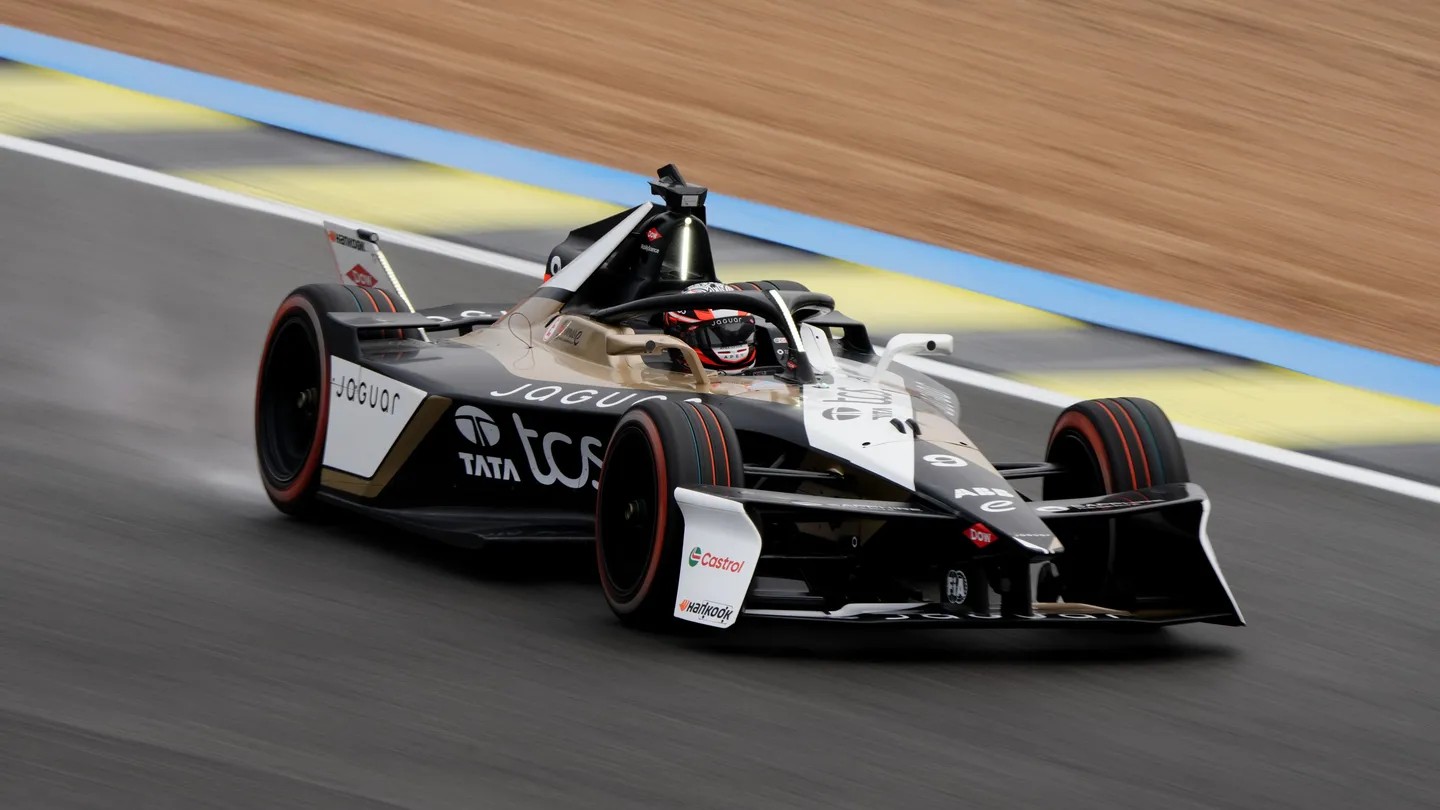
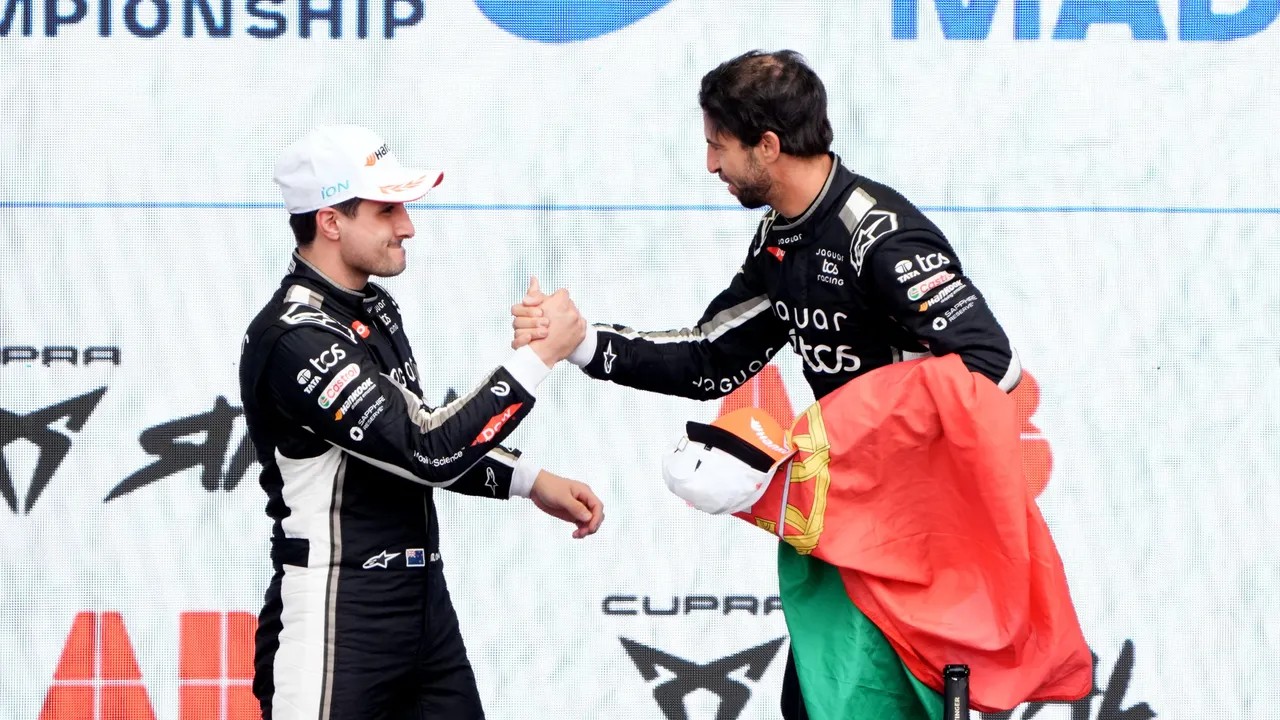
Madrid’s inaugural Formula E race did not unfold as a polite curtain‑call but as a tightly wound, strategy‑driven thriller that felt more like a tightly edited motorsport documentary than a street‑circuit exhibition. On the Jarama billiards table, António Félix da Costa and Jaguar used every lever at their disposal—energy maps, regen calibration, and positioning—to prise open a window of victory, while Pascal Wehrlein’s measured third‑place finish quietly cemented Porsche’s grip on the championship. Formula E, for once, felt less like a technological showcase and more like a proper race series where tactics and timing were as decisive as power units.
The chess‑game start
From the opening laps, Madrid read like a typical Formula E script: a cluster of cars rotating early braking zones, searching for the optimal balance between attacking now and conserving for the second half. The first real twist came on the fresh‑tire wave on Lap 4, when Robin Frijns and Nick Cassidy elected to jump ahead of Mitch Evans, squeezing the Kiwi into a conflicted train. By Lap 8, Da Costa had already begun to impose himself, muscling past Cassidy and then Jos Butt‑Stetzer, signalling that Jaguar were less concerned with clean‑air theatre and more with forcing a rhythm that suited their own energy‑management plan.
When the first sudden‑braking pile‑up unfolded on Lap 10, it was Formula E’s usual cocktail of congestion and over‑braking—cars bunching up, drivers probing thresholds, and rear‑end instabilities spelling out “mistake ahead.” Alexander Sims’ spin‑cum‑barrel‑roll and the consequent detritus of carbon‑fibre and dust reshaped the race in a heartbeat, bunching the field, deploying a safety‑car, and forcing everyone to recalibrate their energy and tyre budgets. Under double‑yellow flags, the net was cast wide, and the drivers switched from pure racing mode to a kind of rolling computation: how much can I afford to spend now?
Mid‑race recalibration
The post‑SC restart amplified the numbers‑game. Oliver Rowland, Nico Müller, and André Lotterer, who had all been creeping upwards, now found themselves with a deceptively short window to attack before the mandatory energy‑saving phase tightened the field again. Rowland, pushing from the midfield, nearly unpicked André Lotterer into Turn 1, but Müller’s well‑judged defence blocked the move and reasserted the hierarchy. For a moment Madrid looked like a conventional circuit race, but the underlying tension never relaxed: regen levels, tyre temperatures, and delta‑to‑car‑ahead all feeding into a collective white‑board of shifting margins.
Amid that, the real drama unfolded further up the order. In the Jaguar camp, Mitch Evans and Da Costa were playing a high‑stakes game of one‑two choreography. Initially, Jaguar were running in second and third, but the decision to push Evans ahead of Da Costa— both to clear the Brazilian and to give him a cleaner line into the chicane—backfired. The passing forced Jaguar to push harder to refuel those two positions, burning more energy than planned. As the commentators dryly noted, “you always have to push the car in front of you to get past,” and in this case, the extra effort cost Jaguar that ideal rhythmic balance.
The driver‑switch turn‑points
The first major emotional pivot came when Stoffel Vandoorne, who had been hovering in the top five, inexplicably lost control and slid into the gravel. The replays showed a controlled, almost choreographed drift into the run‑off, followed by a slow, almost contemplative exit—like a driver consciously deciding that the possibility of loss was preferable to the risk of a full‑on collision. Formula E, for all its electric purity, still has these quietly theatrical moments where a driver’s ego and the team’s risk‑calculus collide. Vandoorne later admitted he “had a bit of trouble” managing the car, but the underlying subtext was that he did not want to compromise his teammate’s position through a rash move.
For Jaguar, the real setback came when Evans’ car lost its rear‑end stability and he spun into the gravel, forcing a pit‑stop that cost him pace and position. The loss of front‑end grip and resultant drag‑race of strategy calls meant that Jaguar had to go from the attack to a damage‑limitation play mid‑race. Da Costa, by contrast, was able to hold his line and manage his energy more efficiently, unshackled from the need to constantly hustle car‑ahead. That small freedom—one driver liberated from the other’s errors—became the decisive difference as the race entered its second half.
The end‑of‑race strategy squeeze
As the final laps approached, the race morphed into a series of micro‑battles choreographed by energy‑charts. The mandatory second safety‑car period, triggered by a multi‑car tangle involving da Costa, Cassidy, and Müller, compressed the field yet again and forced everyone to reset their terminal laps. The safety‑car window became a tactical chess‑move: some drivers elected to push early, others to squirrel energy for a final‑lap surge. In the Jaguar camp, Evans’ earlier pit‑stop and compromised tyre management left him short of the rhythm needed to reclaim a podium, while Da Costa’s cleaner race line and superior energy management allowed him to coast past Robin Frijns late on.
By the final lap, the race was a four‑corner ballet of aggression and restraint. Da Costa’s late‑lap push, from sixth to third, was a textbook example of how a driver can exploit a field tightening under a safety‑car, then control his pace to avoid over‑spending. His move on Frijns at the chicane—late, precise, and risk‑calibrated—was the kind of manoeuvre that only really works when the driver trusts his energy state and his engineers’ numbers.
The championship‑shaping subtext
Strategically, the weekend also served as a quiet landmark for the championship. Wehrlein’s third‑place finish consolidated his position at the top of the drivers’ standings, with Porsche now leading the teams’ table by a narrow margin. Jaguar’s one‑two in the points might have looked like a triumph on paper, but the internal kinetic drama of their race—Evans’ spin, the early pass‑jostle, and the energy‑cost of maintaining that rhythm—revealed a subtle fragility beneath the surface. Formula E, in its latter stages, is less about absolute speed and more about the ability to manage the race’s own sliding scale of risk and efficiency.
Madrid’s debut Formula E round, then, was less about spectacle and more about the quiet calculus of margin, timing, and self‑control. The race’s headline was the win, but its true narrative lived in the milliseconds between decisions: when to push, when to let a car through, when to trust the data, and when to gamble. It was a reminder that, in an era of electric motorsport, the most compelling stories are not necessarily about who crosses the line first, but about how they got there—and how much they chose to spend along the way.