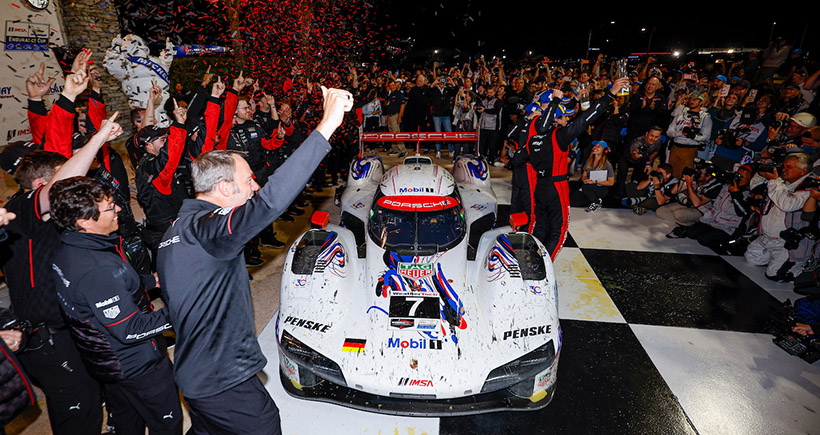
Porsche Penske’s twelve-hour Sebring campaign felt less like a flat‑out brawl and more like a carefully orchestrated siege, conducted in stints, cautions and half‑throttle lifts rather than in great lunges of desperation. At the flag it read as a dominant one‑two, but the story across the bumps was one of quiet, relentless tactical pressure rather than raw speed alone.
Opening movement: establishing tempo
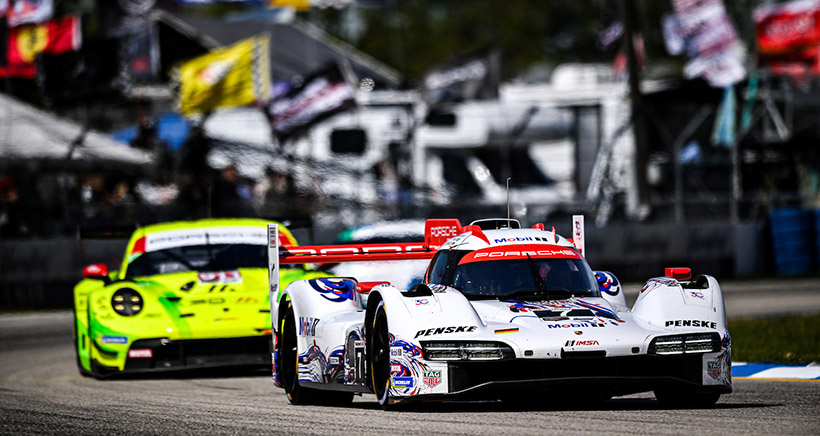
From the start, the Porsche 963s treated the first hours not as a sprint to the front, but as a controlled exercise in positioning and information‑gathering. Laurin Heinrich’s charge in the No. 7 from mid‑pack to the lead before quarter distance looked flamboyant, but it was underpinned by a programme of fuel targets and traffic drills that had begun on Friday.racing.
The team’s early‑race calls were conservative by design: short fuelling under the first neutralisation to gain track position, then settling into fuel‑number laps that kept both cars inside a flexible pit window. The aim was simple – detach themselves from the midfield mêlée without over‑committing tyres or fuel, and force rivals like Whelen Cadillac and Meyer Shank’s Acura to choose between shadowing the strategy or gambling on an offset.
Behind, the Whelen‑run Cadillac was pushed into a reactive posture almost immediately, losing the lead in the pits and then having to claw back time in traffic, a task made harder once Earl Bamber was forced into unscheduled repairs under the early safety car. That solitary setback distorted the car’s stint structure, obliging the engineers to work around a compromised fuel pattern for the rest of the afternoon.
Middle hours: living with the chaos
Sebring’s middle portion is where strategies usually unravel; Porsche chose instead to let the race come to it. As multi‑car incidents at the final turn and a sequence of full‑course yellows chopped the contest into episodes, the pit wall treated each caution not as a lifeline, but as an opportunity to tidy the chessboard.
The calling card was flexibility. On some cautions, the No. 7 took a full service while the No. 6 stayed out to inherit track position; on others they split tyre choices, one car double‑stinting a set while the sister car took fresh Michelin rubber. The effect was cumulative: whatever phase of the race emerged – short green‑flag sprints, longer fuel runs, or restarts into heavy traffic – at least one Porsche was on the “right” side of the equation.
Rival camps did not always have that luxury. Wayne Taylor’s Cadillac, quick on outright pace, saw its carefully prepared plan collapse twice: first through the chain‑reaction accidents at Turn 17, and later when post‑race technical checks dropped the car to the back of its class. Each interruption forced their strategists further from the ideal fuel and tyre sequence, and closer to gambles on wave‑by timing and aggressive restart fuel burn that never quite paid off.
Fuel, tyres and the art of the restart
If the afternoon belonged to adaptability, the evening was about discipline. Felipe Nasr’s late double stint in the No. 7, tasked with defending track position while staying within a strict fuel window, illustrated the underlying philosophy: bank time when the race allows, spend it only when absolutely necessary.
The Porsches rarely looked the outright fastest over a single lap, but their engineers had banked on two things: marginally better tyre degradation over a stint and stronger drive‑off over the notorious bumps in the final sector. That combination allowed their drivers to manage restarts with a sort of detached calm – lifting a fraction earlier into Turn 1 to save fuel, then using the car’s traction to clear GT traffic before the concrete bruises at Turns 15–17.
Others were less restrained. Both Cadillac and Acura outfits tried to claw back track position by leaning on rich fuel maps immediately after restarts, a tactic that won them a handful of corners but cost them flexibility later in the stint. Time and again, they found themselves pitting a lap or two earlier than ideal, surrendering the overcut to a Porsche car still on its fuel number and able to stay out in clean air.
Multiclass management as strategy
As daylight faded, the real battleground became not the stopwatch but the gaps to the next pocket of GT traffic. Porsche’s race engineers were notably conservative in their traffic instructions, prioritising exits over entries: a clean run out of Tower or Le Mans Curve, even if it meant a compromised braking point, was preferred to a bold dive that risked being baulked on the following straight.
This was particularly evident in the way the 963s worked the Manthey‑run GTD Pro Porsche and the Ford and Ferrari entries that were central to the LMGTE‑style drama at sunset. Where some GTP cars chose to force the issue into the final corner – a temptation that contributed to the Ford Mustang, Risi Ferrari and Winward Mercedes coming to grief – the Porsches often accepted a temporary delay, only to recoup the time by launching past several GT cars in one measured push on the Ulmann Straight.
In the support classes, the same logic paid dividends for United Autosports in LMP2 and the Manthey Porsche in GTD Pro. Neither had an entirely clean day, but both understood that at Sebring, the ability to navigate clusters of slower cars with minimal variance in lap time is a strategic weapon on par with raw speed or a clever fuel number.
Endgame: managing risk to the flag
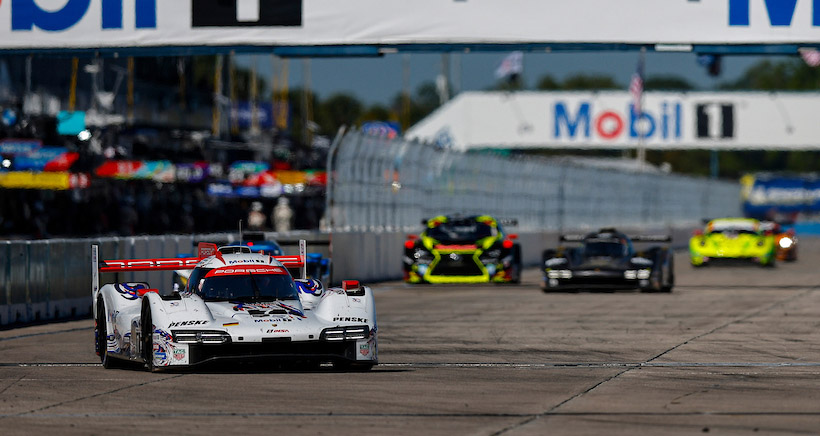
The final two hours presented the classic Sebring dilemma: defend track position robustly, or leave a margin for the sort of late‑race drama that so often redraws the result sheet. Porsche elected for the latter. The cadence became almost metronomic, the lap times perhaps a fraction conservative, but the reward was that when the last cautions came, they arrived as confirmation rather than salvation.
By then, the structure of the race had hardened. Whelen’s earlier delay meant its Cadillac could threaten on pace but not on pit sequence, while Acura’s need to recover time left it exposed on fuel. With both Porsches synchronised on stops and comfortably inside their consumption targets, the final splash was more a formality than a gamble, and the field’s last attempt to reset the order under yellow could not quite reach them.
So the record books will show a measured one‑two for Porsche Penske Motorsport, another endurance classic ticked off and a fourth Sebring victory for Nasr, but the more revealing story lies in the margins. This was a race won not by a single decisive move, but by a thousand small, almost invisible decisions – lifts, short‑fills, tyre calls and moments of restraint – that, taken together, turned twelve ragged hours on old concrete into something close to strategic order.