

Team Peugeot TotalEnergies arrived at the 94th 24 Hours of Le Mans with one of the most dramatic qualifying form lines in Hypercar history. Malthe Jakobsen delivered the manufacturer’s first-ever WEC pole position at Spa-Francorchamps five weeks earlier with a 2m00.653s lap in the #94 Peugeot 9X8, and at Imola the car finished a strong fourth in qualifying. At Le Mans, both Peugeots were eliminated before Hyperpole could begin, finishing 16th and 18th — more than 1.8 seconds off Alpine’s pace.
The contrast is staggering, and the lap-time deltas tell the full story.
The Spa-to-Le Mans Delta Collapse
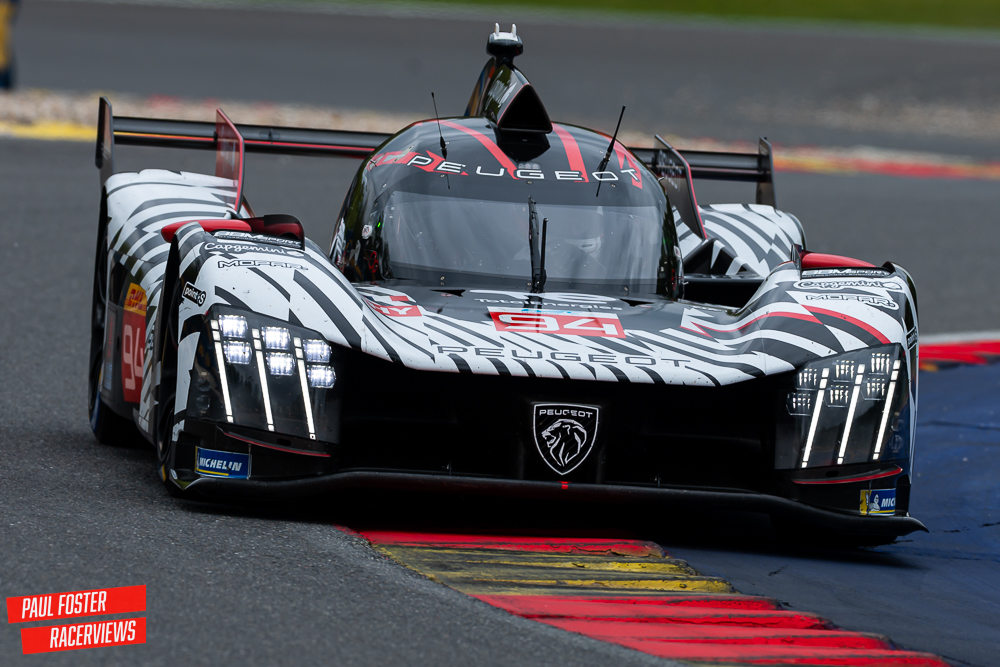
At Spa, Jakobsen stopped the clock at 2m00.653s in the #94 Peugeot to claim pole by 0.215s over Alpine’s Charles Milesi, who set 2m00.808s. The sister #93 Peugeot finished fifth at +0.402s off pole. Both cars advanced safely to Hyperpole and the #93 later qualified ninth overall.
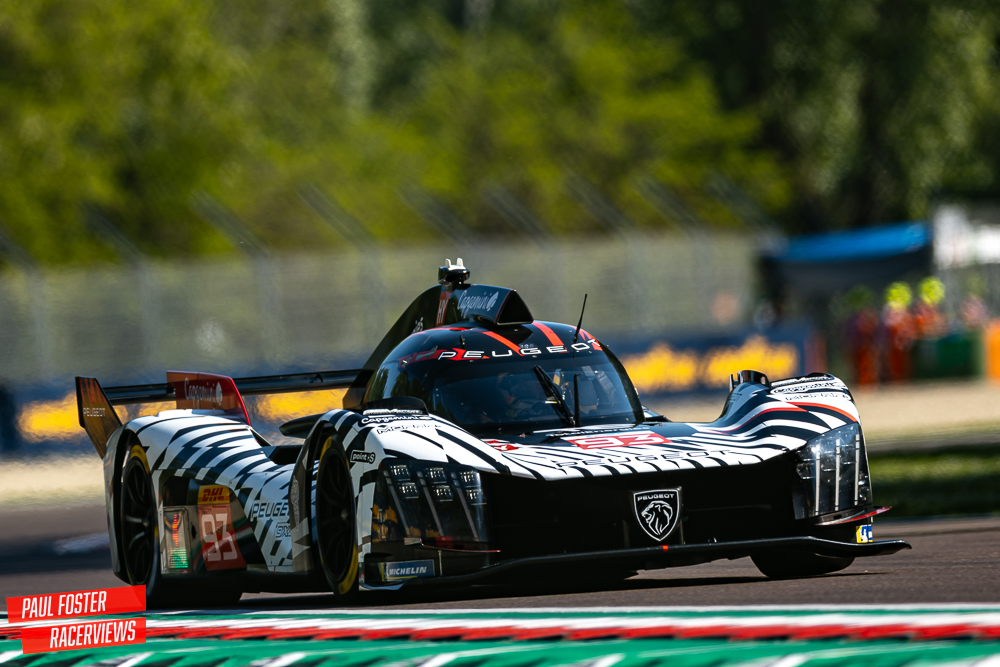
At Imola, the #94 Peugeot was +0.221s off Ferrari pole position, finishing fourth in qualifying — a strong, competitive result that kept Peugeot in the top-five conversation.
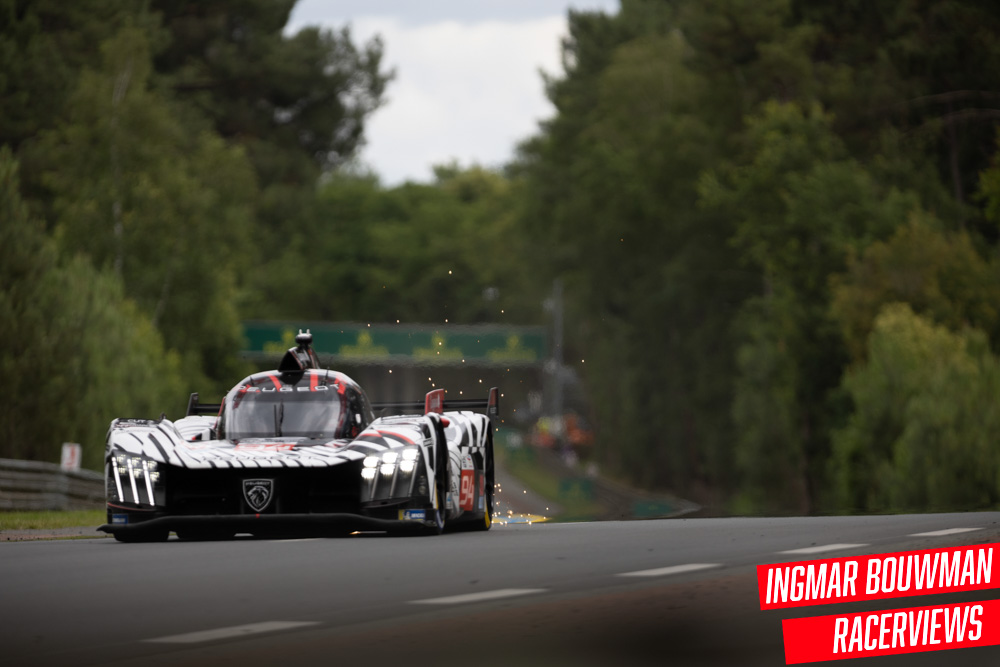
At Le Mans, the performance deficit exploded. Stoffel Vandoorne’s #94 Peugeot finished 16th at +1.853s off Alpine’s Ferdinand Habsburg, who set 3m23.135s. Jean-Éric Vergne’s #93 was 18th at +2.525s off the same benchmark — the last car in the 18-car Hypercar field.
The delta shift from Spa/Imola to Le Mans is brutal: Peugeot went from +0.2s off the leader to +1.85s to +2.5s. That’s roughly a 1.6–2.3 second per lap slowdown compared to its earlier 2026 form, or approximately 10 km/h slower in average speed on the Sarthe circuit.
Team principal Emmanuel Esnault didn’t hide the frustration: “It is extremely frustrating to go from being pole contenders at Spa and Imola to being 10 km/h slower than the competition’s race rhythm at home”.
Top Speed: The 9X8’s Aerodynamic Package Problem
The top-speed delta reveals the mechanical root of Peugeot’s Le Mans struggle. While Peugeot’s 9X8 EVO has a wing that produces less drag than its previous wingless predecessor, the car’s top speed at Le Mans is still compromised under the current BoP package. The BoP adjustment reduced the 9X8’s power and increased its aerodynamic drag relative to Alpine, Cadillac, and Ferrari.
The result is a car that cannot extract the same straight-line speed it had at Spa, where the circuit’s high-speed Kemmel Straight rewarded the 9X8’s aero efficiency. At Le Mans, the Mulsanne straight demands peak top speed and traction, areas where Peugeot lost critical advantage under the new BoP.
BoP: The “Much More Favorable” Spa Package Disappears
The headline story is Balance of Performance (BoP). At Spa, Peugeot enjoyed a “much more favorable” BoP package than it received at Le Mans, according to Paul di Resta, who later conceded the team is “nowhere near the fight” at the 24-hour race.
BoP in Hypercar is a weekly calculation that adjusts power, weight, and aerodynamics to keep the class competitive. Peugeot’s Spa package gave it the edge in single-lap mode, particularly in the high-speed corners where the 9X8’s aero efficiency shines. At Le Mans, the BoP shifted significantly against the French manufacturer, with the 9X8 losing critical downforce and power relative to Alpine, Cadillac, and Ferrari.
The Le Mans BoP lies outside the system used for regular WEC rounds, meaning direct comparisons with Spa are not applicable — the values are derived primarily from simulation rather than actual race data. This simulation-based approach can produce sudden shifts in performance that teams don’t expect until they’re on track.
Single-Lap Fragility and Traffic Chaos
Beyond BoP, the Peugeot 9X8 has shown consistent fragility in single-lap qualifying mode. The car’s hybrid deployment system and rear-end stability have been unpredictable across different fuel loads and tyre temperatures, problems that surface more sharply at Le Mans where the margin for error is zero.
At Spa, Jakobsen’s lap was described as “extraordinary” and “perfect,” with the driver hitting every apex and managing the hybrid system flawlessly through the fast Eau Rouge–Raidillon sequence. At Le Mans, both Peugeot drivers struggled to find consistent rear tyre temperature in the early sector, which compromised exit speed from Indianapolis and the final corners.
Traffic compounded the problem. Vandoorne’s qualifying lap in the #94 was compromised by a slow LMP2 car on the approach to Indianapolis, while Vergne in the #93 faced a similar issue when an LMGT3 car crossed his path on the Mulsanne straight. Those interruptions cost crucial tenths that, in a session where the top eight cars were separated by less than half a second, proved fatal.
The drop-zone format magnified the pressure. At Spa and Imola, Peugeot was fighting for pole. At Le Mans, it was fighting to avoid elimination. The psychological shift from “contender” to “survivor” is brutal, and it appears to have compounded the technical issues rather than being overcome by them.
What the Deltas Mean for Race Weekend
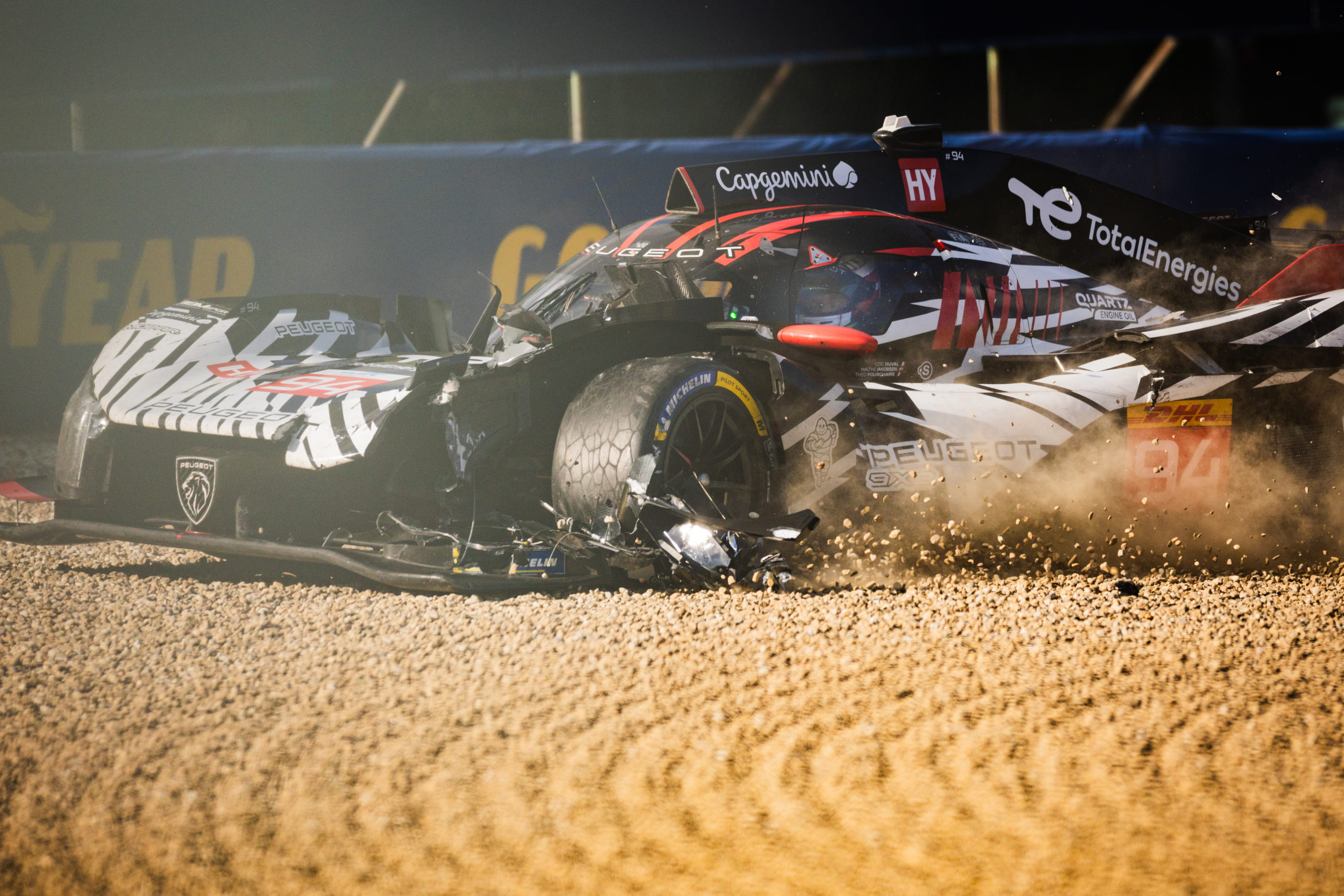
Peugeot now faces a grueling race weekend. Without Hyperpole, the team will start from 16th and 18th on the grid, forcing them to rely on race pace, strategy, and reliability to salvage a result. The 24-hour duration offers hope — history at Le Mans is full of recovery drives from poor qualifying positions — but the starting deficit is significant.
The manufacturer will also need to address the underlying BoP and technical concerns before the next WEC round. If the 9X8 cannot find consistency in single-lap mode under the current package, Peugeot’s championship ambitions will remain in jeopardy.
For now, the story of Peugeot at Le Mans 2026 is one of unfulfilled potential. The French crowd hoped for a frontline battle, but the qualifying session delivered a stark reminder: at Le Mans, speed alone doesn’t guarantee success, and the smallest flaws — especially when multiplied by BoP — can cost you the chance to fight for pole.
From Spa pole to Le Mans elimination: Peugeot’s 2026 qualifying tale is a lesson in how quickly things can change in Hypercar, and how brutal the lap-time deltas can expose a car’s weaknesses.


