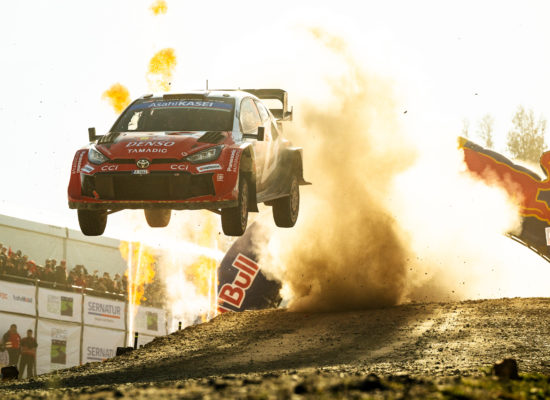
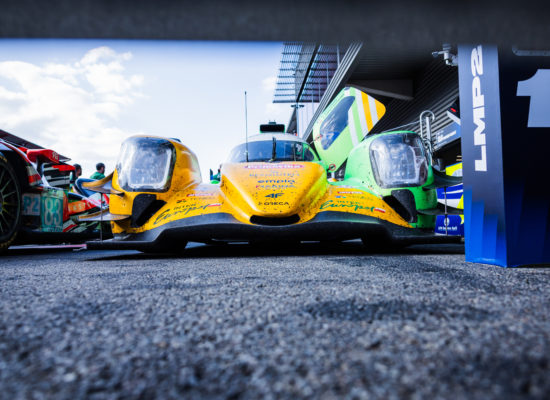
In the end, it was Toyota again. Not the Toyota of old, front‑row favourites dictating terms from the green flag, but a No.7 entry that started 14th, clawed its way through a hyper‑compressed field and survived 24 hours of strategy, traffic and pressure to win by just under eleven seconds.
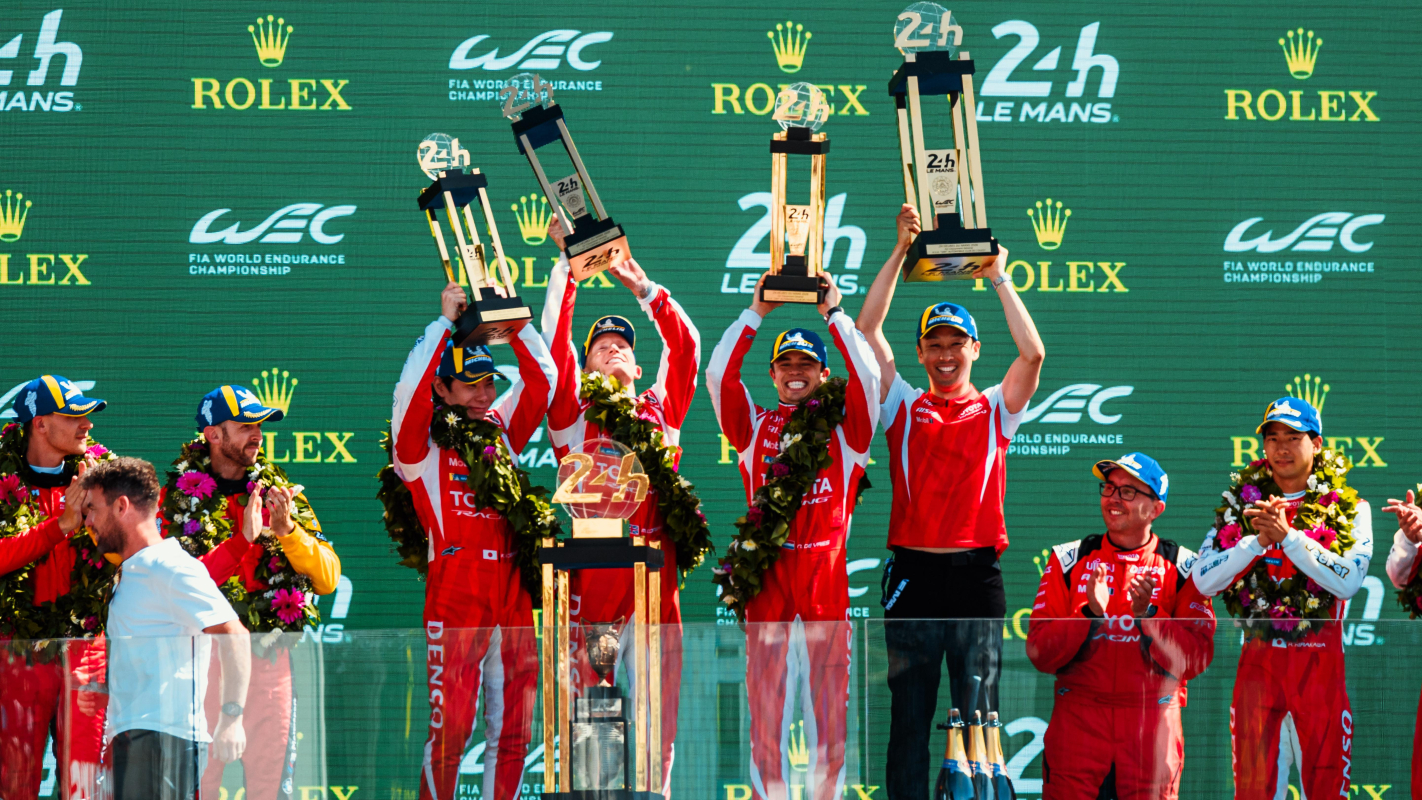
Kamui Kobayashi, Mike Conway and Nyck de Vries delivered Toyota’s sixth overall Le Mans victory, their first since 2022, in a race where the stopwatch never really stopped pressing them. At the flag, the top four Hypercars were covered by barely half a minute, the No.7 Toyota leading home the No.20 BMW and its sister No.8, with the No.12 Cadillac fourth and Ferrari’s best, the No.51, fifth.
This was not a dominant crushing. It was a race Toyota won by out‑thinking BMW and Cadillac, making fewer mistakes, and timing their last plays in a contest that never settled until the final half hour.
A Grid That Lied
Thursday’s Hyperpole gave BMW the headlines. Dries Vanthoor’s 3:22.564, inherited when Jack Aitken’s faster Cadillac lap was deleted, put the No.15 BMW M Hybrid V8 on pole for the first time in Bavaria’s top‑class Le Mans history.
Cadillac lined up alongside with the No.12 Hertz Team JOTA car, Alpine and the second BMW filled out the sharp end, and Toyota were marooned in the midfield. The classification that mattered most on Saturday afternoon showed the No.7 Toyota down in 14th, with the No.8 only one place better in 15th.
Yet as soon as the race began, those numbers started to lose their meaning. In a field where Hypercar traffic met LMP2 and LMGT3 at every corner, clear track and strategic daring mattered far more than starting position, and Toyota’s race engineers understood that equation faster than anyone.
Toyota’s Undercut and Cadillac’s First Strike
The early hours unfolded as a complex game of fuel offsets and risk management. Toyota’s No.8 made the first major move, leaning into an aggressive undercut‑style strategy that saw Sébastien Buemi and Brendon Hartley cycle toward the front as the opening stints played out, while BMW and Cadillac parried with their own timing calls.
At six hours, the headline belonged to Cadillac. The No.38 Hertz Team JOTA Cadillac, with Sébastien Bourdais, Earl Bamber and Jack Aitken, sat on top of the classification, having used a combination of raw pace and efficient traffic management to keep the No.20 BMW behind. Toyota’s pair, including the eventual winners in the No.7, were still in the midfield on paper, but crucially on the lead lap and running to a carefully controlled tempo.
Ferrari’s defence of its 2024 win was already starting to fray. Penalties for contact and pit‑lane misdemeanours sent the No.51 and No.83 tumbling down the order, and the sense grew that this Le Mans would not be theirs.
Chaos in the Darkness
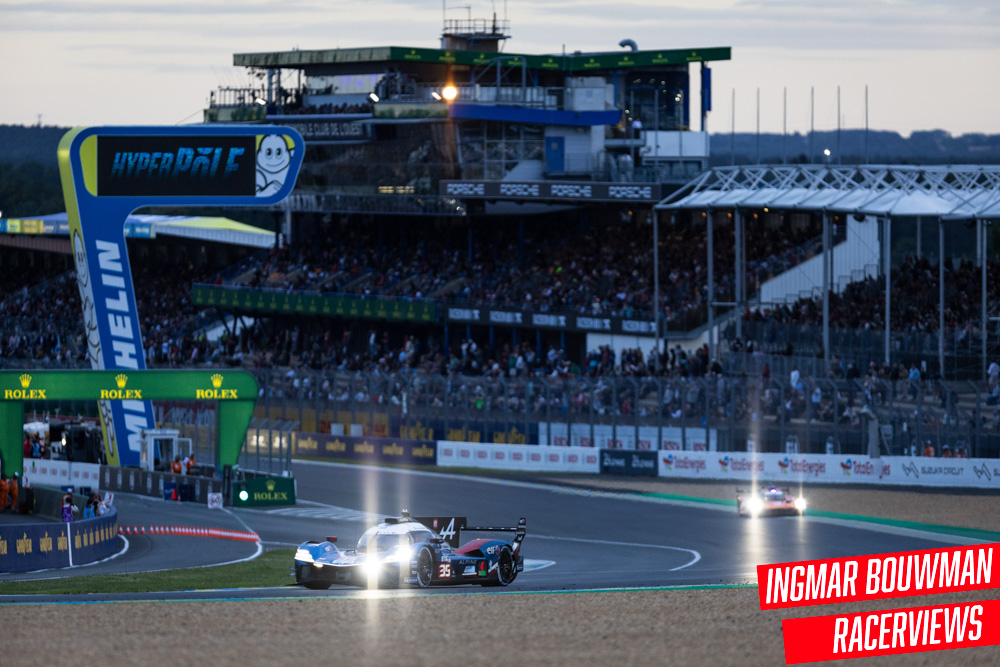
True endurance racing rarely waits for dawn to start rewriting its script. Through the night Le Mans 2026 delivered a string of incidents and interruptions that refused to favour any single contender for long.
Multi‑class clashes, including heavy LMGT3 contact and an incident that would later claim the No.50 Ferrari, forced lengthy safety car interventions and full course yellows. Each neutralisation crushed hard‑won gaps back to nothing and opened new strategic doors, and the race began to feel like a series of rolling dice throws rather than a straight‑line endurance run.
BMW suffered one of the night’s most painful episodes. The No.20 picked up damage in traffic and was forced into a long, slow crawl back to the pits, at one stage flirting with falling a lap down. The car even spent time in the garage, but the combination of a resilient car, consistent pace and well‑timed safety cars allowed Robin Frijns, René Rast and Sheldon van der Linde to drag it back onto the lead lap and, eventually, into contention for the win.
Yet for all that churn, Cadillac continued to look like the car of the night. The No.12 and No.38 V‑Series.Rs were brutally quick whenever the track stayed green, climbing steadily and taking turns in the overall lead as the race crossed midnight and headed toward sunrise.
Cadillac’s Golden Dawn
Dawn belonged to a gold car. The ACO’s sixteen‑hour update captured the mood perfectly, describing the No.12 Cadillac Hertz Team JOTA as the “alarm call Le Mans woke up to,” its V8 in full song as it tried to turn night dominance into a daylight stranglehold.
Norman Nato underlined the car’s authority with one of the fastest laps of the race, a 3:26.305 that confirmed Cadillac still had qualifying‑style speed deep into the run. At that stage the No.12 was the official leader, ahead of two Toyotas and the resilient No.20 BMW, and the story seemed to be edging toward an American brand finally converting pace into a Le Mans overall win.
Behind them, Alpine and Genesis played the role of dangerous outsiders, often hovering in the top eight and ready to pounce if any of the favourites tripped over traffic or themselves.
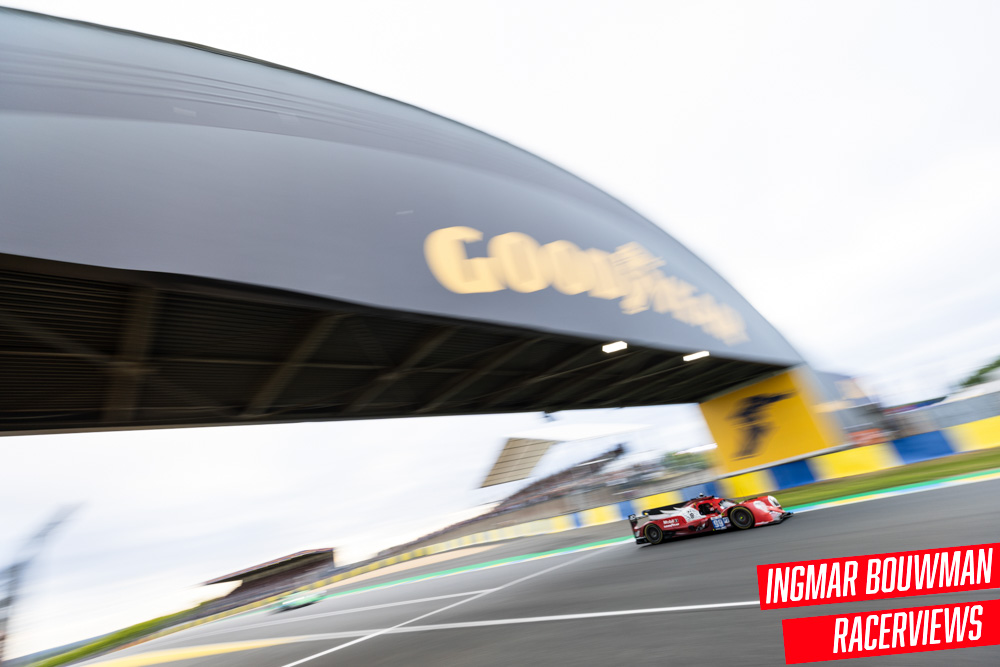
The Race Compresses: Neutralisations and a Final Reset
If dawn shone gold, the late morning and early afternoon turned the race Toyota’s way. Le Mans 2026 never gave Cadillac the clean, green final act it needed.
A major LMGT3 accident triggered one of the decisive late‑race safety car periods, compressing the field and forcing everyone toward a final, more or less shared, fuel and tyre window. The Cadillac that had sprinted away earlier suddenly found its hard‑earned margin erased. Each restart demanded fresh risk, fresh traffic gambles, and each stop lost a little of the structural advantage it had enjoyed through the night.
At the twenty‑hour mark, the top four were separated by just over eight seconds. Cadillac’s No.12 still led, but the No.8 Toyota, the No.7 – now fully in the game – and the No.20 BMW were all stacked up behind, ready for a four‑hour sprint more reminiscent of a WEC six‑hour round than the final chapter of a 24‑hour race.
In the background, track‑limits policing and earlier penalties meant Cadillac had less margin for error than the Toyotas. Toyota’s race, described by organisers as “textbook” in its execution, was built on limiting those self‑inflicted wounds
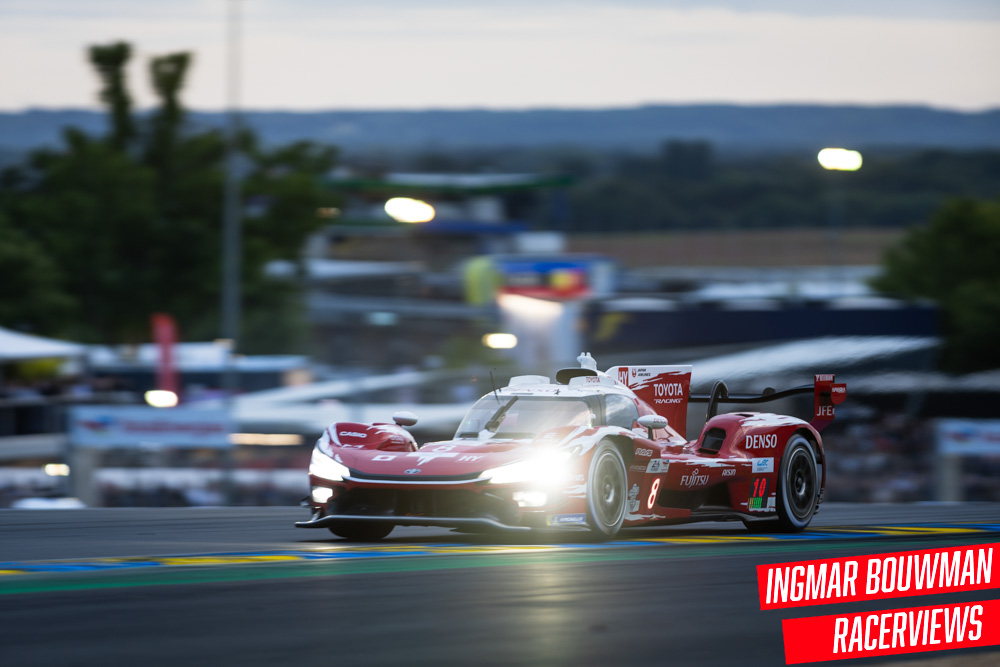
Toyota Takes Control
The final hours were not decided by a single dramatic overtake or a strategic masterstroke, but by Toyota’s ability to exert a steady, grinding pressure that neither BMW nor Cadillac could fully resist.
As the last fuel windows clarified, the No.7 Toyota established itself as the car with the most complete package: enough speed to attack when required, enough efficiency to make the final numbers work without desperate late splashes, and enough resilience in traffic to avoid catastrophe. Kobayashi and Conway, already Le Mans winners, played the closing stints with a controlled aggression that never tipped into recklessness.
BMW’s No.20 became the primary threat, especially after its earlier nightmares had been neutralised by safety cars. The M Hybrid V8 harried the Toyotas in the final restart sequence, Frijns in particular pushing hard to break their rhythm. Yet every time the gap started to shrink, Toyota found another fraction in traffic or another small strategic edge in stop timing.
The No.8 Toyota also made its presence felt. In one of the race’s defining late‑race duels, Brendon Hartley hunted down Louis Delétraz in the No.12 Cadillac and finally forced his way past to secure third, turning what might have been a single car triumph into a double podium for the Japanese marque.
At the chequered flag Kobayashi guided the No.7 home with a margin of just 10.9 seconds over the BMW, with the No.8 a further few seconds back and the No.12 Cadillac fourth, still on the lead lap. It was Toyota’s first Le Mans victory since 2022, their sixth overall, and the second for both Conway and Kobayashi. For Nyck de Vries, it was a first – and a powerful answer to anyone who doubted his place back in a factory prototype cockpit.

LMP2: Inter Europol’s Green 1–2
In LMP2, the story was quieter but no less impressive. Inter Europol Competition produced a controlled, almost understated 1–2 finish, their cars managing the chaos around them better than anyone else.
The class had been a strategic game of tyres and timing through the night, with Duqueine and others taking turns at the front as different teams committed to double or triple stints. But by Sunday afternoon it was the Polish‑flagged squad’s blend of consistent pace, clean execution and absence of major mistakes that carried the day, with the No.30 Duqueine ORECA also featuring strongly on the class podium.
As LMP2 approaches its redefinition in the coming regulatory cycles, this result stands as a marker of what the category has traditionally rewarded: teams who can be fast enough, tidy enough, and awake enough at the right times.
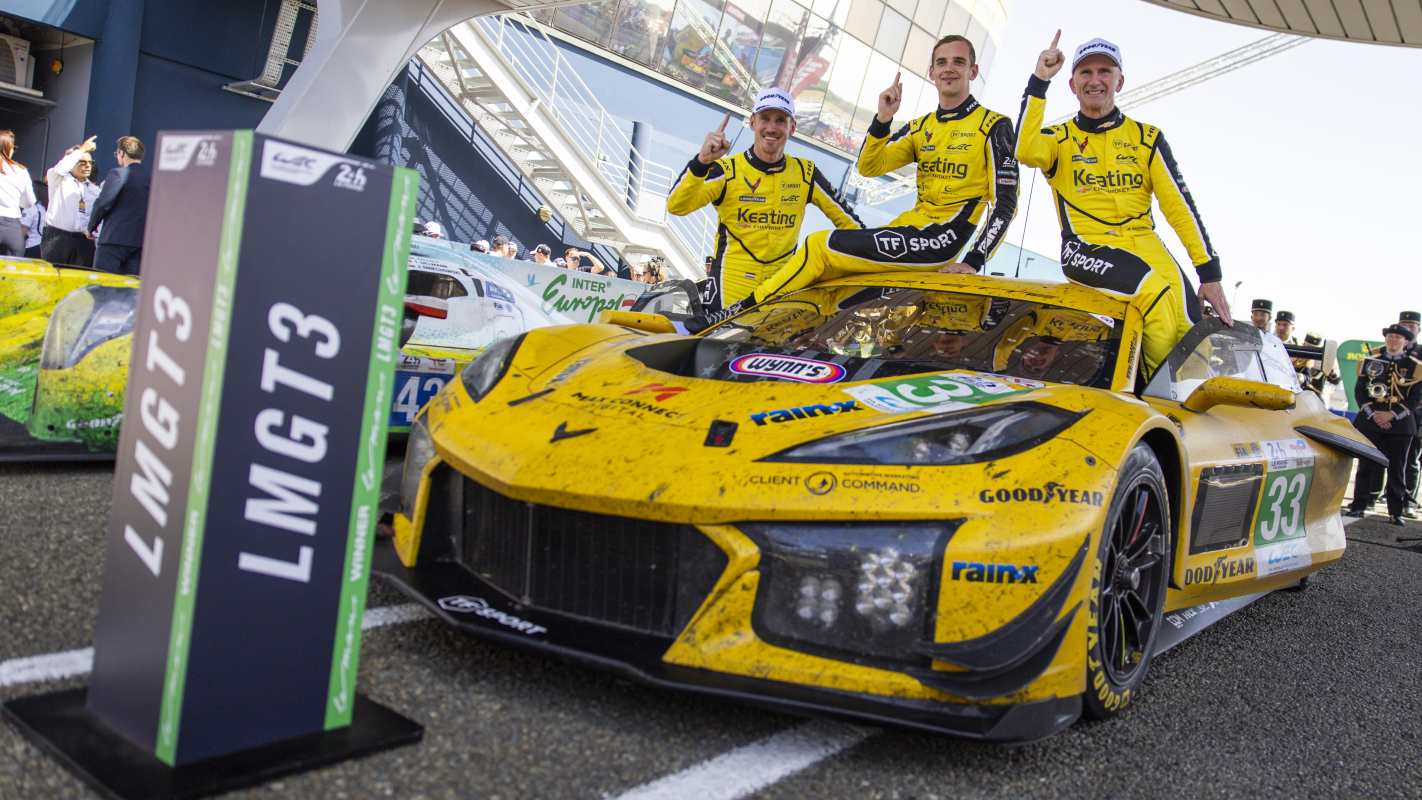
LMGT3: Corvette’s Tenth, GT3’s Statement
The first fully embedded LMGT3 Le Mans delivered exactly what the rulemakers wanted: a multi‑brand fight decided on the track, not the balance sheet.
Corvette, now fielding the Z06 LMGT3.R with TF Sport, wrote another chapter in their La Sarthe folklore. The No.33 of Ben Keating, Jonny Edgar and Nicky Catsburg survived the drama that claimed rivals, then out‑ran Akkodis ASP’s Lexus and Heart of Racing’s Aston Martin in a race that remained live almost to the end.
Organisers were quick to point out that this was Corvette’s tenth class victory at Le Mans, and their first under the GT3‑based LMGT3 regulations, a neat bridging of eras for a brand whose yellow cars have become part of the race’s visual DNA.
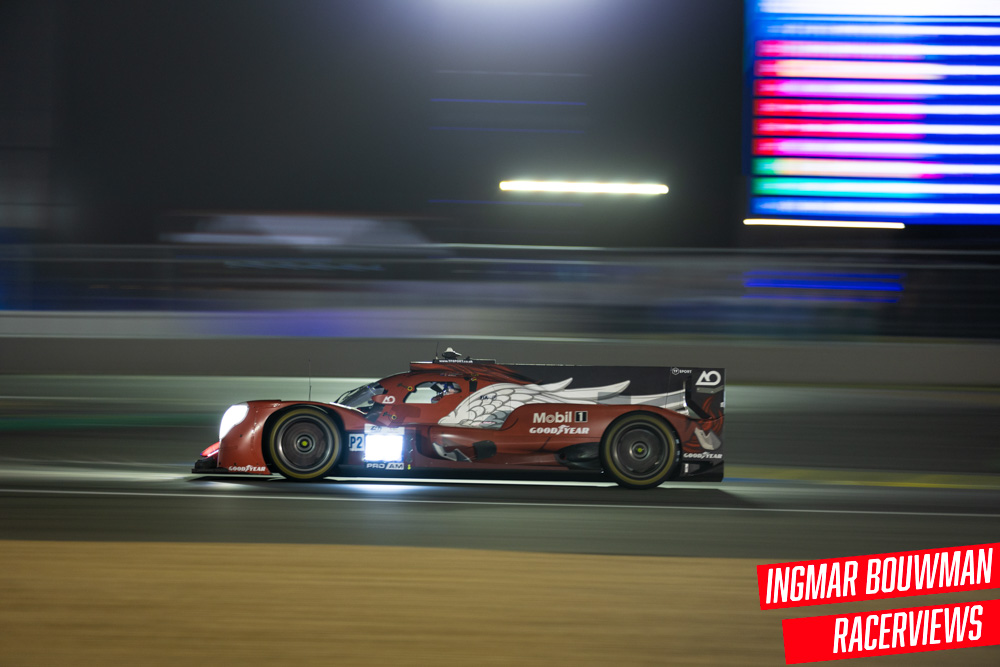 +2026 Le Mans 24 Hours. Circuit de la Sarthe. Shot by Ingmar Bouwman for www.racerviews.com
What Le Mans 2026 Leaves Behind
Le Mans 2026 will not go down as the wildest race in the event’s history, nor the most chaotic or controversial. Instead it will be remembered as a contest where three manufacturers – Toyota, BMW and Cadillac – raced each other flat out for 24 hours and finished within half a minute, and where the winner was decided not by fate, but by disciplined, relentlessly intelligent execution.
Toyota’s return to the top step shows that their reworked TR010 Hybrid and their organisational muscle are still the benchmark when it comes to long‑form endurance racing. BMW’s pole, recovery and second place confirm that Munich’s second Le Mans era is very real. Cadillac’s speed, and their ultimate defeat, underline how brutally the race punishes even small miscalculations.
Behind them, Inter Europol’s LMP2 1–2 and Corvette’s LMGT3 win suggest that, even as the top class grabs the headlines, the broader ecosystem of endurance racing is healthy and capable of producing its own narratives of excellence.
For once, perhaps, Le Mans 2026 is best summed up not by a single image or incident, but by the scoreboard at the end: four Hypercars on the lead lap, separated by seconds, after 381 tours of the Circuit de la Sarthe. That is the kind of race endurance fans dream about – and this time, Toyota woke up with the trophy