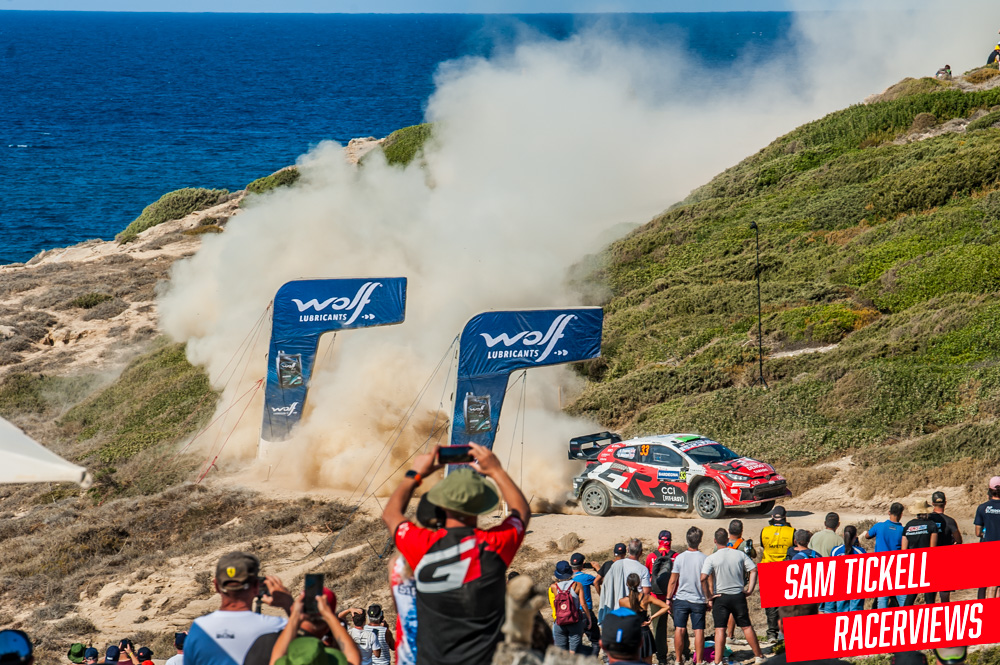
Sardinia delivered the sort of ending rallying rarely earns: a championship settled not by arithmetic, but by two corners of loose gravel and a fraction too much commitment. Oliver Solberg won the rally; Elfyn Evans and Scott Martin won the world title. It was cruel, compelling and entirely fitting for the last Rally1-era season finale.
Evans: The Long-Awaited Crown
Elfyn Evans and Scott Martin finally converted years of near-misses into the FIA World Rally Championship title, finishing fifth in Sardinia but taking the crown by five points from Solberg. It was a championship built on discipline: two wins, relentless Sunday scoring and the ability to survive a season in which Toyota’s own drivers kept taking points from one another.
Evans’ weekend was far from perfect. Opening the road on Friday left him sixth, a puncture on Sunday cost nearly two minutes and removed him from Super Sunday points, and the title suddenly rested on one Power Stage. Yet when the moment demanded a clean, committed run, he produced one—8.9 seconds quicker than Solberg on SS17.
For a driver who had finished championship runner-up in five of the previous six seasons, this was less a surprise than a correction. Evans has often been the sport’s most reliable points machine; in 2026, reliability finally became championship-winning currency.
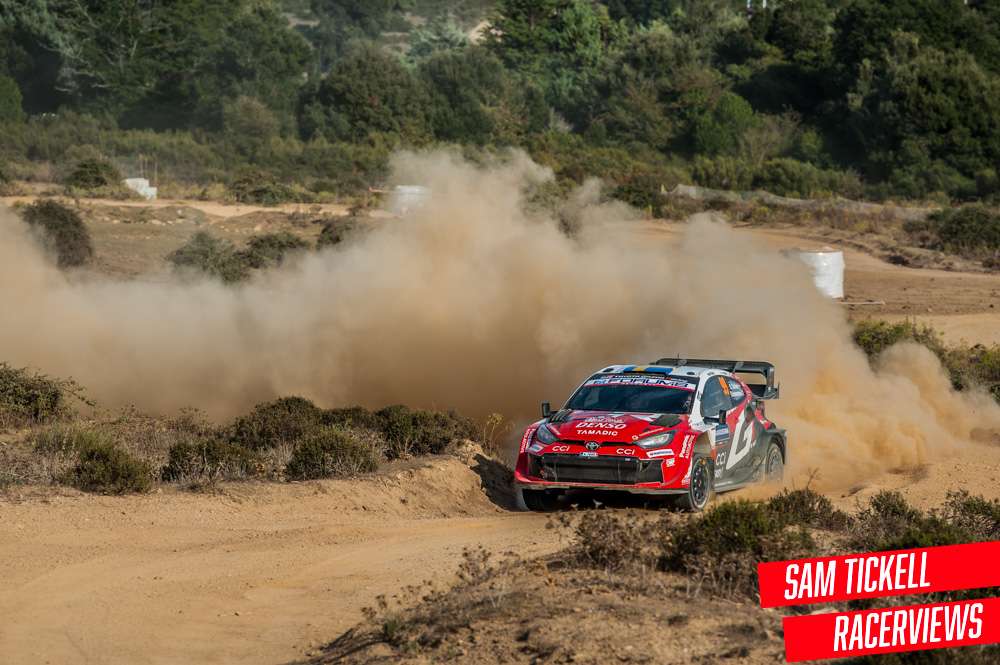
Solberg: Brilliance, With a Cost
Oliver Solberg was the fastest driver at Rally Italia Sardegna and, arguably, the fastest driver across much of the season. He won the rally by 57.6 seconds from Sébastien Ogier, took back-to-back victories in Chile and Sardinia, and arrived at the final stage with a genuine mathematical chance of the title.
But the final corner told the season’s story. Needing to beat Evans’ time, Solberg pushed beyond the margin available, ran wide and lost the championship by five points. He still recovered to win the rally—an extraordinary consolation—but the mistake was not an isolated Sardinian lapse. It was the culmination of a season in which raw speed repeatedly collided with risk.
The counterpoint is equally important: Solberg and Elliott Edmondson’s first full top-flight season produced a Monte Carlo win, more stage wins than anyone else, and a late-season charge from 59 points adrift. The talent is unquestioned. The next lesson is knowing when not to use all of it.
The Hyundais: Pace Without Reward
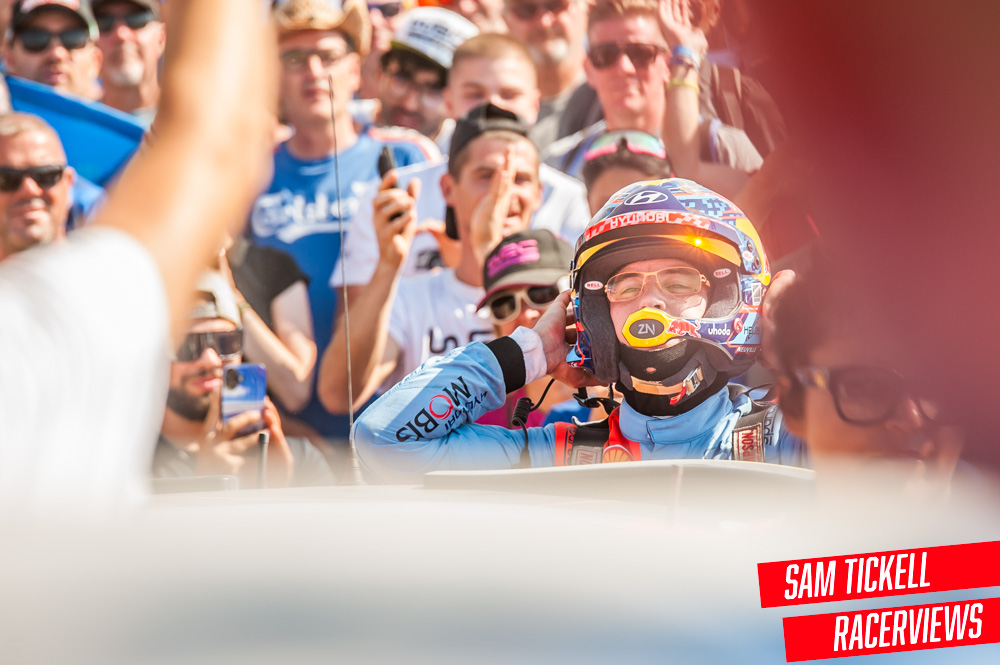
Hyundai arrived with a credible shot at spoiling Toyota’s party, and Friday suggested it might. Thierry Neuville and Adrien Fourmaux traded stage wins and fought at the front, with the i20 N Rally1 clearly quick on Sardinia’s abrasive gravel.
Then Saturday intervened. Fourmaux lost roughly 2m47.7s to two punctures, and Hyundai’s winning ambition dissolved into damage limitation. He still finished fourth, 2m38.6s behind Solberg, and was one of the few drivers able to live with the Swede’s pace once the Toyotas began their title fight.
Neuville’s weekend ended with the final Power Stage win—the last of the Rally1 era—but the broader picture is more uneasy. Hyundai finished second in the manufacturers’ championship, 222 points behind Toyota, and enters a period of real uncertainty about its top-level rallying future.
Toyota: A Team Championship, Literally
Toyota did not merely win the title; it staged an internal civil war for it. Evans, Solberg and Sami Pajari arrived separated by 21 points, and all three remained in contention until the final stage. That is both a tribute to Toyota’s car and driver depth, and a reminder of how finely balanced the team’s internal management had to be.
The GR Yaris Rally1 signed off with its 12th win from 13 rallies in 2026, equalling its season record, and a fifth consecutive manufacturers’ title for TGR-WRT. Ogier’s second place also carried history: a record 121st WRC podium, on his record 214th start.
Pajari’s third place was quietly impressive. Nine podiums and three wins in only his second full Rally1 season left him six points from the title—evidence that Toyota’s future is not simply Evans versus Solberg, but a genuinely crowded internal hierarchy.
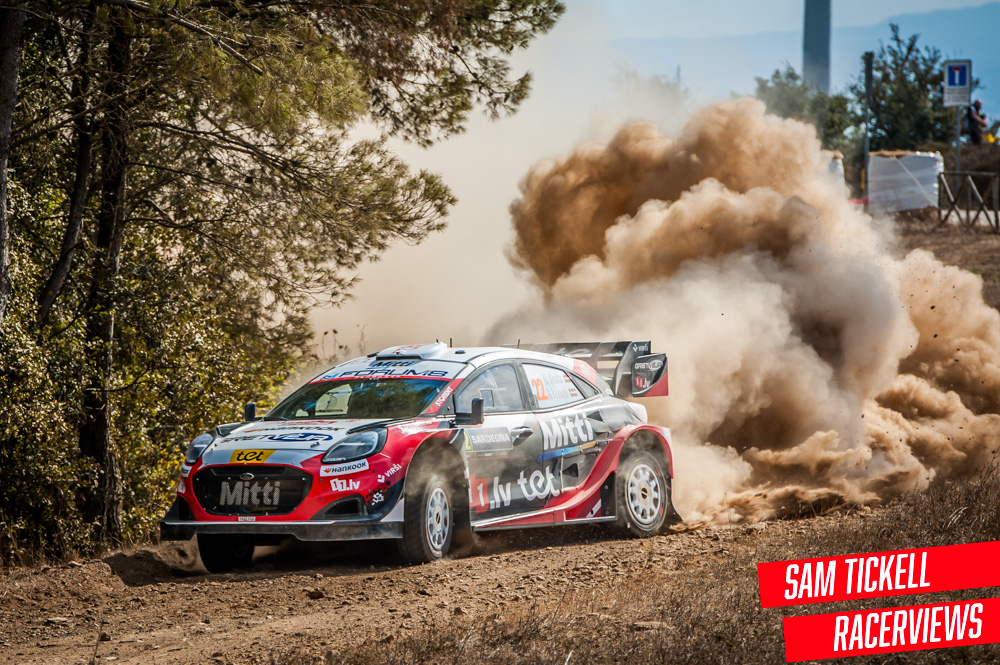
M-Sport: A Quiet Farewell
M-Sport’s weekend was defined less by results than by context. Jon Armstrong and Shane Byrne brought the Puma Rally1 home seventh, while Josh McErlean and Eoin Treacy also completed the event, but the team ended the manufacturers’ standings fourth on 168 points.
The more meaningful M-Sport story concerns what comes next. With the Rally1 era closing, the team’s role in the sport’s next cycle—and whether Ford’s top-level presence can be rebuilt around it—remains one of the central unanswered questions of the post-2026 landscape.
The Wider Story: End of an Era
This was the final round of the current Rally1 cycle, and Sardinia gave the formula a proper send-off: rough roads, strategic road order, tyre drama and a championship decided at the last possible moment. Toyota’s dominance was emphatic, but the human contest kept the category alive until the very end.
The sport now turns toward 2027 with more questions than answers: Hyundai’s intentions, M-Sport’s future, and whether the next technical era can produce cars and competition capable of matching the theatre Sardinia just provided.
For Evans and Martin, though, none of that matters tonight. After years of being the sport’s nearly men, they are World Rally Champions—and they earned it the hard way.