The Dakar Rally will not run in Saudi Arabia in 2027. Amaury Sport Organisation (A.S.O.) and the Saudi Motorsport Company (SMC) have confirmed that the 49th edition, originally set for 1–15 January, will instead be held on “a different territory”, with the venue to be announced in the coming days.
It is an extraordinary late change for an event of this scale: a full relocation, barely ten weeks before the scheduled start, made “in close coordination” with the Saudi Automobile and Motorcycle Federation and with the support of the FIA and FIM.
Why the Kingdom has stepped aside
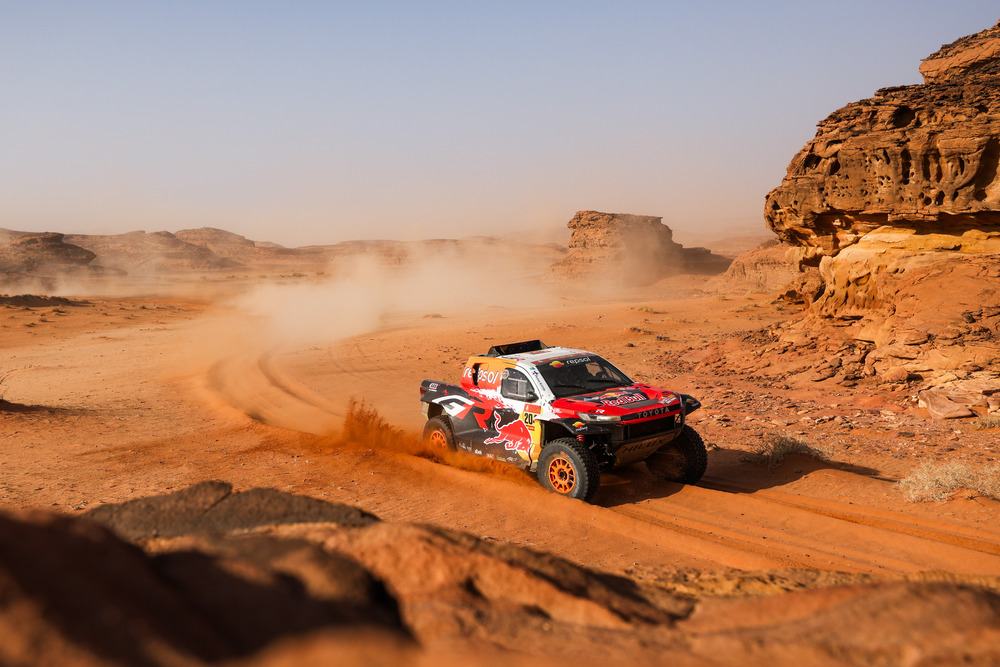
The official language is deliberately restrained: “recent developments in the region”. Behind it sits a rapidly deteriorating security picture, with reporting linking the decision to Houthi attacks on Saudi Arabia and the wider Middle East conflict. For A.S.O., the calculation is straightforward. A rally-raid is not merely a sporting competition; it is a moving city of competitors, service crews, media, medical teams, helicopters, fuel, spare parts and local authorities. If the host state cannot provide credible assurance over security, insurance, airspace and emergency response, the event cannot responsibly proceed.
Crucially, this is framed as a one-off. Saudi Arabia will return for Dakar 2028, the 50th edition, with A.S.O., SMC and SAMF insisting that the long-term partnership remains intact.
Morocco: the strong rumour
The leading candidate is Morocco. Reuters reported before the official announcement, citing two drivers and a team manager involved in the World Rally-Raid Championship, that Dakar would return to Africa, beginning with a prologue in Spain or Portugal before crossing to Morocco for the bulk of the event.
Subsequent reporting has pointed to a possible Spain-to-Morocco format, with a ferry transfer across the Alboran Sea and around twelve African stages. Motorsport.com, AFP-sourced reports and French media have all identified Morocco as the preferred option, although A.S.O. has not confirmed it.
If confirmed, it would be a symbolic homecoming. The Dakar raced in Africa from its creation until 2007; a Moroccan edition would be its first on African soil since then.
The rumour also has a practical logic. Morocco has deep rally-raid infrastructure, established desert routes, proximity to Europe and experience hosting major off-road events. But turning that into a full Dakar at short notice is another matter entirely: route validation, border and customs arrangements, bivouac sites, medical evacuation planning, fuel supply, spectator management and broadcast infrastructure would all need to be compressed into an unusually short window.
Eco Africa Race: already there
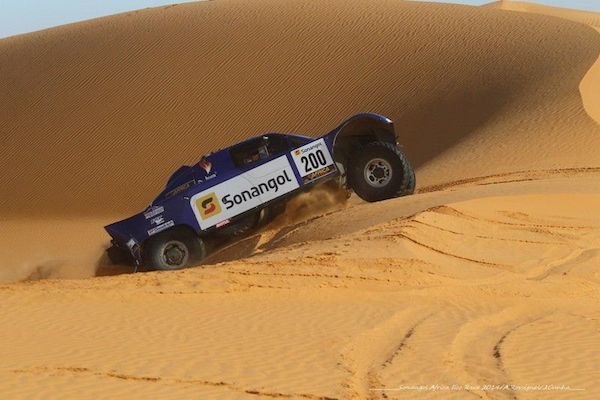
The complication is that Morocco will not be empty in January. The Africa Eco Race has already confirmed its 18th edition for 24 January to 6 February 2027, starting in Tangier and finishing at Lac Rose in Senegal.
Its route runs south through Morocco, including Meknes, Erfoud, M’Hamid, Assa, Laayoune and Dakhla, before crossing into Mauritania at Guerguerat and continuing to Senegal. The event features twelve stages, with a rest day in Dakhla on 30 January.
That creates an obvious point of friction if Dakar also moves to Morocco in early January. The two rallies would be operating in the same country, potentially using similar southern corridors, border crossings and desert regions, albeit with a gap between the reported Dakar dates of 9–22 January and the Africa Eco Race start on 24 January.
For Morocco, that could be an opportunity: a month-long showcase of rally-raid, tourism and international motorsport. For organisers, teams and local authorities, it is also a logistical pressure test. Bivouacs, recovery resources, fuel logistics, border processing and safety coverage cannot simply be duplicated without coordination.
What it means for the
For teams, the immediate issue is uncertainty. A.S.O. says it is in direct contact with competitors, teams and partners, but a route change this late affects shipping, visas, vehicle preparation, spare-part stock, accommodation, staff travel and sponsorship activations.
A European start would ease some logistics, particularly for European-based teams. A Moroccan core would reduce the long-haul freight burden associated with Saudi Arabia, but it would also reintroduce the old Dakar challenge: a more compact, navigation-heavy African route rather than the vast Saudi desert canvas.
For the Africa Eco Race, Dakar’s possible return is both validation and competition. It validates Morocco’s status as the natural home of African rally-raid, but it also places the smaller event alongside the sport’s biggest commercial machine in the same January window.
The bigger picture
This is more than a route change. It is a reminder that modern mega-events are exposed to geopolitics in ways that no sporting organisation can fully control. Saudi Arabia remains central to Dakar’s future, but 2027 shows that even a seven-year hosting partnership can be suspended when regional security shifts.
The next announcement will tell us whether Dakar truly returns to its African roots. If it is Morocco, the 2027 season will open with an unusually crowded, high-stakes rally-raid calendar — and with the ghost of the old Dakar very much back in the room.