The Ardennes still do that thing they have always done. The clouds cling to the tree line, the air sits cool and heavy over the asphalt, and Spa‑Francorchamps feels less like a racetrack and more like a palimpsest, each era written over the last but never quite erasing it. On a Spa Classic weekend, that layering becomes visible, audible and very much alive.
In the Peter Auto paddock, Endurance Racing Legends lays it all out in full scale. These are the GTs and prototypes of the 1990s and 2000s, the cars that filled late‑night TV feeds and grainy web streams, now back in front of their natural audience. The series brings together the machinery that once tackled Le Mans, Spa and other blue‑riband enduros, from GT1 bruisers to the delicate but deadly LMP2s and LMP675s that tried to out‑think physics with lightness and aero instead of brute force.
The Pilbeam that never left
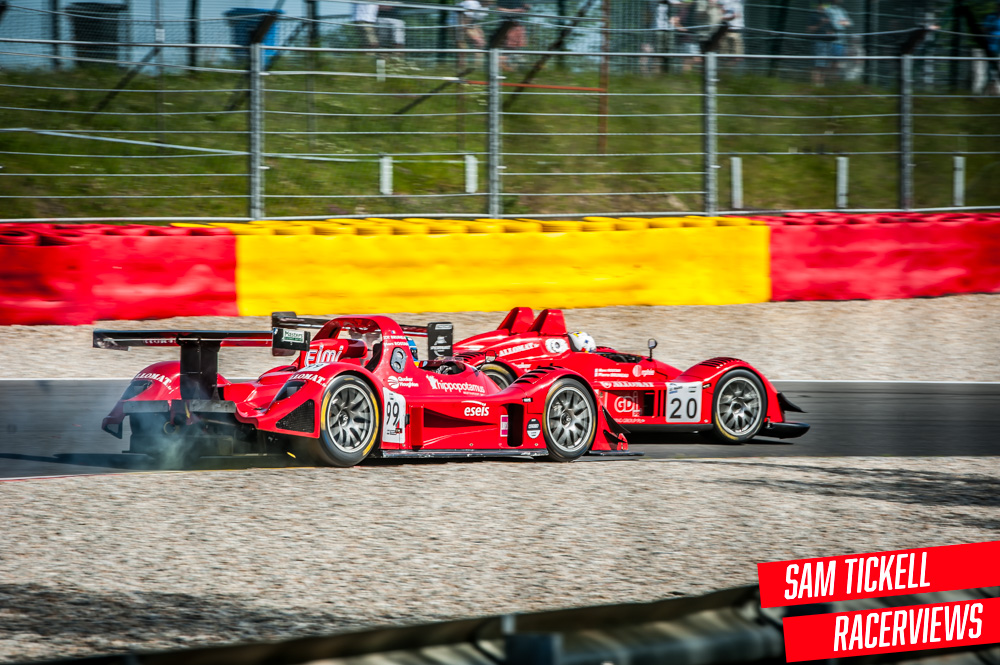
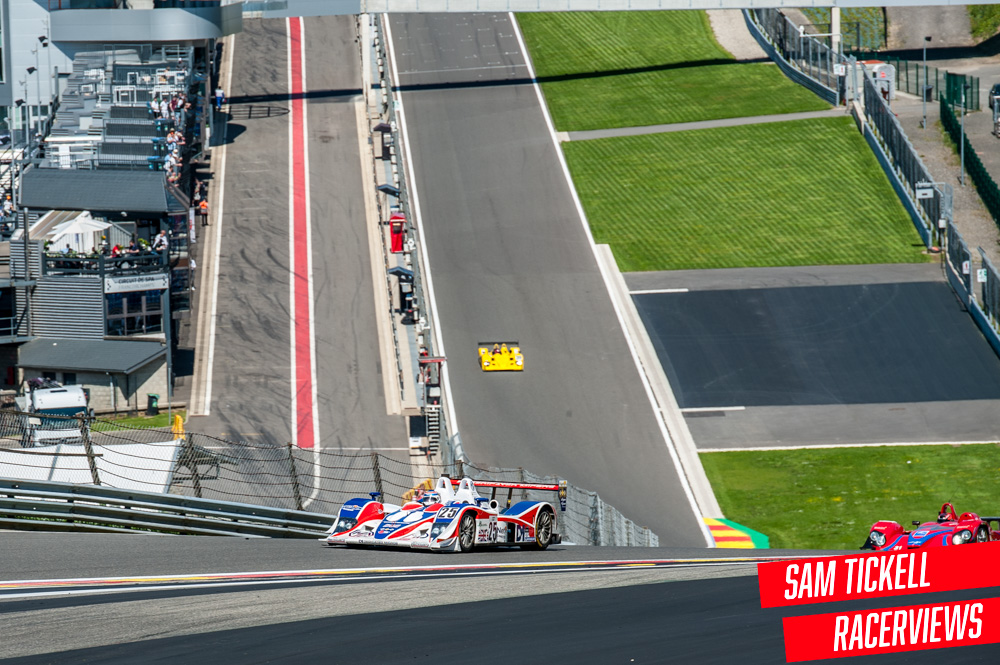
Some stories here are about simple continuity. Marc Rostan and Pierre Bruneau’s Pilbeam is one of them. It is not a re‑creation of a car they once drove; it is the car they drove, a Pilbeam from the LMP675/LMP2 era that lived through the mid‑2000s and has refused to quietly retire. Their partnership in a Pilbeam‑Judd, run by PiR Competition and carrying the number 20, placed them in the thick of the 2006 Le Mans Series LMP2 field, and their Pilbeam story stretches back to earlier Le Mans class honours in the lighter prototype categories.
By 2006, Marc Rostan and Pierre Bruneau were still in the thick of things with PiR Competition’s number 20 Pilbeam‑Judd in the Le Mans Series, keeping an independent, customer‑built chassis active in a field increasingly filled with big‑name constructors.
Seeing that same chassis, in period‑evoking colours, parked in the Spa Classic paddock is a small shock to the system. In the 2000s, this was a functioning tool of resistance: smaller engine, smaller budget, but a willingness to attack the same distance as the frontrunners. Now, with Rostan and Bruneau still attached to it, the car becomes a bridge—one that links the PDF entry lists of early‑internet Le Mans and LMS seasons to the present‑day paddock, without a join line you can easily see.
Newton and the MG Lola thread
Further down the lane, Mike Newton’s MG tells a complementary story. His current MG Lola traces its lineage back through RML’s long campaign with the EX‑series cars: first the spiky, high‑revving MG Lola EX257 in the early years of the Le Mans Endurance Series, then the sleeker, LMP2‑focused EX264 that arrived as the ruleset matured.
The RML squad delivered the kind of résumé most factory teams would envy: LMP2 class wins at the 24 Hours of Le Mans in both 2005 and 2006, plus a Le Mans Series LMP2 title for the RML squad in the same era.
Newton’s relationship with these cars is not casual. He debuted the MG Lola EX257 in 2003 and took it through the 2004 season as the team moved into the new endurance landscape, before stepping into the EX264 as RML shifted fully into LMP2. With that MG Lola EX264, he and the team went on to claim LMP2 honours at Le Mans in 2005 and again in 2006, part of a programme that also delivered a Le Mans Series LMP2 title. The MG Lola you see at Spa Classic today is part of that same family, carrying the same proportions, the same stance under braking at La Source, and the same engine note that once echoed through the small hours at La Sarthe and in 1000 km races at Spa.
Spa has always been a good barometer of such cars. In period, the MG Lola EX264 platform was a regular in long‑distance races here, qualifying inside the top dozen and converting that into strong LMP2 finishes over six‑hour runs, proof that these smaller prototypes had moved beyond ‘junior’ status to become genuine contenders in the overall narrative of the race.
The front‑engined outlier: Panoz at Le Mans
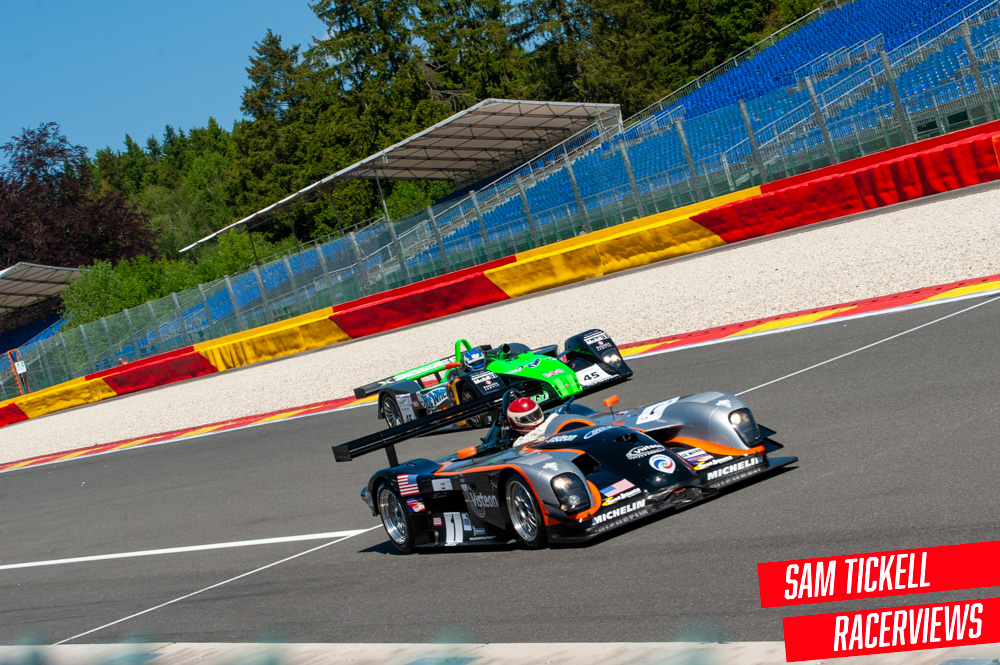
If the Pilbeam and MG Lola represent the logical evolution of lightweight prototypes, the Panoz LMP‑1 Roadster‑S is the glorious outlier. Built in 1999 as a successor to the Esperante GTR‑1, it took the idea of a GT‑based, front‑engined Le Mans car and pushed it into full prototype territory, its massive V8 sitting ahead of the driver in a field increasingly defined by mid‑engined orthodoxy.
Its 1999 Le Mans campaign saw the factory entry of David Brabham, Éric Bernard and Butch Leitzinger finish seventh overall despite a gearbox change, and the same car later delivered landmark ALMS victories, including the famous 2001 Portland win that snapped Audi’s long unbeaten run
On paper, the Panoz LMP‑1 Roadster‑S shouldn’t have worked as well as it did, yet the record books tell a different story: multiple wins in American Le Mans Series competition and a robust showing at the 1999 24 Hours of Le Mans, where the factory car of David Brabham, Éric Bernard and Butch Leitzinger brought the front‑engined concept home in seventh overall despite a late gearbox change. When you see one of these Panoz Roadsters in an Endurance Racing Legends context, you’re reminded that the late‑1990s prototype rulebook still allowed for wild ideas—and that some of those ideas actually worked.
The rare silhouette: Lotus Elise GT1
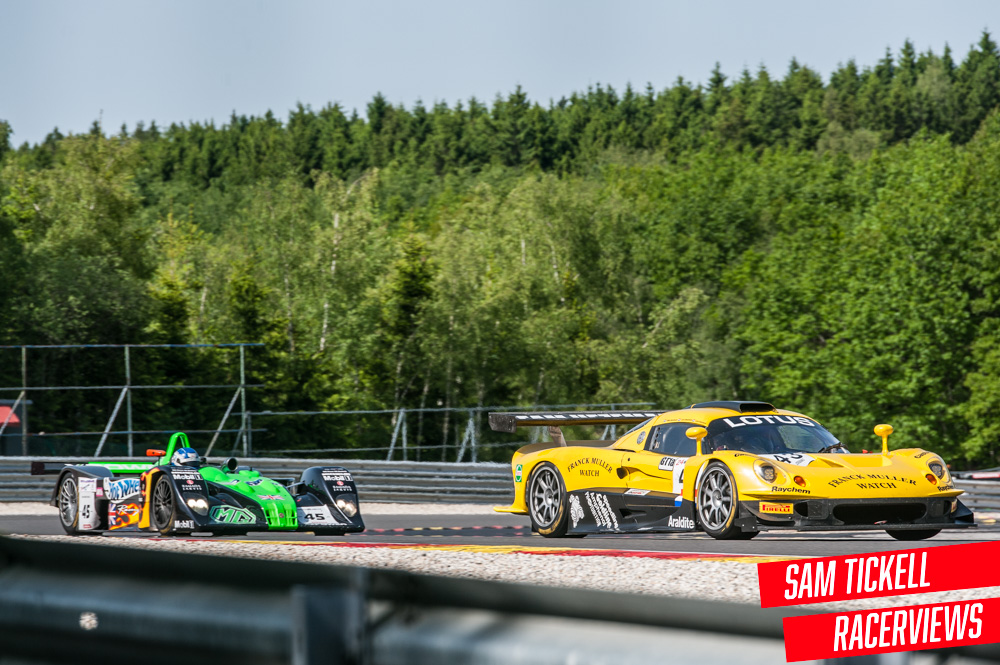
At the other end of the paddock, the Lotus Elise GT1 is a different kind of rarity. Built in 1997 as the most extreme expression of the Elise platform, Lotus created just a handful of GT1 cars and a single road‑legal homologation special, combining a bonded aluminium chassis with a full carbon‑fibre body and a twin‑turbocharged V8 driving the rear wheels.
On paper it was devastating: a Type 918 twin‑turbo V8 in road‑car form producing around 550 PS and capable of more than 200 mph, yet in practice its Le Mans and FIA GT outings were short and often troubled, with reliability issues and rule changes limiting results to a handful of notable finishes rather than the silverware its specification promised.
In a field dominated by Porsche 911 GT1s and Mercedes‑Benz CLK‑GTRs, the Elise GT1’s story was brief and often brutal. Rule changes hit its turbocharged engine hard, cutting power at a stroke, and the programme’s single full season in FIA GT and at Le Mans yielded more colour than silverware, with reliability problems and disqualifications shadowing its handful of notable results. Yet its presence today—one of only a tiny number still active—adds a different texture to the Endurance Racing Legends paddock: a reminder that the GT1 arms race of the late 1990s produced not just the big names, but also fragile, fascinating outliers trying to hack the system.
When LMP2 felt like the future
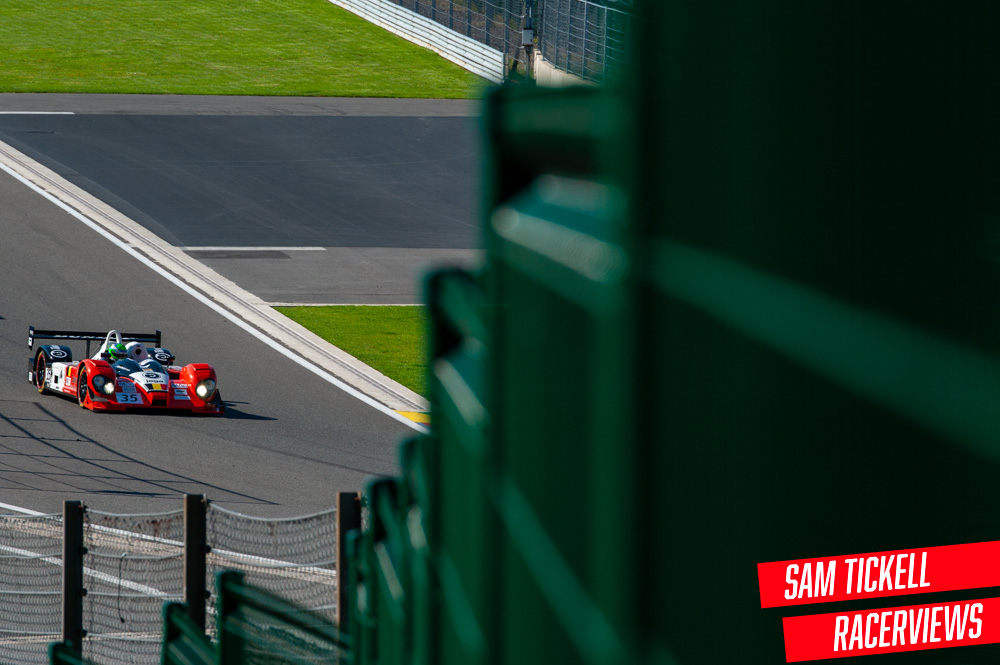
All of these machines sit in the same historical corridor. The early‑to‑mid‑2000s were the years when the Le Mans Prototype alphabet soup—LMP900, LMP675, LMP1, LMP2—hardened into something coherent. The lighter classes, where Pilbeams and MG Lolas roamed, were not just experiments; they foreshadowed the cost‑capped, efficiency‑driven racing that would eventually define the WEC era, while front‑engined Panoz concepts and GT1 curiosities like the Elise wrote in the margins.
Those MG Lolas and Pilbeams, built to exploit low weight and clever aero, read now like drafts of a rulebook that would only be finished a decade later. Their proportions and philosophies wouldn’t look entirely out of place in the early World Endurance Championship paddock, where LMP2 became the stable, spec‑engine backbone of the grid and LMP1 absorbed the experimental, big‑budget role once occupied by GT1 specials and bold prototypes.
From Spa Classic to WEC pitlane
Peter Auto has leaned into that overlap. Endurance Racing Legends deliberately positions these 1990s and 2000s cars as the missing link between classic sports cars and modern WEC machinery, bringing back GT1 silhouettes, front‑engined oddities and slim‑waisted LMP2s in one curated grid. Younger spectators respond to them viscerally because they still look and sound like the racing cars they recognise from archive footage and social media clips, while older fans hear echoes of Eurosport night shifts and Radio Le Mans in their exhaust notes.
That philosophy is now being extended even more explicitly. A new Legends‑style support series, developed by Peter Auto alongside the WEC’s organisers, is taking later‑generation LMP1s and LMP2s—the cars that bridged the gap to the hybrid era—onto the same weekends as the current hypercar and LMP2 fields, creating a live timeline where a 2006‑era prototype can share the stage with its modern descendants at circuits like Imola and Spa.
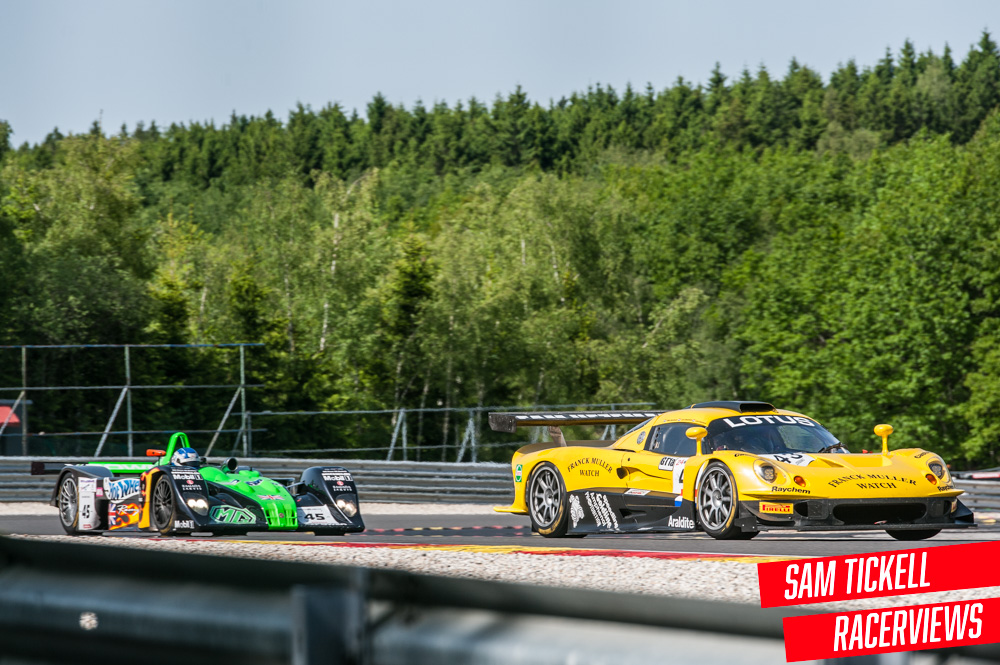
In that environment, Spa Classic feels less like a standalone nostalgia exercise and more like a proof of concept. Watching Newton’s MG, Rostan and Bruneau’s Pilbeam, a bellowing Panoz and a rare Lotus Elise GT1 climb through Eau Rouge and onto the Kemmel Straight, you can draw a clean line from their era to today’s WEC paddock. The modern LMP2s that sit under the current regulations—and the hypercars that have replaced LMP1 as the headline act—owe some of their philosophy to these lighter, cleverer and sometimes wilfully eccentric prototypes that once punched above their weight
Nostalgia, but not as comfort food
The nostalgia at Spa Classic is therefore not soft. It is not about sepia filters or static displays. It is about continuity—about seeing the same Pilbeam that chased class honours two decades ago still being hustled through traffic, the same family of MG Lolas that once took LMP2 wins at Le Mans running again in anger, and the same Panoz and Lotus silhouettes that challenged convention now given the space to tell their stories properly.
For someone like Emile Breittmayer—whose story you will read alongside this—the interest is not just in the results, but in the ecosystem. Drivers, engineers, privateers, series organisers: they all share a project of keeping this slice of endurance racing alive, not embalmed. Spa’s forest provides the soundtrack, the cars provide the proof, and the WEC calendar increasingly provides the future stages.
When you stand at the top of the Raidillon and watch an MG Lola, a Pilbeam, a Panoz Roadster and a Lotus Elise GT1 take a set, you can almost hear two timeframes overlaid. One is the late‑1990s and mid‑2000s, with CRT televisions glowing in the background and a new generation of prototypes finding their feet. The other is now, where those same cars still have something to say—and where their ideas have already migrated into the rulebooks and paddocks of the present.