Emile Breittmayer’s smile says it before the numbers do.
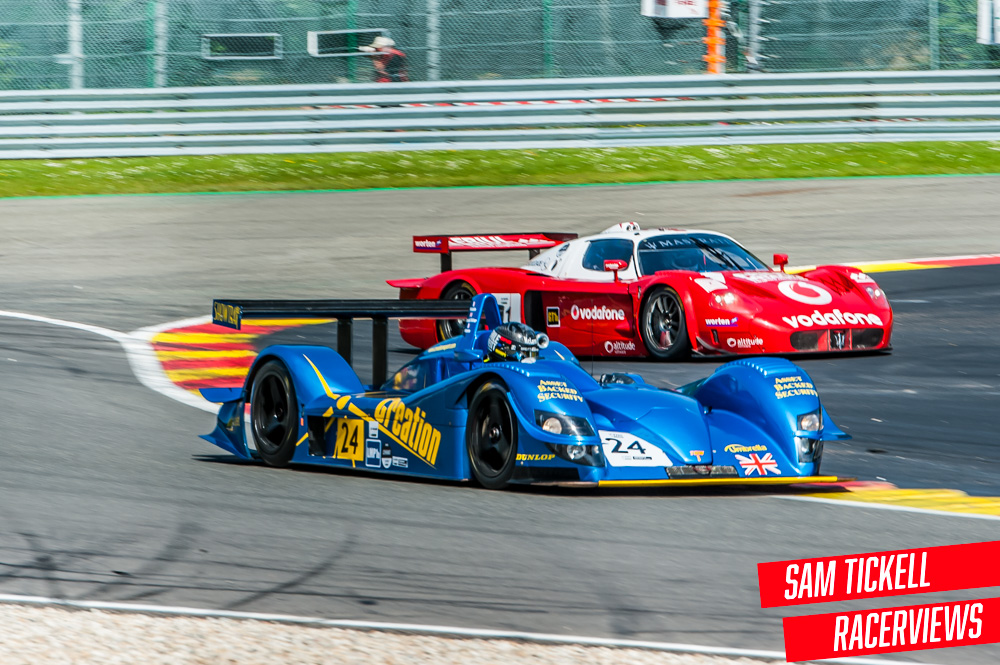
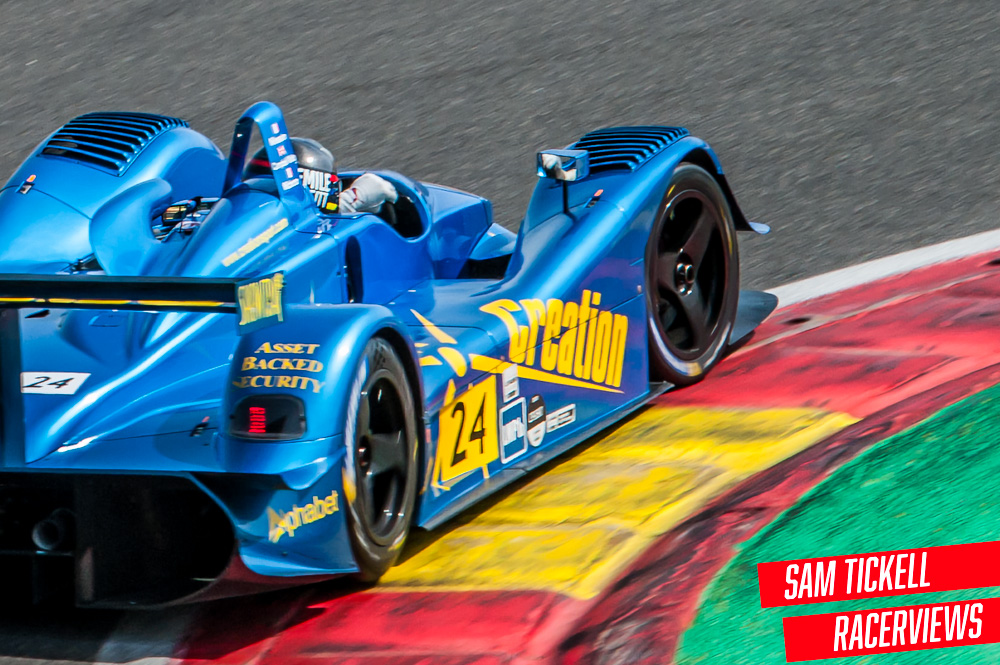
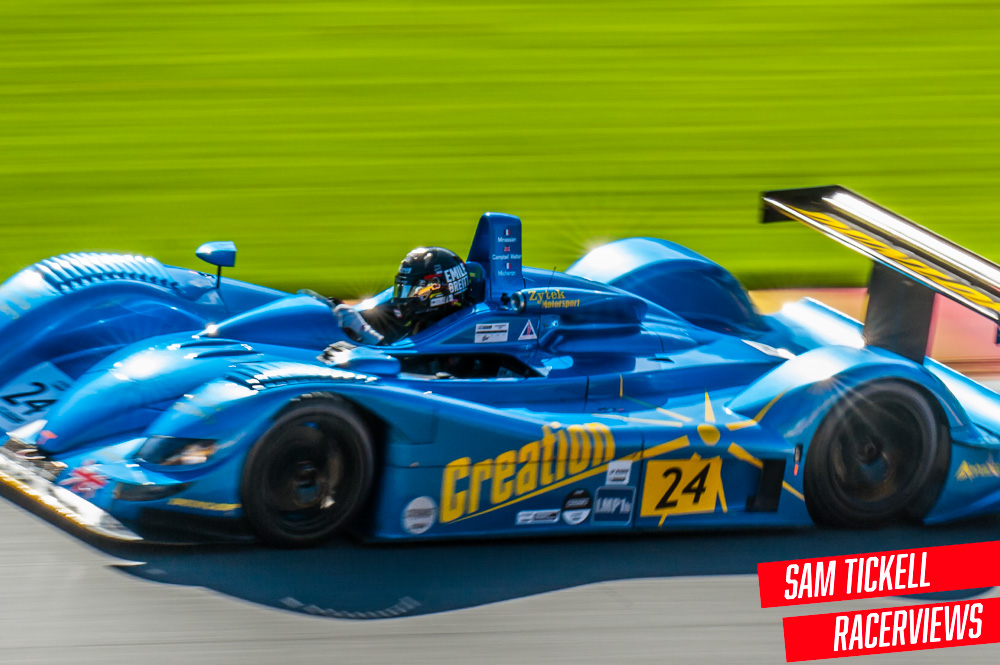
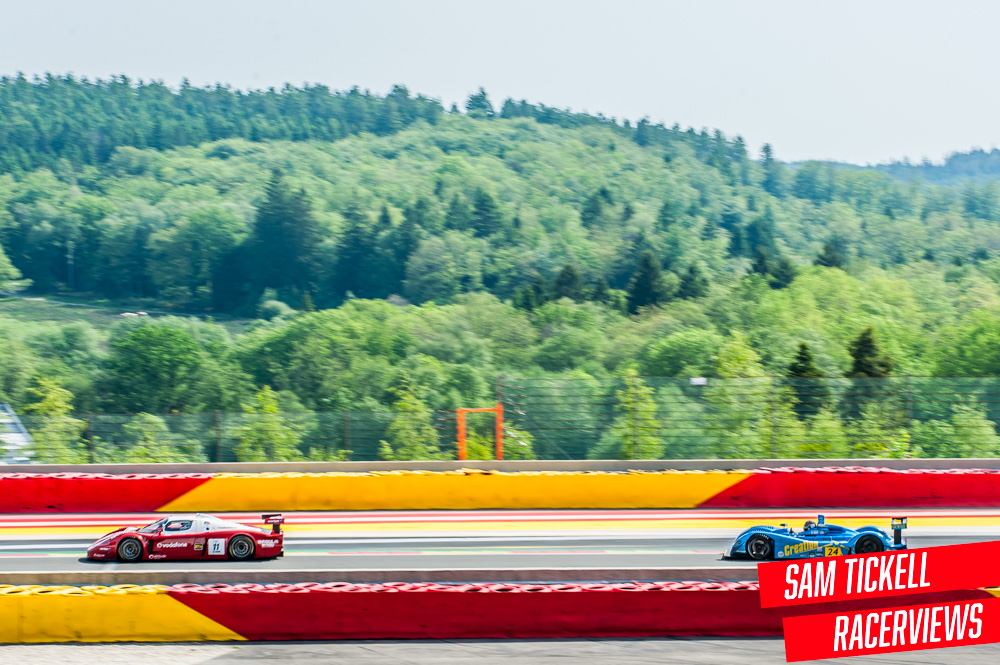
“I just fall in love with the car because I love the light car, and this car is really light,” he says, almost apologising for how simple it sounds. The car in question is anything but simple: a DBA 03S, born as a Reynard 02S LMP675, upgraded into an LMP1 “Blue Rocket” by Creation Autosportif, and now back in anger in historic racing colours under the Breitt Racing banner.
In period, this was the kind of prototype that made engineers and privateers lean in. Today, it’s a bridge back to a very particular moment in sports car racing, when light, nimble cars dared to take on the heavyweight Pescarolos and Audis and occasionally came away with the headlines.
 A car defined by lightness
 A car defined by lightness
Even in the way Emile talks about it, the DBA is a car you feel as much as you describe.
“To 700 for 500 kilo and 7 for 500 horsepower,” he explains, shorthand for the power‑to‑weight equation that hooked him. In era‑correct spec, the car carries around 500 horsepower from a 3.4‑litre Zytek V8 for roughly 760 kilograms—far below the 900‑kilogram minimum that defined most contemporary LMP1 machinery. Emile’s shorthand is imperfect; his instinct is not. The attraction is about mass, response, the sense that every input counts.
“The first feeling of the car is just great,” he says in your interview. “It’s so fast and it’s a really nice car.” The numbers may be two decades old, but the sensations are not. The DBA’s steering is quick, its aero honest, and its braking almost shocking for anyone used to GT cars. “And the history of the car, I really like it because it win a lot of race in period, not Le Mans, but it was all the other tracks, and it was really fast in Spa and beating the Audi.” That last line matters to him. “It’s one of the only car who beats the Audi in period, so that’s why I love this car.”
He’s not wrong. As the Ascot Collection’s own dossier on the car notes, this particular chassis—Reynard 02S‑01—took eight podiums and 15 top‑three qualifying results, including eight pole positions, across the Le Mans Endurance Series and American Le Mans Series. It started life in 2002 as a LMP675 Reynard in the hands of RN Motorsport, then evolved into the DBA 03S and finally into Creation’s blue‑and‑yellow LMP1 entry, picking up its “Blue Rocket” nickname along the way.
At circuits like the Nürburgring and Spa, it wasn’t just quick “for a privateer”. In 2004, it famously took LMES pole at the Nürburgring ahead of three Audi R8s and then finished on the podium, proof that the concept—less weight, less fuel, less inertia—could be a real threat when it came together. In the United States, it added a pole at Laguna Seca in the ALMS, again ahead of Audi, underlining why Emile talks about it with such obvious pride.
From Lister Storms to the Blue Rocket
 From Lister Storms to the Blue Rocket
To understand the car, you have to understand the team that turned it into what it became.
Creation Autosportif was founded in 2003 by Ian Bickerton and Mike Jankowski in Oxford, their name and logo inspired by the “Pillars of Creation” in the Eagle Nebula rather than the usual alphabet soup of acronyms that clung to most customer teams. They made their public debut with Lister Storm GT cars in FIA GT and FFSA GT, a line‑up backed by Stuff magazine that delivered flashes of pace, including a second place at Oschersleben.
By 2004, however, the team’s attention moved decisively towards prototypes. Creation bought a DBA 03S from RN Motorsport—a car that had already shown promise in LMP675—and took it into the brand‑new Le Mans Endurance Series. In its first LMES season, the blue and yellow car scored two third places, good enough for fourth in the teams’ standings, and in 2005 it improved again, taking a runner‑up finish at Silverstone and regularly qualifying near the front.
When the ACO reshaped the top class into LMP1 in 2004, Creation and Zytek were granted a kind of dispensation: they could run the car in LMP1 without meeting the 900‑kilogram minimum, provided they accepted a smaller air restrictor to balance performance. The idea was simple: Audi’s domination needed a counterbalance, and the “Blue Rocket” was one of the cars tasked with providing it.
The result was a prototype that combined LMP675 agility with LMP1 ambitions. Powered by the high‑revving Zytek ZG348 V8, later replaced by a Judd for consistency, it delivered that rare blend of lightness and durability that privateers crave. It entered Le Mans three times, finishing second in LMP675 in 2003 before its upgrade, and even if La Sarthe never yielded the headline win Creation wanted, almost everywhere else it felt like a car that could sting giants.
From there, the storyline moves on—to the CA06/H hybrid and the all‑new Creation CA07—but the DBA itself remains a snapshot of that transitional moment. And it is that snapshot Emile has reclaimed.
From Ascot Collection to Breitt Racing
 From Ascot Collection to Breitt Racing
“These cars, they’re 20‑something years old,” you note in the voice‑over. “They don’t come up very often. Parts are difficult to come by.” That scarcity is part of the appeal. Emile acquired the DBA from the Ascott Collection, the French specialist that restored the car to period spec and supplied it to Breitt Racing with a fresh Zytek (now Gibson) engine and a complete historical file.
“Yes, they work a lot,” Emile says of the preparers. “They have all the plan from before, so they do everything like before. I have the data of before too, so we learn a lot, and I think we’re gonna improve the next years and next years because I plan to do a lot of race with it.” That access—to original drawings, setup sheets, data traces from Creation’s LMES and ALMS campaigns—means his DBA is not just a relic; it is a continuing project, a car still being developed, just in a different competitive context.
Breitt Racing, and the broader Breittmayer family effort, have already made a habit of splitting their time between modern competition and historic racing. They are ever‑present in the Belgian Rally Championship; they could, if they wished, drop into a contemporary GT grid with something like a Ferrari or Porsche. Instead, they keep returning to events like Spa Classic and Le Mans Classic with cars that demand a different kind of attention.
“Yes, it’s just amazing because it’s historic cars and it’s crazy car,” Emile says, searching for the right word and landing on the one that really matters. “When you drive a Capuchinobo in Spa, or LMP1 or Lola 270, the car is really different, different style of car, and it’s really fun because the driving is really different. So you have modern style, historic style, and it’s still really fast and very competitive. So I have a lot of fun doing this event for the race. Everything is competitive, fun.” The grammar wobbles; the point does not. Historic racing, for him, is not about taking it easy. It is about reliving a period where the cars were wild but the competition was sharp.
A light car in a heavy era
 A light car in a heavy era
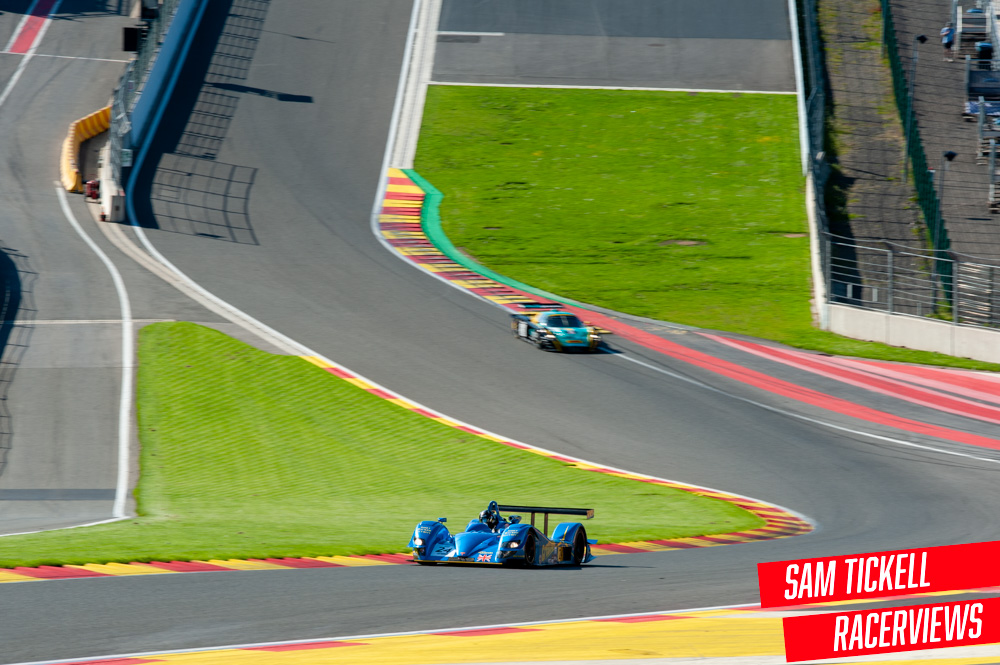
Seen against the broader history of Le Mans prototypes, the DBA/Creation story is part of a larger narrative. The Reynard 02S was conceived as a way to right the wrongs of the ill‑fated 2KQ, designed from the outset to be fully competitive as either a LMP675 or LMP900, and built to meet the ACO’s crash standards for both. When Reynard collapsed, International Racing Management and John Nielsen ensured that the design survived, and with Zytek’s help it found new life as the DBA 03S and later the Zytek 04S.
Creation’s decision to pick up that chassis and turn it into their own LMP1, and the ACO’s decision to let it run light in the top class, speak to a moment when the rulebook was still trying to decide what endurance racing should be. It was a time when small, well‑prepared teams could still scare giants with cars that weighed 150 kilograms less and braked just that fraction later into the Dunlop chicane or Les Combes.
Emile is drawn to that contrast. “The other LMP1 are more 900 kilo and a bit more horsepower,” he says. “But the car feels…” He almost doesn’t need to finish the sentence. You know what he means: the car feels alive, alert in a way heavier, more stable machinery is not. It is the same logic that once put WRs and Pilbeams on Le Mans grids alongside Audis and Pescarolos; the same logic that makes today’s historic grids, with their mix of GT1 silhouettes and early‑2000s prototypes, so compelling.
Why this car, now?
 Why this car, now?
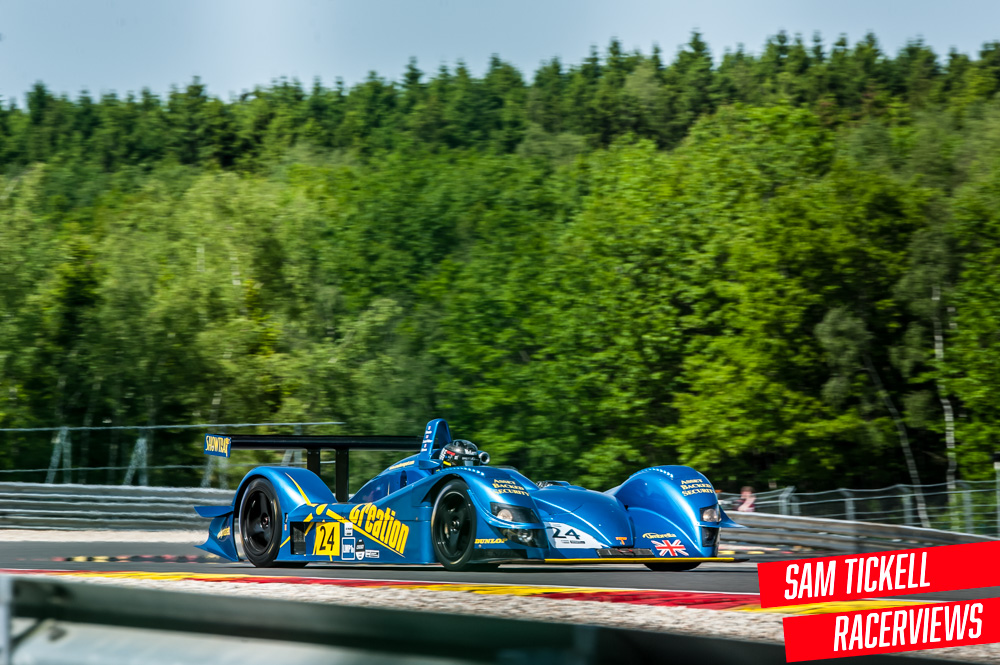
In the video, you ask why he chose this car, when so many other options existed. His answer loops back to two themes: history and feeling.
“The history of the car, I really like it because it win a lot of race in period,” he says. “Not Le Mans, but it was all the other tracks, and it was really fast in Spa and beating the Audi.” It matters to him that the car has a story beyond being “eligible” for Masters Endurance Legends or Endurance Racing Legends; that it was once the car that set pole in front of established factory names and earned its nickname not from marketing but from lap times.
And then there is that first impression.
“First feeling of the car is just great. It’s so fast and it’s a really nice car.” There’s no mention of lap times, no talk of balance windows or tyre degradation. The attraction is simpler and deeper: the sensation of a light LMP car on a fast lap at Spa in 2024 or 2025 that feels remarkably like it did in 2004.
For Emile, historic racing offers a way to carry that sensation forward. “It’s still really fast and very competitive,” he says. “Everything is competitive, fun.” The car may be from another era; the racing is not. In that sense, the DBA 03S/Creation LMP1 suits him perfectly. It is a car that was built to surprise bigger names two decades ago and now, in his hands, has the chance to do much the same at Spa Classic, Le Mans Classic, and the growing constellation of endurance‑inspired historic events.
And as he stands next to the car after its first runs in Breitt Racing colours, the logic of that choice is obvious. For all the talk of plans, data, and future races, the core remains the way he puts it at the start:
“I just fall in love with the car because I love the light car, and this car is really light.”
Article, interview, video, photos by Sam Tickell.