Friday – Poland rewrites its brief
Rally Poland arrived on the ERC calendar this year with a new brief: same history, different surface. After decades as a high‑speed gravel staple, the 82nd edition moved south to Katowice and onto pure asphalt, taking its 187.6 km of stages to Silesian roads that feel more like a European GT test track than a traditional loose‑surface rally. For the series, it was a deliberate pivot: an old event refreshed to suit a modern championship where versatility is increasingly the defining currency.
Qualifying on Thursday gave an early taste of the new order. Dominik Stritesky set the benchmark time, Mikko Marczyk sat less than a second behind, and Teemu Suninen, arriving as ERC points leader, was already somewhere near the sharp end of the sheet. It was a scene that suited a Suninen story: established rivals from the ERC and national championships, all within tenths on a tight asphalt shoot‑out, and a Finn whose reputation has been built as much on neatness as on outright fireworks.
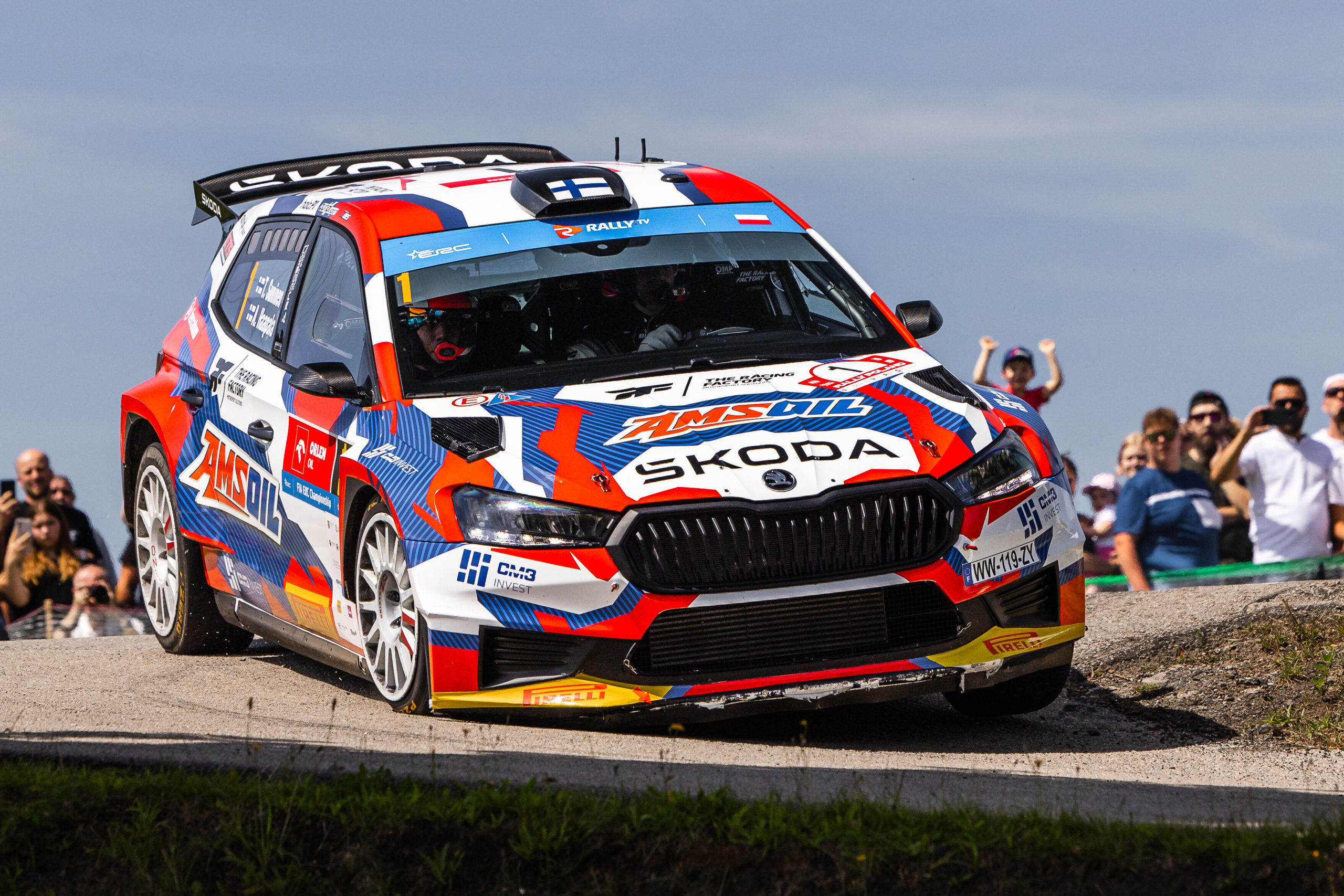
Friday’s first full day built on that. The route combined shorter, more technical tests with faster, open sections, all laid out within reach of Katowice so that road sections never strayed too far from the city’s skyline. Qualifying winner Stritesky started the rally running fifth coming into stage three, while Irish and Polish hopefuls were already in the mix – Jakub Brzeziński, Mikko Marczyk, and others trading tenths rather than seconds. Suninen, though, was the driver the camera kept returning to: not always the flashiest on each individual split, but consistently in a place where the classification could turn his consistency into control.
Friday’s key storylines centred on positioning rather than big gaps. A Lancia driver grabbed early super special headlines with a stage one win and another fastest time on stage seven that lifted them into the runner‑up slot. Marczyk, the local hero, hovered close by, giving Poland the home podium prospect it wanted. Suninen, meanwhile, did what points leaders tend to do when they sense a new surface could spring surprises: he stayed close, avoided errors, and made sure the rally would still be his to shape on Saturday rather than somebody else’s to defend.
It meant Friday closed with Poland’s asphalt debut framed around a small, tense leading group. The local set – Marczyk and other Polish names – were inside the top five. The regular ERC runners had done enough to stay in contention. And Suninen had quietly put himself exactly where he needed to be: within striking distance of a first ERC win, on a surface that rewarded the kind of measured aggression he’s been refining for years.
Saturday – Suninen takes the pen
Saturday was the day Rally Poland stopped being an interesting experiment and turned into a proper ERC inflection point. The stages extended in length and complexity, with Silesian asphalt revealing its different characters: fast sections that looked like they belonged to an old‑school European touring‑car circuit, tighter village stretches where braking markers were more likely to be lamp‑posts or shrines than dedicated rally boards. The gaps at the front were small enough that any mistake would be punished; the question was who would take control without overreaching.
According to the highlights, Saturday belonged to Suninen. He arrived in leg two as championship leader, but not yet as a winner in the ERC; by the end of the day, he had turned Poland into his opportunity to change that status. Stage after stage, he set the tone, trading times with Jakub Matulka – a driver who, over the weekend, would become both his main rival and his yardstick – and slowly edging the event in his favour.
While Saturday’s early narrative still carried the names that had lit up qualifying – Stritesky, Marczyk, Brzeziński – the highlight reels make it clear that the star of the show on the second day was Suninen. His driving matched the new Poland perfectly: precise, confident on the brakes, and committed enough to take advantage of the high‑grip sections without inviting small mistakes on the polished asphalt in the towns. By late in the leg, he had moved into the rally lead, with Matulka nudging ahead of others and preparing for a final‑day fight.
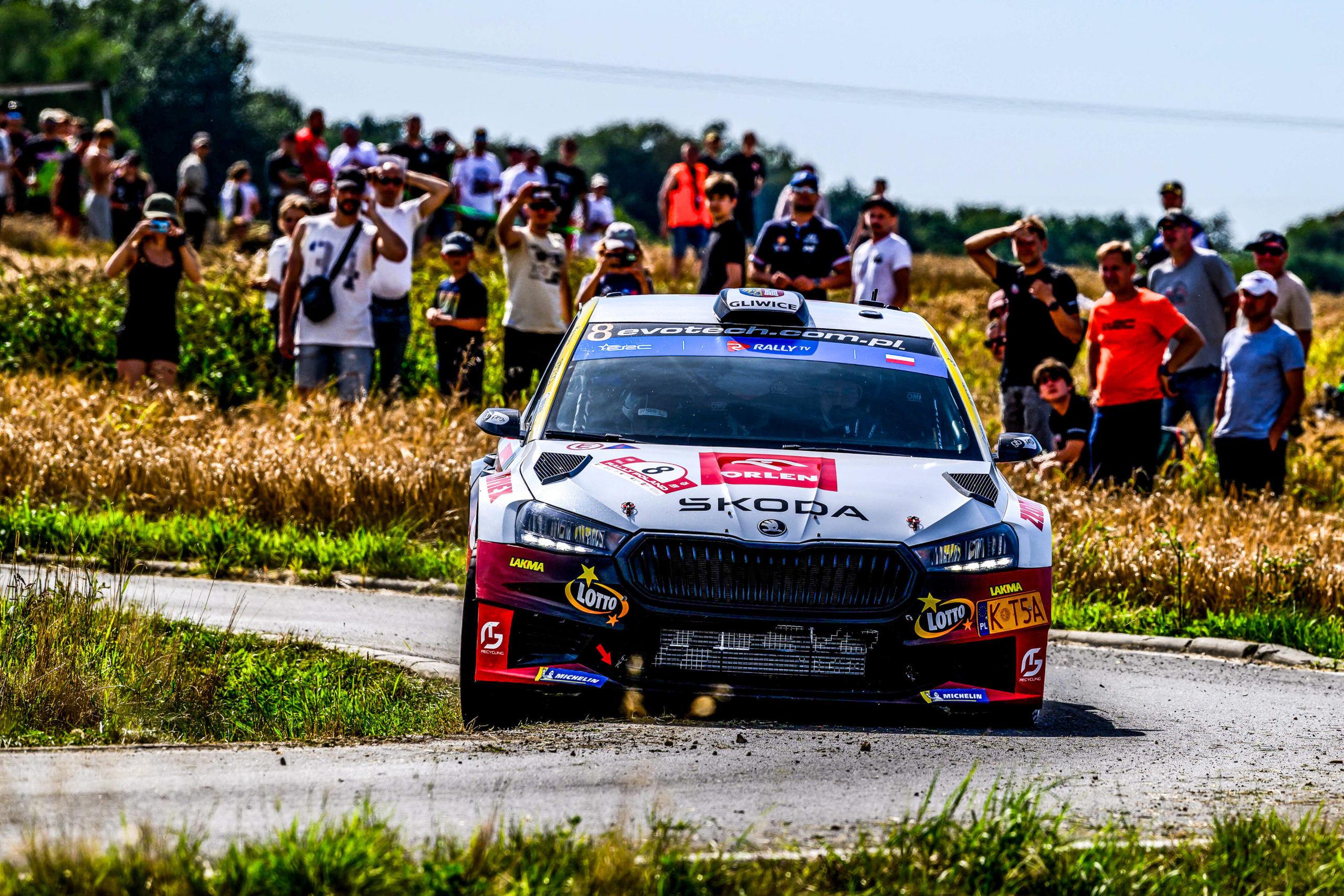
Behind them, Marczyk’s story evolved from qualifying star to home podium hopeful. Running close to the top three, he fought through stage‑by‑stage battles with compatriots like Brzeziński and other ERC regulars, all while carrying the expectation that at least one Polish name had to be on the rostrum when the new‑look Rally Poland crowned its winner. Andrea Mabellini and Polish legend Kajetan Kajetanowicz, the three‑time ERC champion, stayed firmly in the mix as the weekend progressed, ensuring the top five had a pleasing blend of international and domestic flavour
As Saturday closed, Suninen led going into the final day, Matulka positioning himself as the primary threat, and Marczyk, Mabellini and Kajetanowicz anchoring a top five that looked like a neat cross‑section of the ERC’s current competitive landscape. For Suninen, it meant Sunday was no longer about staying in the title picture; it was about converting a season of solid control into a first European championship victory on a rally that had reinvented itself from gravel to asphalt and, in the process, become something of a proving ground for his adaptability.
Sunday – polish on Polish asphalt
Final day highlights from Poland read like the closing chapter of a composed, carefully managed win rather than a chaotic last‑minute steal. The stages remained quick, and the gaps at the front were small enough to discourage any complacency, but the pattern was consistent: Suninen and Matulka trading stage wins, the Finn controlling the margin without allowing the Czech driver to sniff a real chance of overturning the balance. It was a duel conducted in tenths rather than seconds – the kind that suits a rally where asphalt precision matters more than big, gravel‑style lunges.
Suninen “would indeed claim a first ERC victory,” as the highlight commentary puts it, his final winning margin measured at 9.7 seconds over Matulka. In classification terms, the result is crisp: Suninen and co‑driver Antti Haapala winning in their Škoda Fabia RS Rally2 in 1:38:52.8, Matulka second at +9.7s, Marczyk third to secure that hard‑fought home podium. Mabellini fourth, Kajetanowicz fifth, ensuring three locals in the top five – exactly the kind of outcome that keeps a reinvented national event feeling rooted rather than generic.
From Suninen’s perspective, Sunday in Poland was as much about tone as time. As ERC points leader, he could not afford a mistake‑strewn chase for style points; as a driver seeking his first series win, he also needed to demonstrate that his championship lead was built on more than consistency. The solution was the kind of performance that will look good on replay for years: disciplined pace, enough aggression to keep Matulka behind, no visible waste of car or tyre, and a final loop where every braking point and apex seemed designed to underline that he had understood Poland’s new asphalt identity faster and more fully than anyone else.
For the event, the result gave the organisers exactly the narrative they wanted. Poland’s asphalt debut produced a high‑quality podium – Suninen, Matulka, Marczyk – and a top five that blended ERC regulars with national icons like Kajetanowicz. It proved that moving from Masuria’s gravel to Silesia’s tarmac could deliver both spectacle and depth: the second‑oldest rally in the world, behind Monte‑Carlo, hosting a fresh format without losing its sense of place.