Tokyo’s double‑header under the lights felt like Formula E’s most complete “city weekend” yet: two very different races on the same street circuit, and a championship picture that shifted in subtle but significant ways across 48 hours.
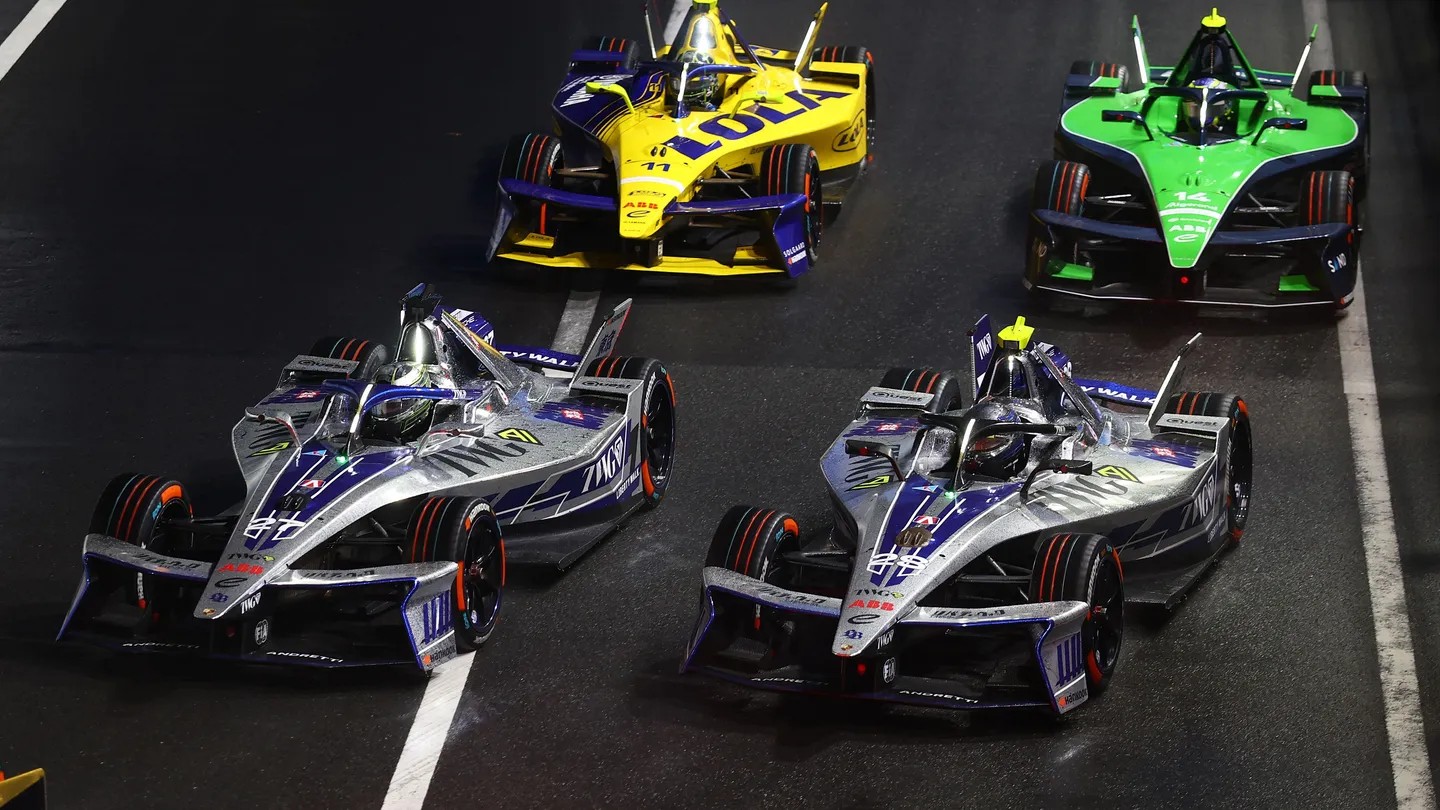
Race 1 – Ticktum steals it at the last corner
The opening Tokyo E‑Prix turned on one moment: Dan Ticktum’s last‑corner, last‑lap move on Jake Dennis, taking Cupra Kiro’s first win of the season and snatching away what had looked like a perfectly controlled Andretti victory. Over 36 laps, Dennis had done what he usually does on street circuits – manage energy, look after track position and keep the race calm – only for Ticktum to convert one final opportunity into the kind of overtake that will be replayed every time Tokyo is mentioned.
Ticktum’s Cupra Kiro had been in the frame all race, helped by a car and package that suited the high‑speed, technical rhythm of the Tokyo Street Circuit, with its combination of long straights and tight complexes under the city lights. He stayed close enough to Dennis to keep the pressure real without overspending his energy budget, and when the final lap came, he had the margin – and the conviction – to attack at exactly the point where Dennis could least afford to defend fully. The result line tells the story: Ticktum first, Dennis second just 0.380s back, Nick Cassidy completing the podium for Citroën another 0.237s further down the road.
Behind them, Mitch Evans brought Jaguar home in fourth, Edoardo Mortara got Mahindra into fifth and Jean‑Éric Vergne added more solid points for Citroën in sixth, underlining how tight the upper midfield remains. Nissan’s home hopes started modestly, with Oliver Rowland seventh, but the local team used the race to reset after both drivers narrowly missed the qualifying duels in the hot, humid daytime conditions. Pascal Wehrlein’s Porsche, arriving in Tokyo as the points leader after Shanghai, failed to finish, turning the opening race into a small but meaningful swing against his championship campaign.
For the wider season arc, Race 1 did three things. It confirmed Dennis as a serious title player even when he’s beaten – the points from second and the way he controlled most of the race mattered. It pushed Ticktum firmly into the spotlight as the driver willing to turn a tight, technical street race into a late‑braking gamble if the energy numbers allow. And it reminded everyone that Tokyo, even in its first full night running, is more than just a showpiece; it is a track where one misjudged defence or one failed finish can reshape the points table in a single evening.
Race 2 – de Vries wins as Dennis takes control
If Saturday was about a last‑lap heist, Sunday’s second race – Round 15 – was about composure in the middle of chaos. Nyck de Vries emerged from a night of interruptions, rolling restarts and strategic pivots to take the win, while Dennis added another podium in third and, crucially, moved into the championship lead. Under the Tokyo lights, Formula E produced a different kind of drama: less about one move, more about who could keep their head while the race format and incidents kept changing around them.
The pre‑race picture had suggested another Mahindra headline: Mortara took pole in the qualifying Duels, beating Antonio Félix da Costa in the final by more than six tenths and looking comfortable on the 1:12.341 lap that secured his fourth pole of the season. The grid behind him was loaded: Ticktum third, Taylor Barnard fourth, de Vries sixth and key contenders like Mitch Evans, Oliver Rowland and Dennis scattered through the midfield after more challenging qualifying runs. On paper, it looked like a race that might finally tilt fully towards Mahindra.
In reality, it became something much more layered. Mortara’s advantage unraveled across the race as incidents, energy management demands and safety‑car periods shuffled the order, and by the end it was de Vries – from within the same Mahindra camp – who had navigated the interruptions best. Cassidy, whose Citroën had already been on the podium in Race 1, finished second, continuing a run of results that keep him firmly in the title conversation. Dennis, again, was third – not spectacular on paper, but critically important once the points were tallied, and enough to give him the provisional lead in the championship.
Further back, Nissan delivered the kind of home weekend it needed. Oliver Rowland climbed to fourth in Race 2, recovering strongly after a challenging opening event and ensuring another double‑points result for the Japanese manufacturer, with Norman Nato in sixth. Jean‑Éric Vergne’s sixth place on Saturday was followed by a fifth‑place run on Sunday, while Buemi, Müller and Barnard’s top‑ten positions underlined how many established names were buried in the chaos and still found ways to score.
The classification line from Race 2 – de Vries, Cassidy, Dennis, Rowland, Vergne, Nato, Buemi, Müller, Barnard, Günther, and so on – only tells part of the story. The other part is the championship context: Dennis leaving Tokyo with back‑to‑back podiums in the Japanese capital, the points lead and Andretti marking its 45th podium, 21st fastest lap and 78th top‑five finish in Formula E. Wehrlein’s more muted second race, combined with his Race 1 DNF, turned Tokyo into a swing round at the top of the table