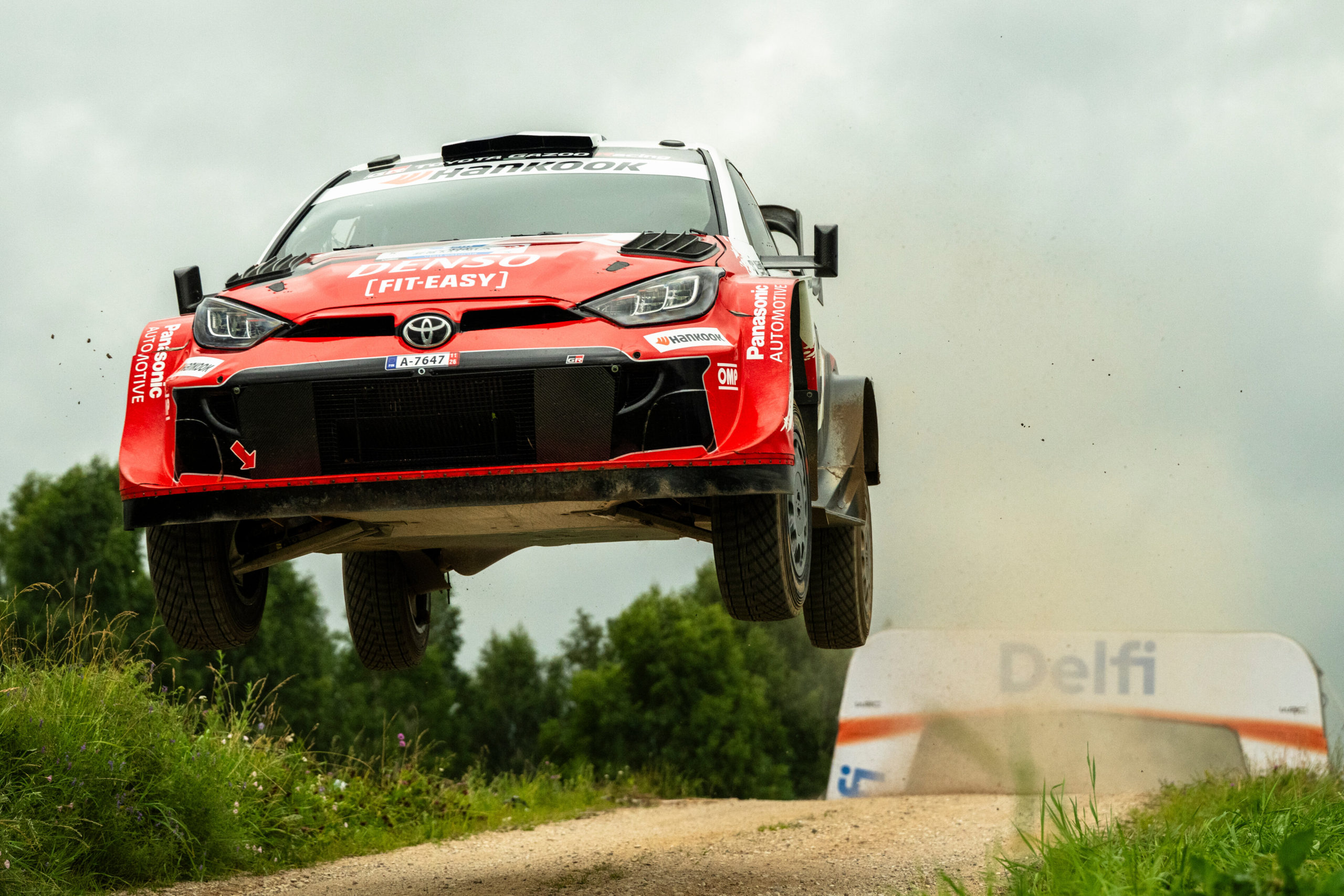
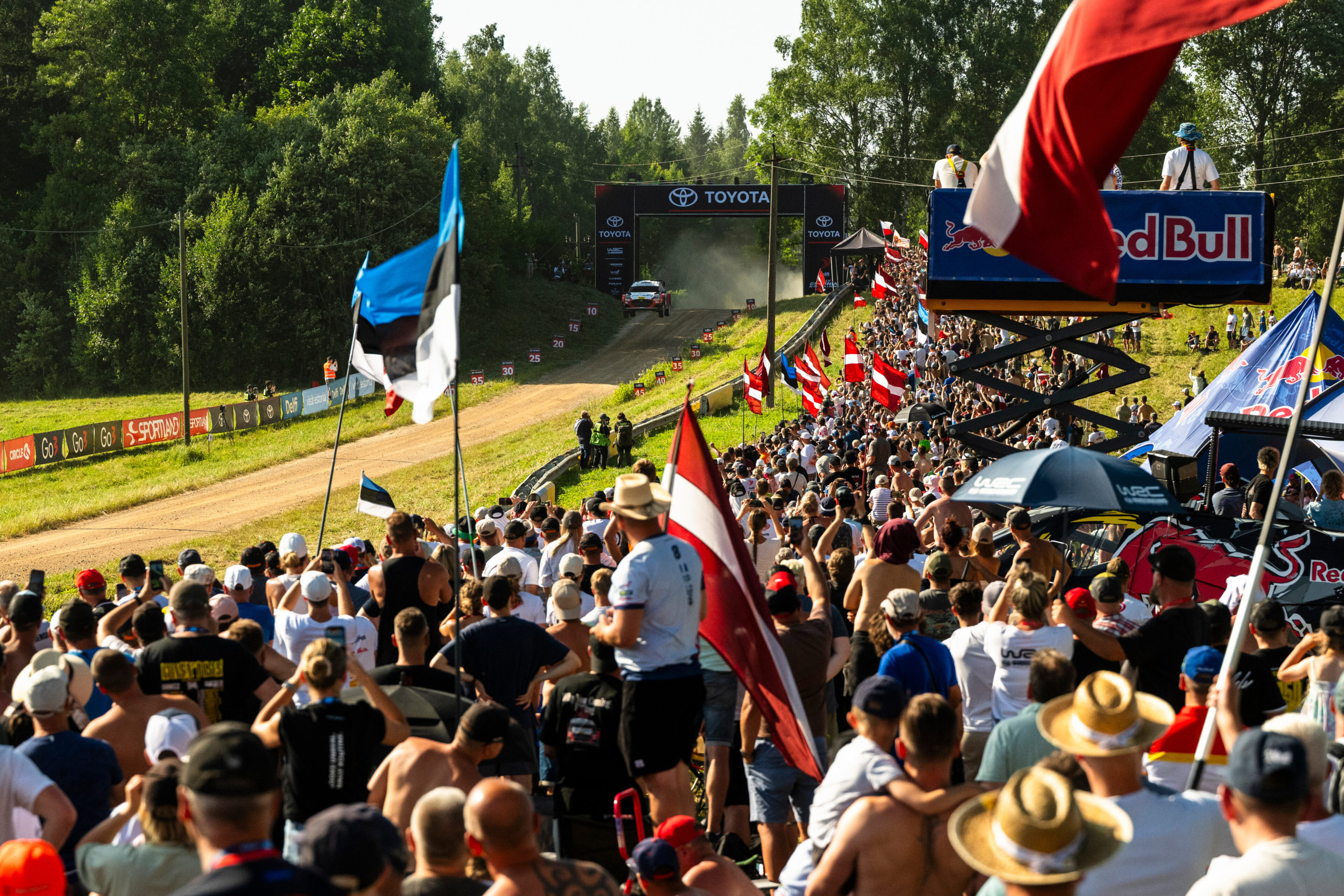
Rally Estonia is one of those events where the itinerary never quite captures the sensation. The documents talk about kilometres and averages; the reality is a car floating over a blind crest at 180, a line of fans on the banking, and a forest that seems to lean in closer every time a Rally1 car arrives.
Around Tartu, Otepää and the smaller towns that have become regulars on the map, the roads are a blend of wide, sculpted gravel and older, more lived‑in tracks. The fast, flowing sections, with built‑in jumps and long compressions, are what made Estonia famous in the WRC, but the narrow, technical links—threading between farms and forest edges—are what turn a fast rally into a demanding one.
Friday
Rally Estonia 2026’s opening leg had the air of a test the drivers already knew was coming. The route sent them south of Tartu onto the kind of stages that have defined the event since it joined the WRC: flowing, high‑speed gravel, minimal risk of punctures, and a rhythm that only really reveals itself at pace.newsroom.
Sami Pajari treated that rhythm as an invitation. By the end of Friday he had gone quickest on all seven competitive stages, completing what was effectively a clean sweep of the day. The numbers told their own story: Pajari leading, Oliver Solberg second at 14.7 seconds, and Adrien Fourmaux just behind in third, 16.5 seconds from the top spot. It wasn’t so much a surprise—the Finn’s pace on fast gravel has been obvious for some time—as it was a confirmation that, given a rally tailored to his strengths, he could run the day with a kind of quiet authority.
Solberg’s approach looked almost consciously measured. On a rally he’d already won in 2025, he kept Pajari in view without forcing the issue, knowing that Estonia’s biggest jumps and fastest crests can punish overconfidence more quickly than almost anywhere else in the championship. Fourmaux’s speed in the Hyundai gave Friday’s classification a balanced feel: Toyota‑Hyundai‑Toyota at the sharp end, with Neuville and Ogier in the supporting cast but never far away.
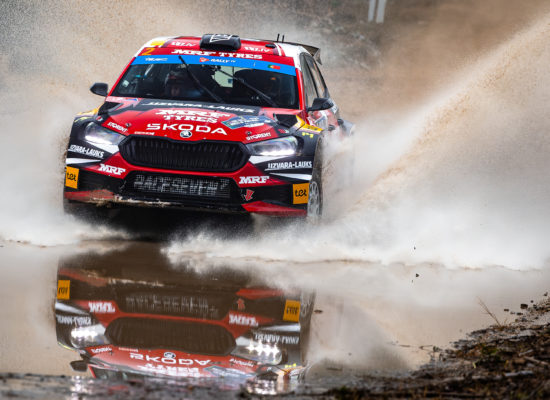
WRC2’s opening chapter belonged to Robert Virves. In front of a home crowd, driving a Škoda Fabia RS Rally2, he and co‑driver Jakko Viilo ended Friday on top of the class, with Teemu Suninen and Roope Korhonen chasing in Toyota GR Yaris Rally2s. The margins were already slim—seconds rather than tens of seconds—but the sense was clear: if anyone was going to bend the category to their will this weekend, it would be Virves, carrying both local knowledge and momentum.
By the time the cars rolled back into Tartu for the super special and evening fan engagement, the pattern was set: Pajari in control, Solberg disciplined, the chasing pack stacked tightly enough to keep Saturday meaningful, and a WRC2 field that looked ready to give the locals something serious to shout about.
Saturday
If Friday proved Pajari’s intent, Saturday confirmed his control. The route extended north and south of Tartu, tying together the wide, fast “signature” Rally Estonia roads with more technical sections that punished poor pacenotes and imperfect commitment.speedweek+2
The day began with the same sense of flow as Friday, but the nuance changed. Solberg finally broke Pajari’s run of stage wins on Saturday’s morning loop, outpacing his fellow Toyota driver on stages 10 and 11 and trimming the gap, if only slightly. It was the kind of response that kept the rally alive: a reminder that even in a weekend where one driver was banking double‑digit stage wins, the duels behind the headline time could still swing on a single crest or braking point.
Pajari, for his part, never looked flustered. Even as Solberg chipped away, the Finn kept the overall shape of the rally tilted in his favour, managing the car where the roads narrowed and staying aggressive where they opened up. By the end of Saturday, his lead remained robust enough that Sunday would be about management rather than rescue.
Fourmaux continued to track the lead pair from a distance, turning what could have been a precarious fight into something more measured: enough speed to stay clear of Neuville, not so much risk that a podium shot turned into a retirement. Neuville, in classic fashion, used the day to rebuild after his Friday deficit, banking stage times that moved him closer to his team‑mate while also keeping an eye on the points picture rather than the outright win.
In WRC2, Saturday’s story stayed close to home. Virves and Viilo held onto their class lead, balancing the desire to perform in front of Estonian fans with the need to keep something in reserve for Sunday’s long runs. Suninen kept them honest, hovering in the mirrors and on the splits, while Korhonen stayed within range, ensuring that any slip from the Škoda at the front would have immediate consequences. The gaps at the top of WRC2 remained narrow enough that a single mistake, or even a cautious run through a rutted section, could change the order.
The atmosphere around the stages reflected that tension. Spectator zones—curated by the organisers to offer both classic bankings for die‑hard fans and more comfortable viewing for families—filled with flags and hand‑painted boards, while the service park in Tartu, anchored by the Estonian National Museum, became a kind of temporary town square, with teams working under floodlights and fans watching times tick over on their phones.
Sunday
Modern WRC Sundays often feel compressed: a handful of stages, a Power Stage and a lot of talk about “managing risk”. Estonia’s final leg in 2026 managed to keep that structure while still feeling substantial. The route included longer tests such as Kääriku, which demanded sustained concentration and rewarded drivers who could maintain pace through heavily used, deeply rutted gravel, rather than just sprinting for bonus points.
For Pajari, the job was clear but not easy. With a lead of nearly 20 seconds over Solberg, the temptation in these situations is either to over‑manage and lose rhythm, or to push unnecessarily and invite mistakes. He did neither. The Finn drove with the same measured aggression that had defined his Friday, adjusting for the evolving surface while keeping enough in hand to respond if splits began to move in the wrong direction. By the time the cars reached the Wolf Power Stage, his margin was steady, his lines still clean.
Solberg, freed from the need to defend a lead, turned Sunday into an attack. He topped the day’s classification and took maximum points from the Power Stage, beating Neuville by just over two seconds on the final run and ensuring that the last meaningful act of the rally still carried his name. It was a performance that sat neatly alongside his 2025 Estonia win: this time not as the outright victor, but as a driver able to shape a Sunday to his advantage even when the overall was slipping away.
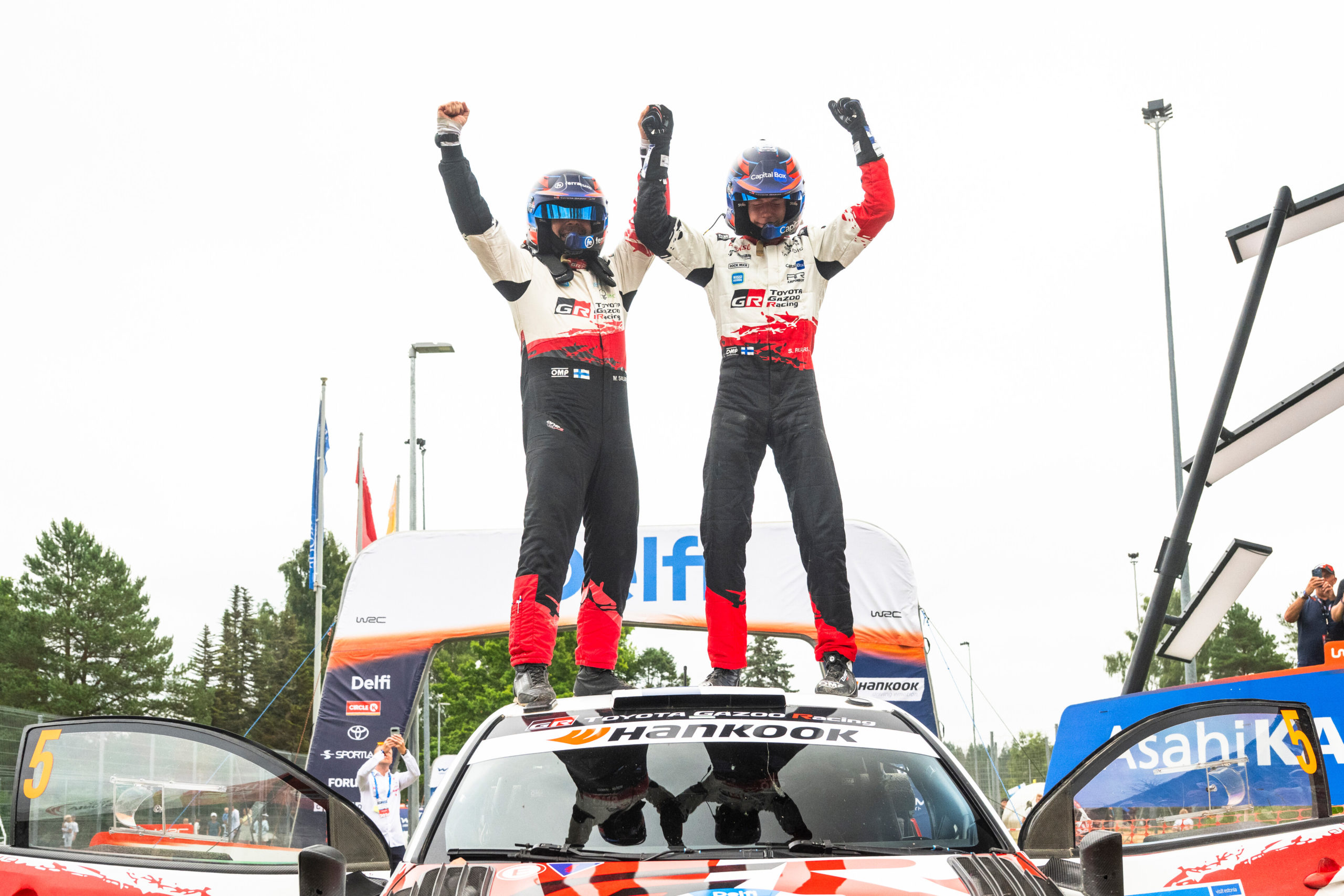
The final classification told a tidy story: Pajari’s first WRC victory, Solberg second, Fourmaux completing the podium after fending off a late push from Neuville, with Ogier rounding out the top five. It also added a statistical flourish—Pajari becoming the sixth different winner of the 2026 season, and Toyota ensuring that all five of its drivers had now won a round that year—while reinforcing Estonia’s reputation as a rally that rewards the brave rather than the merely consistent.wrc+3
WRC2’s conclusion delivered the home result the crowd wanted. Virves and Viilo converted their weekend’s work into a class win, completing back‑to‑back Estonian victories in the category and stepping onto the podium with an ease that belied the effort required. Suninen and Korhonen filled the remaining podium places, giving Toyota’s Rally2 programme a solid haul of points and reinforcing how tightly contested the class is on these high‑speed gravel events.reutersconnect+2
Back in Tartu, as the podium ceremony played out—flags, confetti, the usual choreography—there was a sense that Rally Estonia had once again justified its place on the calendar. It had given the championship another new winner, confirmed that its roads remain among the fastest and most spectacular anywhere in the WRC, and offered the home crowd a WRC2 victory to go with it.